 By
By
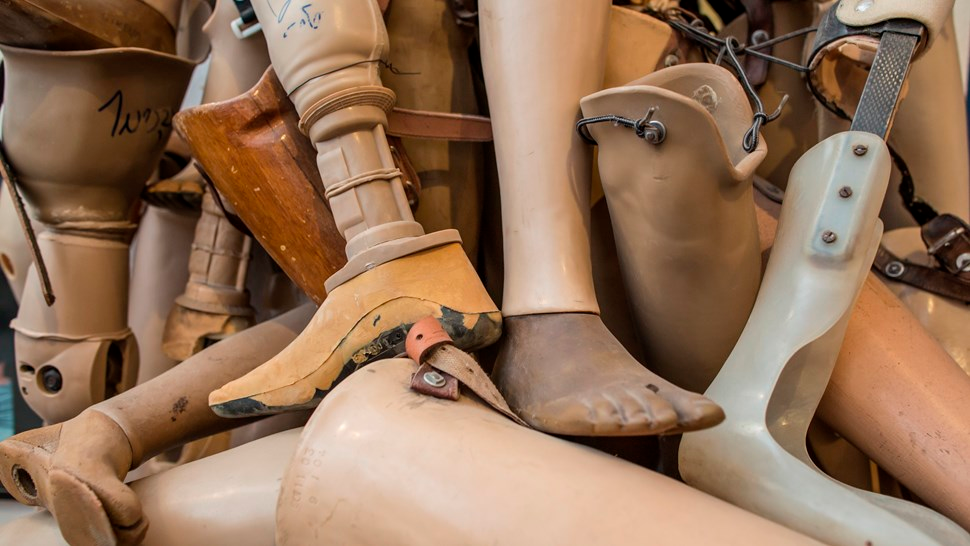
Penta Medical Recycling’s 2025 Annual Impact Report offers a clear picture of how circular prosthetic supply chains can support access to mobility in low- and middle-income settings, including several countries across the IMEA region. The report positions Penta as a logistical bridge between the supply of used and surplus prosthetic limbs in the United States and the need for functional prosthetic equipment in underserved countries. Its model is simple but highly relevant to rehabilitation systems: collect, process, inventory and redistribute prosthetic components to trusted clinic and NGO partners that can fit and maintain them for people with limb loss.
For IMEA prosthetic and orthotic professionals, the report is especially important because it shows how equipment recovery and redistribution can help address one of the region’s most persistent barriers: access to quality prosthetic components. In 2025, Penta collected more than 3,300 prosthetic components from 217 unique donors and sent 4,276 components in 44 international shipments, supporting more than 855 people with restored mobility. The report also states that Penta supported 25 partners in 13 countries during the year.
Across the IMEA region, Penta’s listed implementation partners include organisations and clinics in Cameroon, India, Jordan, Kenya, Lebanon, Liberia, Nigeria, Palestine, South Africa, Sri Lanka, Thailand, Togo, Uganda and Zambia. These partners represent a broad mix of rehabilitation environments, from major hospitals and children’s care networks to local prosthetic and orthotic services, humanitarian organisations and community-based providers.
The report’s partner list includes Christian Medical College Vellore and Life & Limb Foundation in India; the Syrian American Medical Society and Anera in Jordan; CURE International in Kenya and Zambia; Anera in Lebanon; Bestojis Orthopaedic and Rehabilitation Foundation and Ishk Tolaram Foundation in Nigeria; Anera and Palestine Children’s Relief Fund in Palestine; Stepping into Grace in South Africa; Colombo Friend in Need Society and Lanka Fundamental Rights Organization in Sri Lanka; Sirindhorn School of Prosthetics and Orthotics in Thailand; OADCPH in Togo; and Gizamba Prosthetic-Orthotic Services in Uganda.
The Africa-focused elements of the report are particularly relevant. Penta highlights Gizamba Prosthetic-Orthotics Services in Uganda as a community-based organisation supporting individuals with limb loss through both mobility care and wider support networks. The report also notes that Penta’s work with CURE hospitals in sub-Saharan Africa expanded in 2025, with more than 200 prosthetic components shipped to CURE Hospital locations and several hundred additional components prepared for shipment in early 2026.
This paediatric focus should matter to every rehabilitation planner in the IMEA region. Children with limb loss require long-term follow-up, growth-related refitting, family education and access to components that can be adapted as they develop. Penta’s report frames prosthetic access not only as a medical intervention, but as a pathway to school participation, play, independence and social inclusion.
The report also makes a strong economic case for investment in assistive technology. Citing ATscale research, Penta states that assistive technology can improve health and well-being, add an average of 1.3 quality-adjusted life years per user, and increase lifetime earning potential. The report states that adults receiving a needed prosthesis may increase lifetime earnings by approximately USD 8,400, while children may increase lifetime earnings by more than USD 246,300. Based on Penta’s redistribution of more than 14,600 prosthetic components since 2018, the organisation estimates that its work has helped unlock around USD 256 million in projected lifetime earnings for beneficiaries.
For ministries of health, NGOs, rehabilitation centres and O&P clinics across IMEA, these figures reinforce a point that is often underrepresented in procurement discussions: prosthetic access is not simply a cost. It is an investment in health, education, workforce participation and social inclusion. Penta’s report also links its work to the Sustainable Development Goals, including good health and well-being, quality education, decent work and economic growth, reduced inequalities, responsible consumption and production, and partnerships for the goals.
The circular economy dimension is also important. Penta’s 2025 domestic operations show that 70% of collected components came from individuals, 25% from clinics and 5% from businesses. All received equipment is dismantled, assessed, cleaned and logged in a custom inventory request system before redistribution. For the O&P field, this highlights the potential of formal recovery pathways that prevent usable components from being wasted while ensuring they are channelled through clinical partners capable of responsible fitting and follow-up.
For IMEA systems facing budget pressure, conflict-related disability, road traffic injury, diabetes-related amputation and uneven access to rehabilitation services, component reuse cannot replace the need for sustainable national procurement and manufacturing capacity. However, the report shows that well-managed redistribution can become a practical support mechanism when linked to qualified local providers. The key is not simply shipping parts; it is building reliable networks between donors, logistics teams, clinical partners and patients.
Penta’s work in Ukraine is also a reminder of the growing connection between rehabilitation and crisis response. The report states that since the start of the war, Penta has supported 11 clinics and partners in Ukraine with more than 4,000 components through over 20 shipments. In 2025, August Mission sponsored a shipment of more than 1,000 prosthetic components to four clinics across Lviv and Ternopil, while also supporting follow-up and feedback on the ground.
This has direct relevance for parts of the IMEA region affected by conflict, displacement and fragile health systems. Prosthetic care must be integrated into long-term recovery planning, not treated as a short-term emergency add-on. Penta’s recognition by the United Nations Mine Action Service exhibition and its selection as a 2026 Zero Project Awardee further reinforce the role of prosthetic care within disability rights, mine action, crisis response and inclusive recovery.
The 2025 report also shows that Penta’s model depends heavily on partnerships. The organisation worked with more than 50 international organisations across 29 countries, while also strengthening relationships with universities, physical therapy students, prosthetic clinics, funders, volunteers and logistics supporters. For IMEA stakeholders, the lesson is clear: improving prosthetic access requires more than technology. It requires coordinated systems that connect equipment supply, clinical skill, rehabilitation follow-up, logistics, funding and patient-centred care.
For O&P professionals across the Middle East, India and Africa, Penta’s 2025 Annual Impact Report provides a useful example of how surplus prosthetic components can be responsibly redirected into meaningful clinical impact. It also raises a broader question for the region: how can local providers, manufacturers, NGOs and policymakers build stronger circular supply chains that reduce waste while expanding access to safe, appropriate and well-supported prosthetic care?
The answer will not come from recycling alone. It will come from combining responsible component reuse with local training, digital workflows, quality standards, patient follow-up, regional procurement and long-term investment in rehabilitation systems. Penta’s report shows that when these elements are connected, unused prosthetic components can become restored mobility, renewed independence and a pathway back into education, work and community life.