 By
By
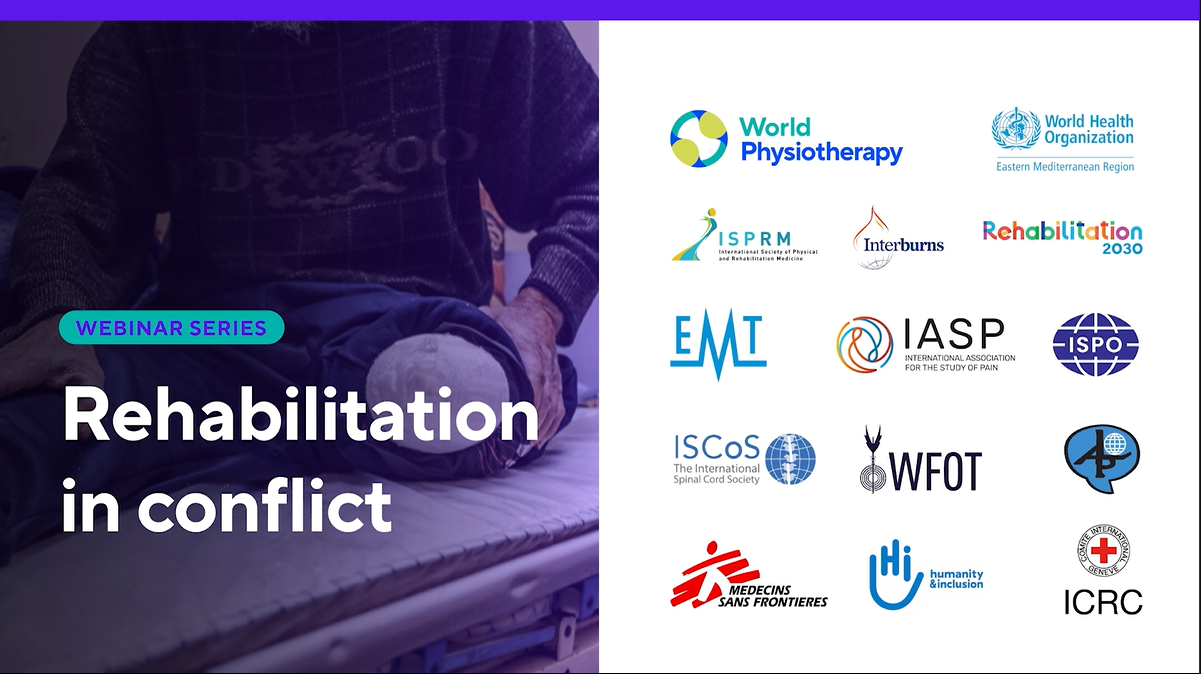
World Physiotherapy has launched a new ten-part global webinar series on rehabilitation in conflict, bringing together leading international rehabilitation, humanitarian and professional organisations to support clinicians working in complex emergency settings. The series explores how rehabilitation can be delivered before, during and after conflict-related injury, with practical sessions on trauma, amputation, spinal cord injury, traumatic brain injury, burns, fractures, peripheral nerve injury, communication and swallowing challenges, and pain management.
For the IMEA rehabilitation and O&P community, this series is highly relevant. Across the Middle East, Africa and parts of Asia, conflict and humanitarian crises continue to create large numbers of people with limb loss, spinal cord injuries, burns, fractures, brain injuries and complex trauma. These injuries do not end when emergency surgery is completed. They require rehabilitation, assistive technology, prosthetics, orthotics, physiotherapy, occupational therapy, pain management, psychosocial support and long-term follow-up.
The webinar series is a timely reminder that rehabilitation is not optional in conflict settings. It is part of survival, recovery and dignity.
A Major International Collaboration
The Rehabilitation in Conflict series is being delivered by World Physiotherapy in collaboration with major global partners, including the World Health Organization, Médecins Sans Frontières / Doctors Without Borders, Humanity & Inclusion, the International Committee of the Red Cross, and several international professional bodies. These include the International Spinal Cord Society, International Society of Physical and Rehabilitation Medicine, International Society for Prosthetics and Orthotics, Interburns, World Federation of Occupational Therapists, International Association of Communication Sciences and Disorders, and International Association for the Study of Pain.
This breadth matters. Conflict rehabilitation is never the responsibility of one profession alone. A person injured in war may need emergency surgery, wound care, amputation management, fracture care, spinal stabilisation, respiratory support, prosthetic fitting, orthotic bracing, pain management, communication support, swallowing therapy, occupational therapy and community reintegration. Bringing multiple professional bodies together reflects the real complexity of care.
Why Conflict Rehabilitation Needs Practical Guidance
World Physiotherapy says the series was informed by engagement with member organisations, including insights from the Lebanese Order of Physiotherapists, and responds to the urgent need for practical guidance and shared learning in conflict-affected settings. The webinars are designed for physiotherapists and other health professionals, with clinical insights covering trauma and injury management, low-resource rehabilitation and recovery across the care pathway.
This is exactly the type of support clinicians need in humanitarian environments. Conflict settings often involve:
- Fragmented or damaged health systems
- Displacement and overcrowding
- Limited equipment and supplies
- Shortages of trained rehabilitation personnel
- Disrupted referral pathways
- High numbers of complex injuries
- Lack of long-term follow-up
- Psychological trauma among patients, families and clinicians
- Difficulty accessing prosthetics, orthotics and assistive devices
In these settings, even small rehabilitation interventions can have long-term impact. Early positioning, contracture prevention, respiratory care, pressure management, safe mobility, stump care, pain support and family education can change the trajectory of recovery.
The O&P Relevance: Amputation, Orthotics and Assistive Technology
The inclusion of a dedicated Amputation in Conflict session led by ISPO is particularly important for prosthetists, orthotists and rehabilitation teams. The webinar is scheduled for Monday 4 May, as part of the wider series.
Conflict-related amputation care requires more than emergency limb removal. It requires a full rehabilitation pathway, including:
- Pre- and post-amputation counselling
- Residual limb shaping and care
- Contracture prevention
- Pain and phantom-limb management
- Wound healing and skin protection
- Prosthetic assessment
- Socket fitting and alignment
- Gait training
- Repairs, maintenance and replacement parts
- Long-term psychosocial and vocational support
Orthotics are also central to conflict rehabilitation. Fractures, nerve injuries, burns, spinal injuries and paediatric trauma may all require bracing, splinting, pressure management, positioning devices, AFOs, spinal orthoses or other assistive technology. In humanitarian settings, orthotic intervention can help prevent avoidable complications and improve function when surgical and rehabilitation resources are limited.
The Webinar Programme
The series is structured around key injury and rehabilitation priorities in conflict settings. Sessions include:
- 2 April: Rehabilitation in conflict – WHO
- 9 April: Expert panel discussion – WHO, MSF, HI and ICRC
- 20 April: Spinal cord injury in conflict – ISCoS
- 27 April: Traumatic brain injury in conflict – ISPRM
- 4 May: Amputation in conflict – ISPO
- 11 May: Burns in conflict – Interburns
- 13 May: Fracture in conflict – World Physiotherapy
- 21 May: Peripheral nerve injury in conflict – WFOT
- 25 May: Communication and swallowing challenges in conflict – IALP
- 1 June: Pain management in rehabilitation – IASP
The webinars are delivered online via Zoom at 16:00 UTC / 19:00 EEST, with live Arabic interpretation and Farsi/Persian translation available. Sessions are also streamed on YouTube, and recordings are being made available to support wider access.
The availability of Arabic and Farsi/Persian interpretation is especially important for the IMEA region, where many clinicians, students and humanitarian workers are responding to crises in Arabic- and Persian-speaking contexts.
Lessons for the IMEA Region
The IMEA region has seen repeated examples of conflict-related rehabilitation need, including Gaza, Sudan, Yemen, Syria, Iraq, Afghanistan and other humanitarian settings. These contexts demonstrate that trauma care and rehabilitation must be planned together. If rehabilitation is delayed or absent, the result can be preventable disability, chronic pain, pressure injuries, contractures, poor prosthetic readiness, family dependence and lost participation.
For regional O&P and rehabilitation providers, this webinar series supports several important messages:
- Rehabilitation must be integrated early into emergency response
- Prosthetics and orthotics should be planned as part of trauma pathways
- Local rehabilitation workers need practical, field-relevant training
- Multidisciplinary coordination is essential
- Assistive devices and materials should be treated as essential humanitarian supplies
- Pain, communication, swallowing, burns and brain injury require specialist attention
- Recordings and translated sessions can support workforce development beyond the live event
Supporting Local Clinicians in Difficult Settings
One of the strongest aspects of the series is its practical orientation. The webinars are designed for professionals delivering care in real conflict-affected environments. Speakers include experts with direct field experience, including work across the Palestinian territories.
This matters because humanitarian rehabilitation cannot rely only on ideal clinical pathways. Clinicians often work with limited space, limited supplies, unstable electricity, security risks, shortages of assistive devices and patients who may be displaced before follow-up. Practical guidance from experienced teams can help clinicians prioritise what matters most when resources are constrained.
For O&P professionals, this may include how to prepare residual limbs when prosthetic fitting is delayed, how to prevent contractures, how to provide temporary mobility support, how to work with physiotherapists and surgeons, and how to build referral pathways where formal systems have broken down.
Why the O&P Community Should Engage
The global O&P community should actively support and share this webinar series. Amputation, fracture, burns, spinal cord injury and peripheral nerve injury are all areas where prosthetic and orthotic expertise can significantly improve outcomes.
O&P professionals can benefit from the series by:
- Learning from humanitarian rehabilitation specialists
- Understanding trauma pathways in conflict settings
- Strengthening collaboration with physiotherapists and rehabilitation physicians
- Improving preparedness for mass-casualty and emergency contexts
- Supporting education for local teams
- Identifying how devices, materials and training can be better deployed
- Advocating for rehabilitation to be included in emergency health planning
For clinics, universities, NGOs and suppliers across IMEA, the series could also serve as a training resource for staff and students.
From Emergency Care to Long-Term Recovery
The central message of the series is clear: rehabilitation in conflict must begin early and continue beyond the emergency phase. A person injured in conflict may require years of care. A child with limb loss will need repeated prosthetic replacements. A person with spinal cord injury may need lifelong pressure care and assistive technology. A burns survivor may need splinting, scar management and psychological support. A person with traumatic brain injury may need cognitive, communication and mobility rehabilitation.
Conflict rehabilitation is therefore both an emergency priority and a long-term health-system responsibility.
Outlook
World Physiotherapy’s Rehabilitation in Conflict webinar series is an important contribution to global rehabilitation preparedness and humanitarian learning. By bringing together WHO, MSF, HI, ICRC, ISPO and other international bodies, the series offers clinicians a rare opportunity to learn across professions and across crisis settings.
For the IMEA CPO community, this is a series to support, share and use. The topics are directly relevant to the realities facing many countries across the region: limb loss, trauma, burns, fractures, spinal cord injury, displacement, low-resource care and the need for coordinated rehabilitation pathways.
In conflict, rehabilitation is not a secondary concern. It is the bridge between survival and life after injury. This webinar series helps strengthen that bridge.
Event Details
Series: Rehabilitation in Conflict
Organiser: World Physiotherapy, with international rehabilitation and humanitarian partners
Format: Online webinars via Zoom and YouTube
Time: 16:00 UTC / 19:00 EEST
Access: Live Arabic interpretation and Farsi/Persian translation available
Recordings: Previous session recordings available online
Registration: Register for the next session
- Original announcement: World Physiotherapy – New global webinar series on rehabilitation in conflict
- World Physiotherapy Rehabilitation in Conflict resources
- Register for the next webinar
- Watch recordings of previous sessions
- World Health Organization Rehabilitation 2030 Initiative
- International Society for Prosthetics and Orthotics
- International Committee of the Red Cross
- Humanity & Inclusion
- Médecins Sans Frontières
- International Society of Physical and Rehabilitation Medicine