 By
By
A new clinician-driven initiative is gaining attention within the prosthetics community, as certified prosthetist orthotist Kerri Lapierre, based at Rhode Island Limb Company, begins developing a collaborative platform designed to improve how clinicians share knowledge and make component decisions in daily practice.
After more than 14 years working in prosthetics, Lapierre identified a challenge familiar to many practitioners. Much of the practical knowledge used in clinical decision making does not exist in textbooks or formal guidelines. Instead, it is scattered across emails, conversations with component representatives, personal experience, conference discussions, and isolated notes kept by individual clinicians.
According to Lapierre, this fragmentation makes it difficult for prosthetists to compare components objectively or to learn from the real-world experiences of colleagues in other clinics.
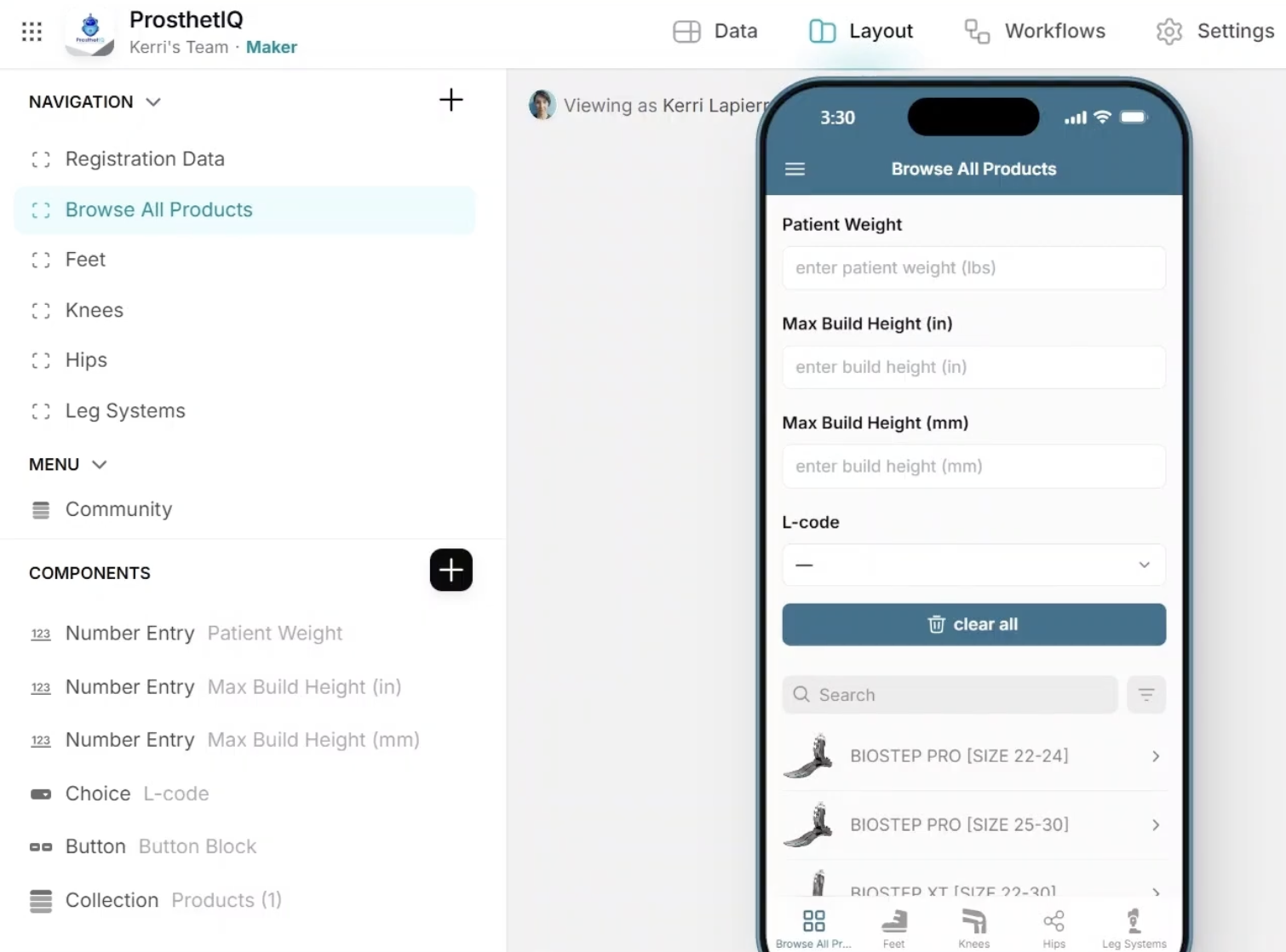
To address this, Lapierre has begun building ProsthetIQ, a community-driven platform intended to create a shared space where prosthetists can exchange insights, compare components, and support each other’s clinical decisions.
The concept is not being developed by a software company or academic group, but by a working clinician who understands the day-to-day realities of prosthetic practice.
“I’m not a programmer,” Lapierre explained when introducing the project. “I’m a clinician. But after years in the field, I kept seeing the same problem. We have a lot of knowledge, but it lives in separate places. There isn’t really a shared space where prosthetists can easily compare what works and learn from each other.”
The goal of ProsthetIQ is to create a platform where clinicians can:
- compare prosthetic components based on real clinical use
- discuss outcomes and patient experiences
- share practical tips and fitting strategies
- reduce reliance on marketing information alone
- build a collective knowledge base for the profession
The idea reflects a broader shift happening across orthotics and prosthetics, where digital tools, online communities, and data-driven decision making are becoming increasingly important. As the number of component options continues to grow, many clinicians report that choosing the right solution often depends on informal advice rather than structured comparison.
A community-based platform could help fill this gap, particularly for younger prosthetists who may not yet have access to large professional networks.
Lapierre recently released a short video explaining the idea and asking colleagues whether a shared platform like ProsthetIQ is something the profession needs. Early reactions suggest that many clinicians recognise the same problem and are interested in contributing.
While the project is still in its early stages, it highlights an important trend in modern prosthetics. Some of the most meaningful innovations are no longer coming only from manufacturers or universities, but from clinicians themselves, working to solve the practical challenges they encounter every day.
If successful, ProsthetIQ could become a valuable tool for strengthening collaboration, improving clinical decision making, and helping the profession retain knowledge that is too often lost between clinics, countries, and generations of practitioners.