 By
By
Revolutionary surgical approaches are redefining what it means to live with limb loss — not just through better prosthetics, but by fundamentally altering how residual limbs are configured to work with advanced technologies.
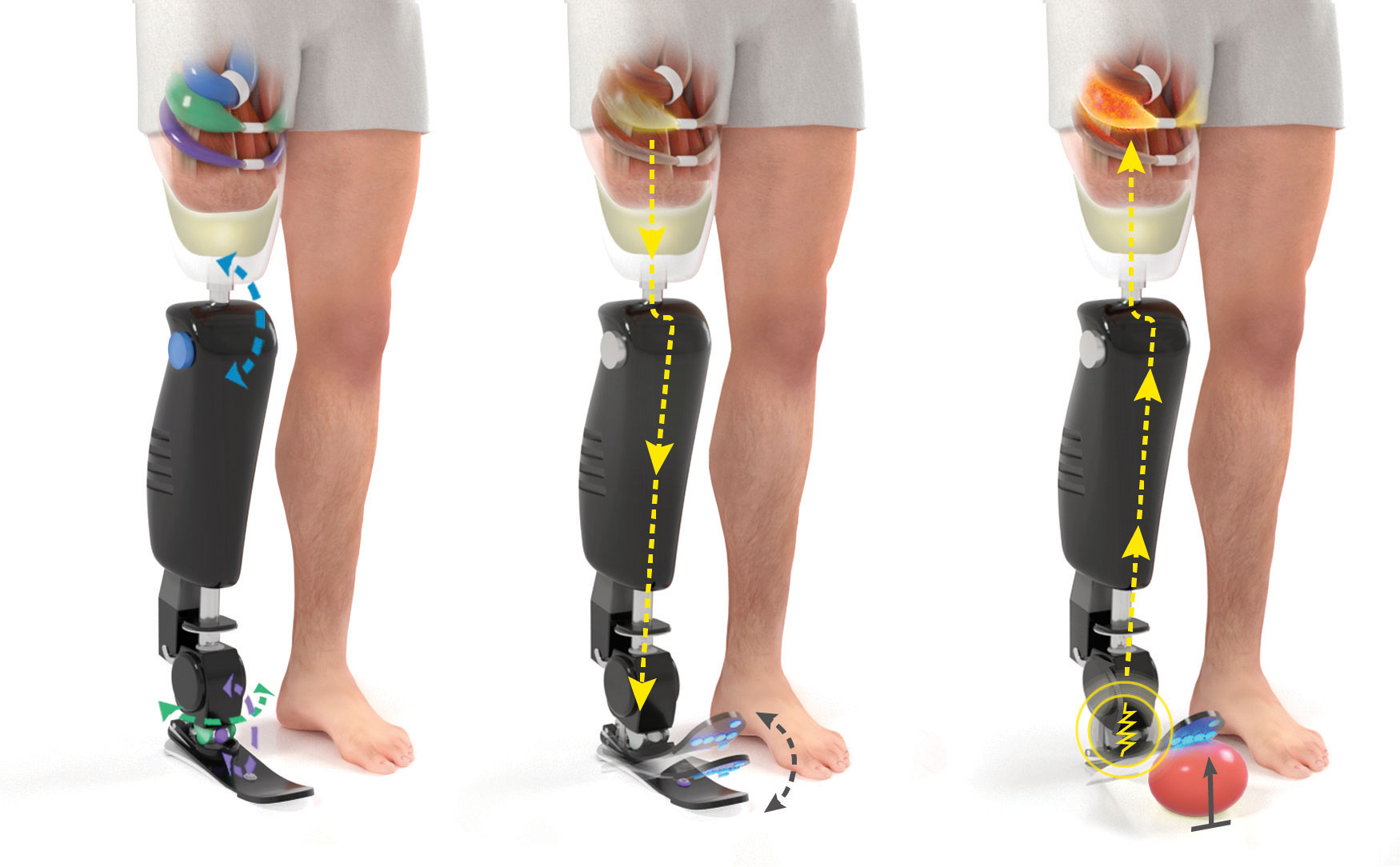
One such innovation gaining attention is the Agonist-Antagonist Myoneural Interface (AMI) — a reconstructive technique designed to preserve or restore the natural physiological relationship between muscle pairs in a residual limb. In contrast to conventional amputations that sever these muscle-to-muscle links and disrupt proprioceptive signaling, AMI surgery seeks to reconnect agonist and antagonist muscles and their neural pathways, offering the potential for improved sensory feedback, reduced pain, and more intuitive control of high-tech prostheses.
What Is AMI and Why It Matters
Traditional amputation techniques typically leave the residual limb without the paired muscle dynamics that enable proprioception — the subconscious sense of limb position and movement. Without these muscle interactions, the brain loses much of its natural sensory input from the missing segment, contributing to issues such as phantom limb pain, neuromas, and challenges in prosthetic control.
The AMI approach reconstructs these muscle pairs during amputation or revision surgery so that one muscle’s contraction naturally stretches its partner — as would occur in an intact joint. This mechanical linkage preserves native mechanoreceptive signals (from muscle spindles and tendon organs) that inform the central nervous system about movement and limb position. Early research suggests that this design supports more natural proprioceptive feedback and may enable amputees to communicate seamlessly with prosthetic devices.
Personal Experience and Clinical Considerations
For many amputees, electing to undergo AMI surgery — particularly as a revision procedure years after an initial amputation — represents a significant physical and psychological decision. It involves weighing the potential benefits of reduced discomfort, preserved muscle physiology, and enhanced neuroprosthetic integration against the risks inherent to any major surgery, including infection, healing complications, and a demanding rehabilitation process.
One above-knee amputee shared how, after six years with chronic residual limb pain linked to an old injury and hardware issue, the decision to pursue AMI revision surgery eventually came down to long-term goals: relief from persistent pain, stronger residual muscles, and the opportunity to pair their limb with next-generation prosthetic technology being developed in research settings. While experimental, the procedure offered a chance to expand functional potential rather than simply maintain the status quo.
Toward Better Prosthetic Interfaces
The implications of AMI extend beyond surgical technique to the prostheses it can unlock. Engineers and clinicians — including those at institutions like MIT’s Biomechatronics Group — are developing neuro-integrated prosthetic limbs that can communicate bidirectionally with the nervous system. These systems depend on rich, reliable signals from the residual limb to deliver intuitive control and, in some reports, measurable improvements in gait, balance, and obstacle negotiation.
By preserving physiological muscle patterns and sensory pathways, AMI provides a biological foundation for advanced prosthetic interfaces. Unlike techniques that focus solely on mechanical attachment or signal capture via myoelectric sensors, AMI emphasizes the restoration of natural muscle-nerve relationships that underlie movement and perception.
Looking Ahead
While AMI remains a relatively new and technically complex approach — more often discussed within research settings than widely available clinical practice — early outcomes suggest a promising role for it in the future of limb loss care. As data accumulates and surgical experience grows, this paradigm may shift from innovative to standard practice, offering future amputees improved quality of life and deeper integration with emerging prosthetic technologies.
For clinicians, researchers, and orthotic & prosthetic professionals across IMEA and beyond, AMI represents where anatomy, neural engineering, and functional mobility intersect — a reminder that progress in limb reconstruction can be as much about restoring sensory experience as it is about mechanical support.






-1.png "Gaza Fund (1)-1")