 By
By
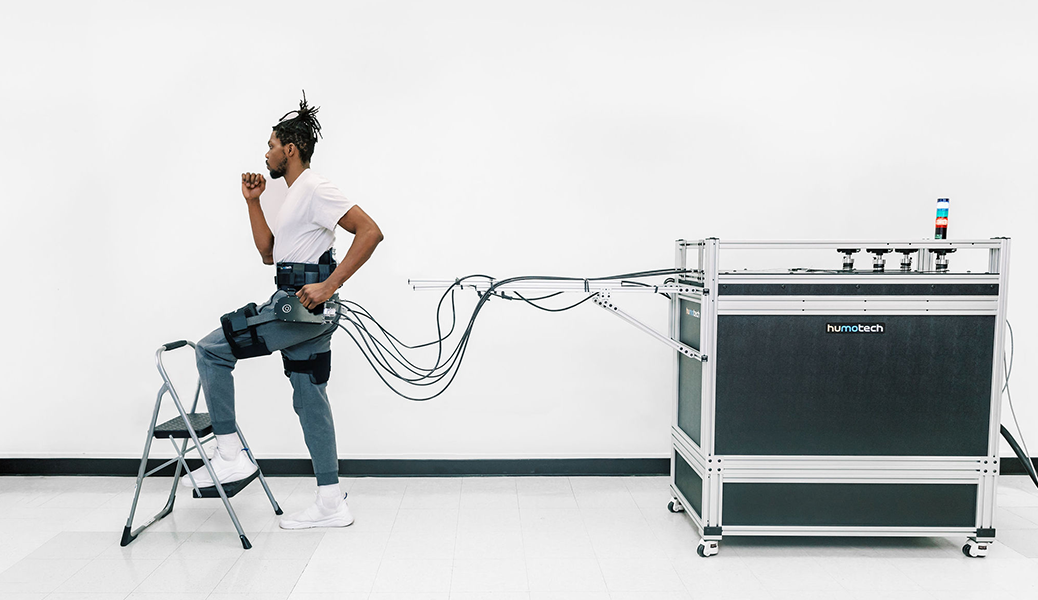
The Caplex system from Humotech is an adaptable, instrumented simulation platform that lets clinicians, researchers and device developers emulate the mechanical and control characteristics of prosthetic feet, ankle‑foot systems, entire prosthetic legs, and wearable exoskeletons — all from a single, reconfigurable unit. Rather than bringing many discrete devices to patients, Caplex lets teams trial dozens of device behaviors quickly and objectively, speeding selection, improving outcomes, and shortening the feedback loop between clinic and manufacturer.
Core capabilities
- Modular hardware: Reconfigurable interfaces that permit rapid swapping or virtual emulation of different foot/ankle geometries, effective rocker shapes, stiffness profiles and damping characteristics.
- Active and passive emulation: Ability to reproduce passive mechanical responses (stiffness, hysteresis, rollover) and to simulate powered or semi‑active behaviours under programmable control strategies.
- Instrumentation & data capture: Integrated force, torque and motion sensors with high‑resolution data logging for objective gait metrics (ground reaction forces, ankle moments, timing, symmetry) and real‑time visualization.
- Patient‑centric fitting: Physical interfaces and adapters to fit a range of residual limbs and foot/ankle anatomies, enabling user trials with clinical donning and gait assessments.
- Rapid parameter tuning: Clinicians can adjust parameters (stiffness, alignment, energy return, timing) on the fly and immediately observe biomechanical and subjective effects.
- Research & development support: APIs and exportable datasets for biomechanics research, device optimization, and validation testing.
Clinical and operational benefits
- Faster, better device matching: Clinicians can iterate through many simulated device settings in a single session to find the best‑performing characteristics for an individual user, reducing remakes and returns.
- Objective decision‑making: Quantitative metrics complement patient feedback to guide prescriptions and document improvement for payers and MDTs.
- Improved patient experience: Patients trial a wider set of functional options in a low‑risk environment, building confidence before investing in a permanent device.
- Reduced inventory & cost: Clinics and hospitals avoid keeping stock of multiple device types for trial, lowering capital tied up in inventory and simplifying logistics.
- Enhanced rehabilitation: Therapists use Caplex to tailor assistive profiles and progress training for post‑op, stroke, or neuro‑rehab patients wearing exoskeletons or prosthetic components.
- Accelerated R&D: Manufacturers use Caplex to test and tune prototypes, compare design variants, and gather user‑informed data without full hardware builds.
Use cases
- Orthotic & prosthetic clinics: Rapid A/B testing of foot/ankle options for transtibial and transfemoral users to determine optimal energy return and rollover characteristics.
- Multidisciplinary clinics: MDTs (orthotists, physiotherapists, surgeons) jointly evaluate device impact on gait, balance, and functional outcomes.
- Rehab centers: Stroke and trauma patients trial exoskeleton control modes and support levels to identify effective assistance profiles.
- Research labs: Biomechanics studies, device validation protocols, and comparative effectiveness research using synchronized force/motion outputs.
- Device manufacturers: Early user testing and parameter optimization during product development without manufacturing multiple device iterations.
Workflow in the clinic
- Intake & baseline: Patient assessment and baseline gait capture.
- Emulation setup: Select and load target mechanical or control profiles (preset library or custom parameters).
- Trial & tune: Patient walks while clinician adjusts parameters; objective metrics update in real time.
- Comparison & decision: Review data and patient feedback, select the best profile or target device characteristics.
- Handoff: Generate prescription specification and data report for fabrication or purchase, and schedule follow‑up.
Evidence & outcome potentialBy enabling direct comparison of device behaviours and providing quantitative gait data, Caplex supports evidence‑based prescriptions that can reduce device abandonment, improve functional outcomes, and produce documentation useful for payer justification. For clinics that track outcomes, Caplex shortens the path to measurable improvements in gait symmetry, walking speed, energy cost, and patient satisfaction.
Implementation considerations
- Training & protocols: Clinicians and therapists require training to interpret instrumented outputs and translate parameter changes into prescription decisions.
- Integration: Caplex data exports should integrate with clinic EMR or gait lab software for recordkeeping and billing.
- Space & support: Requires a gait area with safe walking length, harness/overhead support for higher‑risk users, and basic lab infrastructure.
- Commercial model: Often deployed as a clinic capital investment, shared hub model, or offered through partnerships with manufacturers and rehab networks.
The Humotech Caplex system reframes device selection from an inventory problem into a patient‑driven, data‑informed process. By emulating many prosthetic and exoskeleton behaviours in one platform, it empowers clinicians to optimize prescriptions, reduce costly trial‑and‑error, and accelerate both clinical care and device innovation. For clinics, manufacturers and researchers focused on personalized mobility, Caplex offers a high‑value tool to improve decisions and outcomes while reducing time and cost to achieve the right fit.