 By
By
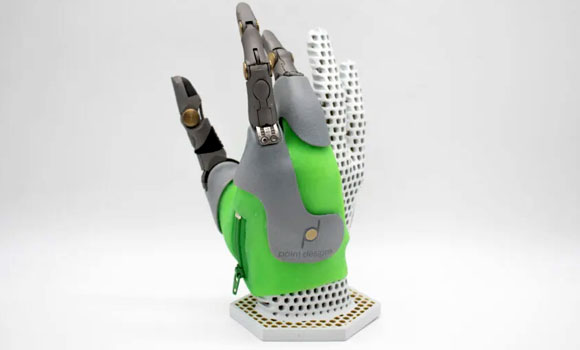
One Click Metal, located in Tamm, Germany, has highlighted the use of its metal Additive Manufacturing technology by prosthesis manufacturer Point Designs. By bringing the Additive Manufacturing process in-house, Point Design eliminated dependency on external suppliers and unlocked faster iteration cycles, lower costs, and improved control over innovation and intellectual property.
With more than 45,000 finger amputations occurring annually in the United States alone, there is demand for durable, lightweight, and functional prosthetic solutions. Founded in 2016 by researchers from the Biomechatronics Development Laboratory at the University of Colorado, Point Designs combines mechanical engineering, Additive Manufacturing, and clinical insight to produce high-performance, patient-specific finger prostheses for these individuals.
The challenge of scaling
At the core of Point Designs’ prosthetic systems are titanium finger components. These parts are exposed to constant mechanical stress and must perform reliably during daily use, all while remaining lightweight and precisely engineered.
In the early stages, Point Designs relied on external manufacturing partners to produce these complex titanium components. While this approach enabled a fast market entry, it became increasingly restrictive as the company expanded.
Key challenges included high production costs, particularly for small batches and frequent design iterations, as well as long and unpredictable lead times. Limited design flexibility and reduced control over intellectual property and quality, particularly for sensitive designs, can also pose problems.
With an annual demand of approximately 1,500 finger components, the company reported that outsourcing was no longer a sustainable solution.
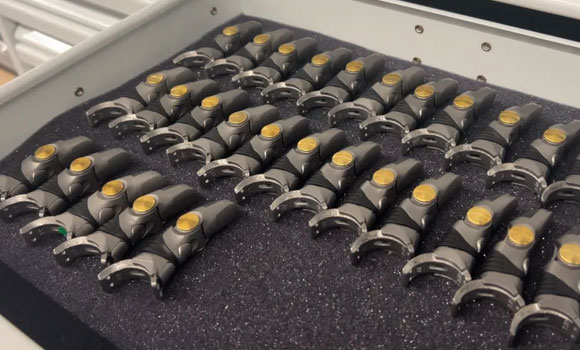
The titanium finger components are the main structural and functional elements of the prosthetic. They enable smooth articulation, a robust locking mechanism, and long-term durability. To meet medical and functional requirements, each component must offer good mechanical strength, low weight, precise fit, and consistent enough quality to enable serial production.
To meet these demands and bring the manufacturing in-house, Point Designs invested in a BASEline Laser Beam Powder Bed Fusion (PBF-LB) Additive Manufacturing machine from One Click Metal.
Bringing the company’s manufacturing in house meant that the titanium finger components can be made directly from finalised CAD data without relying on external suppliers. Optimised part orientation and intelligent design are said to keep support structures to a minimum, reducing post-processing effort and accelerating assembly.
The company noted that the resulting components are well-suited to daily use, lightweight, mechanically robust, and precisely engineered. The build plate size matched the component dimensions perfectly, allowing Point Designs to scale production without unnecessary complexity.
Moving to in-house metal Additive Manufacturing, Point Designs achieved 50% faster lead times, reducing delivery from weeks to days.




-1.png "Gaza Fund (1)-1")