 By
By
Sri Lanka’s orthotics and prosthetics sector has grown steadily from its post‑polio and disaster‑response roots into a mixed ecosystem of hospital rehabilitation units, NGO programs, private clinics and small fabrication workshops. Clinics in Colombo and other major cities continue to carry the heaviest caseloads, but people living in plantation, rural and former conflict zones still face major barriers to sustained access, follow‑up and spare parts. Demand is driven by road‑traffic and occupational injuries, rising diabetes and its lower‑limb complications, congenital conditions such as clubfoot and cerebral palsy, and the long tail of natural‑disaster and post‑conflict rehabilitation needs.
Historically, prosthetic and orthotic care in Sri Lanka was concentrated in a handful of public hospitals and mission or NGO clinics. Those providers established the early standards of care—mass provision, basic sockets and thermoplastic orthoses—and served as training hubs. Over the past decade private clinics and small manufacturers have expanded in urban centers, offering more custom sockets, better finishing, and imported components, while NGOs remain essential for outreach and subsidized services outside cities. A small but growing number of urban clinics have started adopting digital tools—3D scanning, CAD/CAM and selective 3D printing—to shorten lead times and improve fit, but these remain the exception rather than the norm.
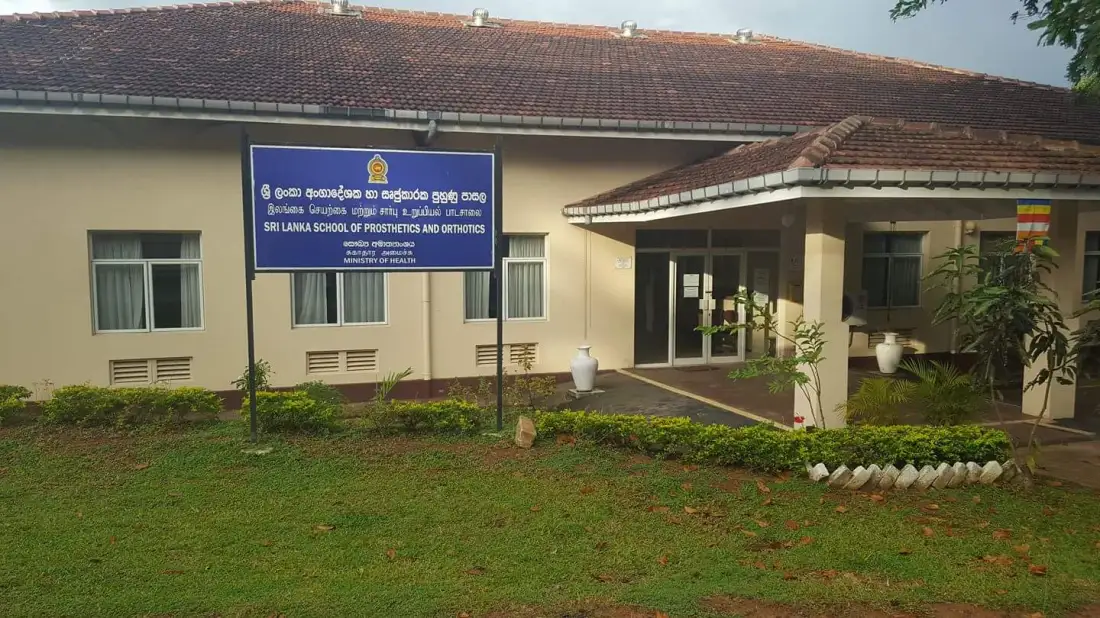
Workforce capacity is a recurrent constraint. Formal, accredited degree‑level prosthetics and orthotics programs within the country are limited, and many clinicians receive parts of their training abroad or through short courses run by NGOs and international partners. As a result, clinical skills and standards vary across providers: many workshops are staffed by highly experienced technicians, but there are too few clinicians trained in comprehensive assessment, gait analysis and multidisciplinary rehabilitation. Continuing professional development exists but is episodic, typically delivered through NGO initiatives or manufacturer training rather than through a national CPD framework.
Manufacturing and supply chains are likewise mixed. Small‑ and medium‑scale local workshops fabricate polypropylene orthoses, basic sockets and assemble imported components, delivering cost‑effective repair and rapid turnaround. High‑end components—microprocessor knees, advanced liners, specialty feet—are largely imported, which increases cost and creates supply sensitivity. Innovation is emerging at modest scale: university projects and social enterprises occasionally pilot 3D‑printed sockets and bespoke solutions, but broader adoption is constrained by cost, skills and quality‑assurance needs.
On policy and financing, disability rights and rehabilitation are recognised in national frameworks, yet O&P‑specific procurement standards, reimbursement mechanisms and regulation for device quality and clinical practice are fragmented. Public insurance rarely covers modern prosthetic components comprehensively, so many patients pay out of pocket or rely on NGO support. The lack of uniform standards and clinical accreditation contributes to variability in outcomes and difficulty scaling higher‑quality services across the island.
There are clear, practical opportunities for strengthening Sri Lanka’s O&P sector: scaling accredited training with clinical placements, establishing minimum technical and service standards with a certification pathway for clinics and workshops, decentralising services through hub‑and‑spoke networks and mobile outreach, and supporting SMEs to manufacture higher‑quality mid‑range components locally. Integrating O&P with diabetic‑foot clinics, stroke rehabilitation and pediatric therapy would also capture referral flows and improve patient outcomes. Public–private–NGO partnerships that combine government reach, NGO community networks and private technical capacity offer the most promising route to sustainable scale.
Top O&P clinics and centres in Sri Lanka (best‑effort list — recommend local verification)
- National Hospital of Sri Lanka — Department of Rehabilitation (Colombo)
- Ragama Teaching Hospital — Rehabilitation Unit (North Colombo)
- Lanka Prosthetics & Orthotics Centre (private specialist clinic, Colombo area)
- Rehabilitation Center, Kandy Teaching Hospital — Prosthetics & Orthotics Unit
- NGO/charity outreach centres (e.g., established regional prosthetic workshops operating through national NGOs)