 By
By
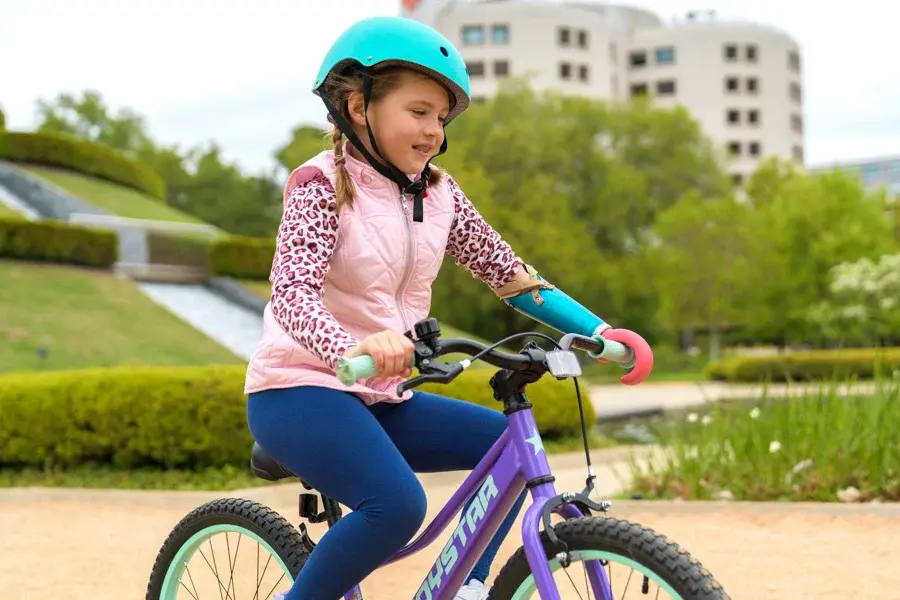
In the last year, Erin Meisel, MD, an orthopedic surgeon in the Jackie and Gene Autry Orthopedic Center at Children’s Hospital Los Angeles, has completed three targeted muscle reinnervation (TMR) surgeries for children who had experienced traumatic upper extremity amputations due to serious infections.
This unique procedure left the children free of pain and preserved the option for future use of an innovative artificial limb known as a myoelectric prosthesis.
Dr. Meisel is an expert physician in CHLA’s Hand and Upper Extremity Orthopedic Program, which sees nearly 300 patients per month. This high number of patients provides CHLA’s specialists with a considerable depth of knowledge, even for surgeries like TMR.
“Essentially, when you perform an amputation, you’re cutting the nerves that are directed at the distal limb because that limb is no longer going to be there, and typically you cut those nerves and bury them in some tissue,” Dr. Meisel explains. “That can lead to a couple of different issues: neuroma pain and phantom limb pain.”
Neuroma pain is the result of a cut nerve trying to heal, but having no nerve end to connect to. Instead, it forms a disorganized ball of nerve cells called a neuroma, which can be very painful. Another common issue is phantom limb pain, which is believed to be caused by the neurological mismatch when the brain thinks the removed limb is still present.
“Targeted muscle reinnervation involves taking the end of a nerve that is no longer going to a target, and rerouting it to a small part of another nerve that remains, giving the nerve a place to go and a job to do,” she says.
Unique challenges
By creating this new nerve connection, the surgery avoids the formation of a neuroma and associated pain. It can also help to minimize or eliminate phantom limb pain. For the patients for whom she performed TMR, Dr. Meisel says, “The pain disappeared.” A couple of months after undergoing TMR, these patients were able to cease all pain medications.
TMR does come with unique challenges, such as a potential size mismatch between two newly connected nerves.
“If you have a bigger nerve connected to a smaller nerve, some of those nerve fibers from the larger nerve might not directly connect, leading to the same problems patients deal with before TMR,” Dr. Meisel says. Solving this problem requires wrapping the smaller nerve in muscle before making the new connection to better balance the sizes and ensure no nerve fibers are loose.
Additionally, while performing TMR during the initial amputation is ideal, it is not always possible. When a serious infection is involved, the limb has to be removed quickly to avoid the spread of infection. In some of Dr. Meisel’s cases, amputations are performed elsewhere before a patient comes to CHLA for TMR.
In certain instances where TMR is not an option, Dr. Meisel uses a different technique called regenerative peripheral nerve interface (RPNI). This involves completely enclosing the end of a cut nerve in a "burrito" of denervated muscle, which helps eliminate pain, but does not allow for later connection to another nerve or a prosthesis.
A myoelectric prosthesis option
One of the great advantages of TMR is that since it involves reassigning nerves to different muscles, the surgery gives patients the option to eventually power a myoelectric prosthesis with their own muscles. Electrodes in the prosthesis socket pick up electrical impulses from firing muscles in the patient’s arm that then power motors to open and close hands, rotate wrists, or move elbows.
“Essentially, when you take the ends of cut nerves and plug them into different nerves, a prosthetist can perform an electromyography or nerve study to find the locations on the skin where those nerves are sending signals,” Dr. Meisel explains. “The more of these points you have to attach electrodes, the more individual functions you can create in the prosthesis.”
Another important consideration when performing TMR is to ensure that the newly connected nerves are distanced from each other. “When the surface electrodes from the prosthesis are picking up nerve signals, if they’re too close together, they may overlap and cause functional problems, so you want to space these points away from each other,” Dr. Meisel says.
While TMR involves complexities, Dr. Meisel emphasizes its long-term value for patients.
“No one wants their kid to have an amputation,” she says. “But if amputation is necessary for them to be 100% cured of disease or infection, and we can offer a surgery to give them the option of using a myoelectric prosthesis, that will make them highly functional for the rest of their life.”