

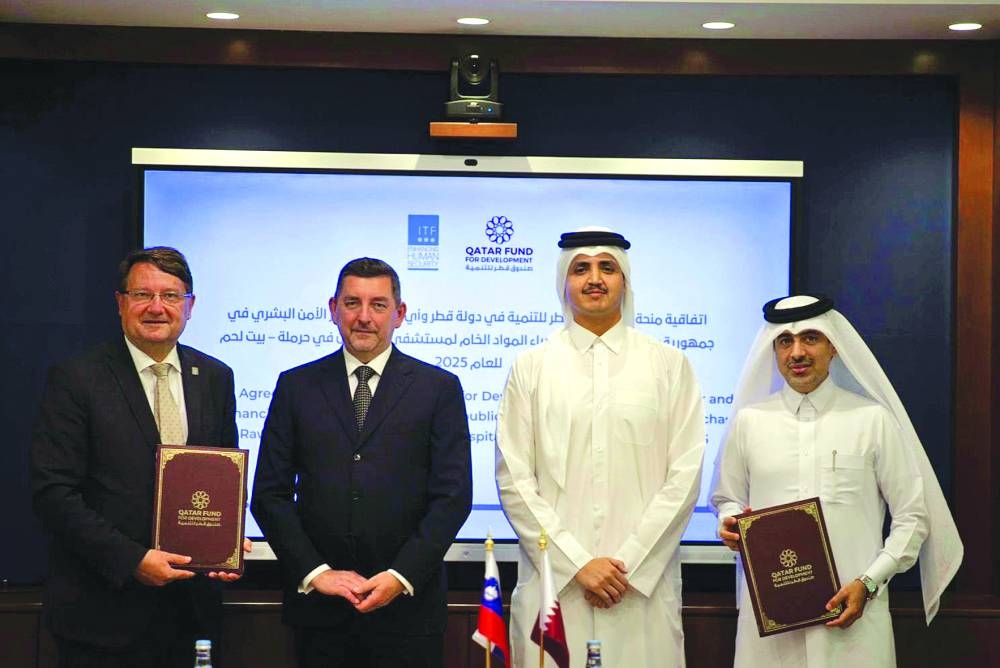
The first shipment of rehabilitation materials has arrived at Palestine Hospital in Harmalah, Bethlehem, marking a new step in efforts to strengthen access to prosthetic, orthotic and rehabilitation services in the West Bank.
The delivery is part of a project led by ITF Enhancing Human Security with support from the Qatar Fund for Development (QFFD). The project is providing essential rehabilitation materials and equipment to help the hospital support patients affected by injuries, limb loss and physical disabilities.
The initiative follows a $1 million grant agreement signed between QFFD and ITF to support Palestine Hospital in Harmalah. QFFD said the agreement is intended to strengthen the hospital’s capacity and improve access to healthcare and rehabilitation services for people affected by conflict. ITF also stated that the support would help the hospital respond to urgent medical needs, including through the procurement of raw materials and improved access to rehabilitation services. (Qatar Fund for Development, ITF Enhancing Human Security)
Palestine Hospital in Harmalah holds a particularly important role in the local rehabilitation system. ITF has previously described the hospital as the only public facility in Palestine providing prosthetic services free of charge to survivors of explosive devices. Since 2017, ITF has supported the hospital’s prosthetic and rehabilitation capacity, with earlier assistance made possible through partners including the OPEC Fund for International Development, Slovenia and South Korea. (ITF Enhancing Human Security)
The latest shipment will help address significant shortages at a time when demand for rehabilitation services remains high. Patients affected by traumatic injury, limb loss and physical disability often require a long pathway of care, including clinical assessment, casting or digital measurement, prosthetic or orthotic fabrication, fitting, physiotherapy, mobility training, repairs and follow-up.
For people living with limb loss, access to raw materials and technical equipment can be as important as access to clinical staff. A prosthetic service cannot operate reliably without sockets, components, liners, tools, consumables and workshop materials. Shortages can delay fittings, limit repairs and prevent patients from receiving the adjustments they need to walk, work, study and participate in daily life.
The project is also significant because the hospital provides services free of charge. In settings affected by conflict and economic hardship, the cost of prosthetic, orthotic and rehabilitation care can be a major barrier. Free public provision helps ensure that people with disabilities and injury-related mobility loss are not excluded because of financial constraints.
The delivered supplies are expected to improve access to quality rehabilitation services, enhance patients’ mobility and independence, and support their return to daily life. For the wider prosthetics and orthotics community across the region, the project highlights the importance of sustained investment in local rehabilitation infrastructure, particularly in areas where public facilities carry much of the burden of care.
ITF’s work in Palestine forms part of its wider human security mission, which includes support for victim assistance, rehabilitation and post-conflict recovery. The organisation has been active in the West Bank through projects aimed at improving access to rehabilitation treatment for Palestinians with disabilities, including support for a special rehabilitation facility within Palestine Hospital. (ITF Enhancing Human Security, OPEC Fund)
The arrival of the first shipment is therefore more than a logistics milestone. It represents a practical contribution to keeping rehabilitation services available for patients who need long-term support after injury, amputation or disability.
- ITF Enhancing Human Security official website
- ITF: Grant agreement with Qatar Fund for Development
- Qatar Fund for Development: $1 million grant agreement with ITF
- ITF: New prosthetic equipment delivered to Harmala Hospital in Bethlehem
- ITF activities in the West Bank
- OPEC Fund: Establishing a special rehabilitation facility in Bethlehem
- Qatar Fund for Development official website
- WHO: Rehabilitation
- ISPO: International Society for Prosthetics and Orthotics