

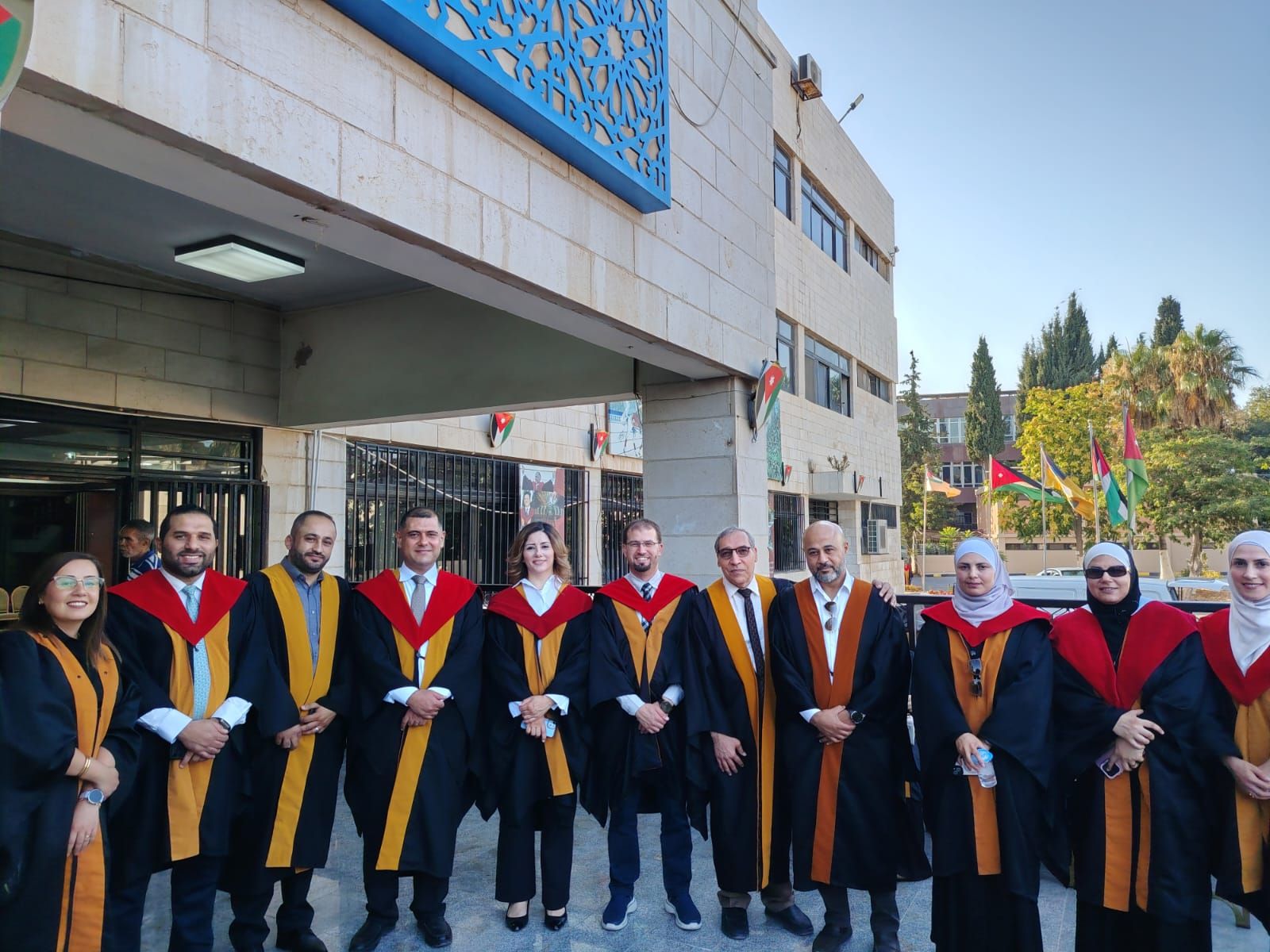
The University of Jordan has celebrated the graduation of its School of Rehabilitation Sciences Class of 2026, marking another important step in the development of the rehabilitation workforce in Jordan and the wider Middle East.
Among those recognising the occasion was Dr Huthaifa Atallah, Assistant Professor in Prosthetics and Orthotics and Assistant Dean for Clinical Training and Partnerships, who highlighted the achievements of the graduating students and particularly the newest cohort entering the prosthetics and orthotics profession.
In a post following the ceremony, Atallah described the event as a proud opportunity to celebrate students whose education he had helped support through academic teaching, clinical training and professional development.
For the regional P&O community, the graduation represents more than an academic milestone. It adds a new generation of professionally trained clinicians at a time when demand for prosthetic, orthotic and wider rehabilitation services remains significant across Jordan and neighbouring countries.
A long-established P&O education programme
The University of Jordan’s Department of Orthotics and Prosthetics was established in 1999 and describes its programme as the first and only accredited prosthetics and orthotics practitioner education programme of its kind in Jordan.
The university offers a Bachelor of Science in Orthotics and Prosthetics, comprising 132 credit hours within the School of Rehabilitation Sciences. The curriculum combines academic study with practical instruction in the assessment, design and fabrication of prostheses and orthoses.
This combination of theoretical education and workshop-based clinical training is particularly important in P&O, where graduates must develop competence not only in biomechanics and rehabilitation science but also in patient assessment, device design, fabrication, fitting and ongoing clinical management.
Atallah paid particular tribute to his P&O students, saying he was proud to have been part of their journey and encouraging them to continue learning as they begin their professional careers.
New graduates enter a changing profession
The Class of 2026 is entering prosthetics and orthotics during a period of rapid technological change.
Digital scanning, computer-aided design, additive manufacturing, advanced materials, sensor technologies and increasingly sophisticated prosthetic and orthotic systems are changing how clinicians assess patients and manufacture devices.
The University of Jordan is itself becoming increasingly involved in this transformation.
Earlier in 2026, the university announced its leadership role in NextStep, an international Erasmus+ initiative focused on innovation and training in smart prosthetics and orthotics. The three-year project is intended to strengthen education and technology transfer in P&O and connect universities with international partners.
NextStep adds an important dimension to the education of current and future clinicians. As technology becomes increasingly embedded in prosthetic and orthotic practice, universities will need to ensure graduates understand both traditional clinical principles and emerging digital systems.
Recent University of Jordan reporting describes NextStep as bringing a specialised health-technology dimension to its portfolio of international projects through a focus on smart prosthetics and orthotics.
Clinical education remains central
Technology, however, does not reduce the importance of hands-on clinical training.
A prosthetist or orthotist must still be able to assess a patient’s physical presentation, understand functional goals, identify risks, select an appropriate prescription and evaluate whether a device is achieving the required clinical outcome.
This makes partnerships between universities, rehabilitation centres, hospitals and clinical training facilities particularly important.
Atallah’s combined roles in academic education and clinical training reflect this connection between the classroom and real-world practice. Developing stronger clinical partnerships can provide students with exposure to a wider variety of conditions and help ensure that graduates enter employment with practical experience alongside their academic qualifications.
Strengthening Jordan’s rehabilitation workforce
Jordan has developed a significant rehabilitation sector serving both its own population and patients from across the region.
Maintaining that capability depends on a continuing supply of properly educated prosthetists, orthotists, physiotherapists, occupational therapists and other rehabilitation professionals.
Each graduating cohort therefore contributes directly to the sustainability of rehabilitation services.
New P&O graduates may progress into hospitals, specialist prosthetic and orthotic centres, rehabilitation organisations, humanitarian programmes, universities, research institutions or private clinical practice. Others may become involved in emerging areas such as digital manufacturing, rehabilitation engineering and assistive technology.
The profession also offers graduates opportunities to work internationally, particularly as demand for qualified P&O personnel continues across the Middle East and in humanitarian rehabilitation programmes.
Building the next generation of P&O professionals
For universities, graduation is both the end of one educational cycle and the beginning of another.
The Class of 2026 leaves at a time when expectations of the P&O profession are expanding. Future practitioners will increasingly need to combine traditional clinical competencies with knowledge of digital workflows, evidence-based practice, data, advanced componentry and multidisciplinary rehabilitation.
At the same time, the fundamentals remain unchanged: understanding the patient, selecting an appropriate intervention and delivering a device that improves function, mobility and quality of life.
Atallah encouraged the graduates to continue developing professionally and to use their skills to make a meaningful difference to patients and communities.
For Jordan’s latest generation of prosthetists and orthotists, the graduation ceremony therefore represents the beginning of a new stage — moving from education and supervised clinical training into a profession where their knowledge will directly influence people’s independence and mobility.
For the wider IMEA P&O community, the arrival of another trained cohort from one of the region’s established university programmes is equally welcome. Strong education programmes are fundamental to expanding access to safe, effective and professionally delivered prosthetic and orthotic care.
- University of Jordan – Department of Orthotics and Prosthetics
- University of Jordan – BSc in Orthotics and Prosthetics
- University of Jordan – School of Rehabilitation Sciences
- University of Jordan – NextStep smart prosthetics and orthotics project
- Erasmus+ Programme
- Dr Huthaifa Atallah – original LinkedIn post