

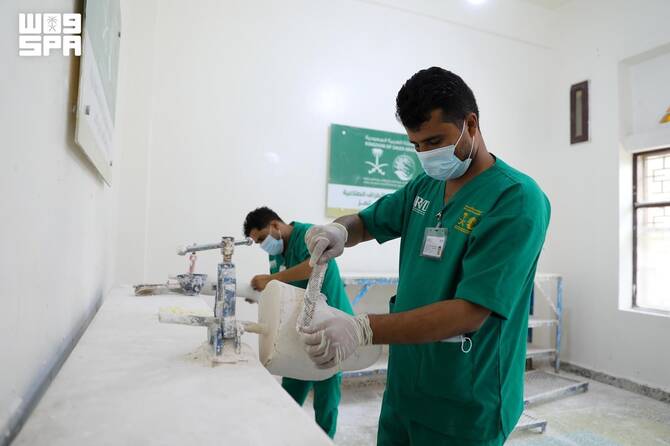
A prosthetics and rehabilitation centre supported by the King Salman Humanitarian Aid and Relief Center (KSrelief) provided 2,789 medical and rehabilitation services to 808 beneficiaries in Taiz, Yemen, during July 2026, highlighting the continuing scale of demand for prosthetic and rehabilitation care in the country.
According to figures reported by the Saudi Press Agency and published by Arab News, all 808 beneficiaries had experienced limb loss and received support through the Prosthetics and Rehabilitation Center project in the Taiz governorate.
The services delivered during the month included the supply, fitting and maintenance of prosthetic limbs, as well as physiotherapy and specialist medical consultations.
More than three services per beneficiary
The July figures underline how prosthetic rehabilitation involves considerably more than simply delivering a prosthetic limb.
With 2,789 services provided to 808 people, the programme delivered an average of roughly 3.45 individual services per beneficiary during the month.
That reflects the multidisciplinary and ongoing nature of prosthetic care. A patient may require assessment, socket fitting, alignment, component adjustment, maintenance, physiotherapy and medical review at different stages of rehabilitation.
For CPOs working in humanitarian environments, maintenance services are particularly important. Prostheses used in difficult environments may be exposed to demanding terrain, heat, dust and extended daily use, while access to replacement components and follow-up clinics can be limited.
Ensuring that established prosthetic users can return for adjustments and repairs is therefore just as important as fitting new patients.
Majority of beneficiaries were local residents
Arab News reported that 60% of beneficiaries were male and 40% female, while internally displaced people represented 18% of those receiving services. The remaining 82% were residents of the area.
The figures demonstrate that the requirement for prosthetic rehabilitation in Yemen extends beyond populations currently experiencing displacement.
Years of conflict, trauma and disruption to healthcare infrastructure have created a substantial population requiring long-term rehabilitation, and many patients need continuing access to services well after the initial cause of amputation.
For prosthetic programmes, this creates a need for sustainable local clinical capacity rather than temporary device-distribution initiatives alone.
Prosthetic maintenance remains a critical service
One of the notable aspects of the Taiz programme is the inclusion of prosthetic maintenance alongside supply and fitting.
Sockets and prosthetic components inevitably require attention over time. Residual-limb volume can change, suspension systems can wear, alignment may need adjustment and feet, joints or connecting components may eventually require repair or replacement.
Without access to these services, a technically successful initial fitting can ultimately become unusable.
Humanitarian prosthetic programmes increasingly need to consider the full lifecycle of a device: assessment, manufacture, delivery, gait training, follow-up, maintenance and eventual replacement.
This becomes particularly important in countries where patients may have travelled significant distances to access specialist P&O services.
Physiotherapy integrated with prosthetic care
The Taiz centre also provides physiotherapy, reflecting the importance of combining prosthetic fitting with broader rehabilitation.
Receiving a prosthesis does not automatically restore functional mobility. Patients may need to develop balance, strength, gait control and confidence while learning how to use the device effectively.
The collaboration between prosthetists, physiotherapists and medical teams therefore plays an important role in determining whether a prosthesis ultimately improves independence and participation.
For newer amputees, rehabilitation may also include residual-limb preparation and strengthening before definitive prosthetic fitting. For established users, physiotherapy can help address changes in gait or mobility following socket or component adjustments.
Continuing Saudi humanitarian support in Yemen
KSrelief has supported a range of healthcare and humanitarian activities in Yemen, with the Taiz prosthetics project forming part of Saudi Arabia’s continuing efforts to strengthen healthcare access and support people living with limb loss.
The latest figures provide another indication of the continuing volume of prosthetic rehabilitation required in the country.
Serving more than 800 amputees in a single month also highlights the operational demands placed on rehabilitation teams. At this scale, clinics require reliable clinical workflows, trained personnel, access to prosthetic components and materials, workshop capacity and efficient follow-up systems.
For the wider IMEA prosthetics and orthotics community, Yemen remains one of the clearest examples of why sustainable rehabilitation infrastructure is essential in countries affected by prolonged conflict.
The challenge is not simply to manufacture more prostheses. It is to ensure that patients have access to qualified clinicians, appropriate prescriptions, physiotherapy, repairs, replacement sockets and long-term follow-up.
The 2,789 services delivered through the Taiz centre during July demonstrate how that broader model of rehabilitation is being put into practice.
- Arab News – KSrelief-supported prosthetics center in Taiz serves 808 beneficiaries
- King Salman Humanitarian Aid and Relief Center
- Saudi Press Agency
- World Health Organization – Yemen
- International Society for Prosthetics and Orthotics