

The rapid growth in the use of GLP-1 weight-loss medications is drawing attention to an unusual neurological complication with direct relevance to orthotists and rehabilitation professionals: foot drop associated with common peroneal nerve compression.
Clinicians at Beacon Health System in the United States told WSBT that they are seeing more patients presenting with weakness in the foot after substantial weight loss, including some people using GLP-1 medications. The condition can begin with subtle symptoms such as a slapping gait or repeated tripping and, in more severe cases, progress to an inability to dorsiflex the foot.
The important distinction is that current evidence does not establish GLP-1 drugs themselves as a direct cause of foot drop. Instead, the suspected mechanism is rapid and substantial weight loss, which can reduce the protective fat surrounding the common peroneal nerve where it passes around the fibular head near the knee. This may leave the nerve more vulnerable to compression.
The phenomenon is often referred to as “slimmer’s palsy” or “slimmer’s paralysis” and predates modern weight-loss drugs by decades. What is changing is the number of people now achieving relatively large reductions in body weight over short periods.
Why rapid weight loss can affect the peroneal nerve
The common peroneal nerve runs close to the surface around the outside of the knee at the fibular head.
Normally, surrounding soft tissue provides some protection.
When a person loses a significant amount of weight rapidly, this cushioning can decrease. Pressure from behaviours that would previously have been relatively harmless—including prolonged leg crossing or maintaining certain positions for extended periods—may then be sufficient to compress the nerve.
WSBT quoted neurosurgeon Dr Kashif Shaikh as explaining that rapid loss of fat can reduce the tissue protecting the peroneal nerve. His team has encountered patients developing symptoms after situations such as long car journeys or prolonged leg crossing.
This mechanism is not unique to GLP-1 treatment.
Peroneal neuropathy associated with substantial weight loss has previously been documented following bariatric surgery, extreme dieting, anorexia and other causes of rapid weight reduction.
Published GLP-1 cases are now appearing
The increasing use of newer weight-loss therapies has brought the issue back into focus.
A 2026 case report described two patients without diabetes who developed acute foot drop following substantial weight loss associated with GLP-1 receptor agonist treatment. The authors described the presentations as GLP-1-associated slimmer’s palsy, although the proposed underlying mechanism remained the rapid weight reduction rather than proven direct neurotoxicity from the medication.
Earlier published reports have also described peroneal neuropathy following significant weight loss associated with tirzepatide.
These remain case reports rather than evidence of a common adverse effect.
Beacon Health clinicians similarly stressed that peroneal neuropathy remains relatively uncommon, but argued that the combination of widespread GLP-1 prescribing and increasingly rapid weight reduction means clinicians should be aware of the possibility.
What foot drop looks like clinically
Foot drop is a functional description rather than a diagnosis.
Patients typically have difficulty lifting the front of the foot during swing phase. With common peroneal neuropathy, weakness can affect ankle dorsiflexion, toe extension and eversion.
Early signs can include:
- A foot that slaps onto the floor during walking
- Increased tripping or catching of the toes
- Difficulty lifting the forefoot
- Weakness when turning the foot outward
- Numbness or tingling over the top of the foot
- Development of a higher-stepping gait to clear the toes
Beacon Health clinicians told WSBT that examination may reveal weakness in both dorsiflexion and eversion, while tapping over the affected nerve can sometimes reproduce numbness or tingling.
These symptoms warrant medical assessment because foot drop has several possible causes, ranging from peripheral nerve compression to lumbar spine pathology and other neurological disorders.
A potentially growing referral pathway for orthotists
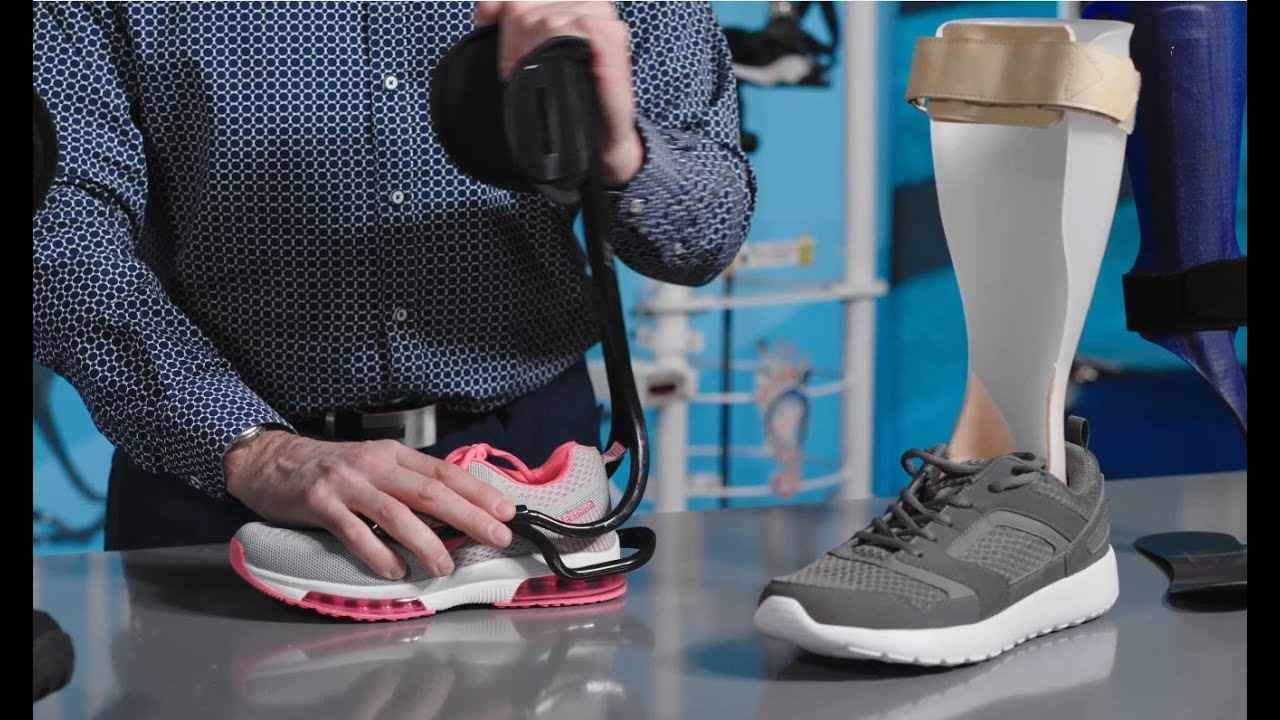
For CPOs, the issue is particularly relevant because AFOs are frequently used to manage the functional consequences of foot drop while neurological recovery takes place.
Orthotic intervention can help maintain toe clearance during swing, improve walking safety and reduce compensatory gait strategies.
The appropriate design depends on the severity of weakness, remaining plantarflexion and dorsiflexion control, knee stability, activity level and expected neurological recovery.
Some patients with relatively mild or recovering weakness may benefit from lightweight dynamic solutions, while individuals with more substantial dorsiflexor weakness may require greater control.
This creates an important role for orthotists within the multidisciplinary pathway alongside neurology or neurosurgery, physical medicine and rehabilitation, physiotherapy and primary care.
Early recognition matters
One encouraging element of compression-related peroneal neuropathy is that some patients can recover without major intervention.
Beacon Health clinicians said initial investigation can often involve clinical assessment and nerve studies rather than immediately progressing to extensive invasive testing. Lifestyle modifications aimed at avoiding further pressure on the nerve may also form part of management.
Published literature similarly describes both conservative and surgical approaches depending on the severity, duration and underlying cause of the neuropathy.
This makes early identification valuable.
A patient who begins repeatedly tripping shortly after significant weight loss may initially assume they are simply weaker or deconditioned. Clinicians treating people undergoing major weight reduction should therefore be alert to new focal weakness rather than attributing every mobility change to general loss of muscle mass.
Relevance could be considerable across IMEA
The issue has particular relevance across the IMEA region because GLP-1 and related therapies are being increasingly used in populations with high levels of obesity and type 2 diabetes.
As the number of patients undergoing major medically supported weight loss increases, rehabilitation professionals may encounter complications that were previously seen mainly after bariatric surgery or extreme dieting.
For orthotists, physiotherapists, podiatrists and rehabilitation physicians, asking about recent weight change and weight-loss medication use could therefore become useful when evaluating a patient presenting unexpectedly with foot drop.
It is equally important not to overstate the risk.
Available evidence currently consists largely of known associations between rapid weight loss and peroneal neuropathy, together with emerging case reports involving patients receiving GLP-1-based therapies. That does not mean people taking these medications should expect to develop foot drop, nor does it establish the drugs as directly damaging the nerve.
The more useful message for the rehabilitation community is awareness.
As powerful weight-loss therapies reshape obesity and diabetes management, they may also change the types of patients appearing in O&P clinics.
Sudden dorsiflexion weakness after major weight loss should prompt assessment rather than being dismissed as a normal consequence of becoming lighter.
For CPOs, it may represent another emerging area where orthotic intervention can provide immediate functional support while the underlying neurological condition is investigated and treated.
- WSBT – Foot condition a possible side effect of rapid weight loss
- PubMed – GLP-1 Receptor Agonist-Associated Slimmer’s Palsy
- NIH – Common Peroneal Nerve Paralysis Following Rapid Weight Loss
- NIH – The Tirzepatide Drop: Beware of Slimmer’s Paralysis
- IMEA CPO