

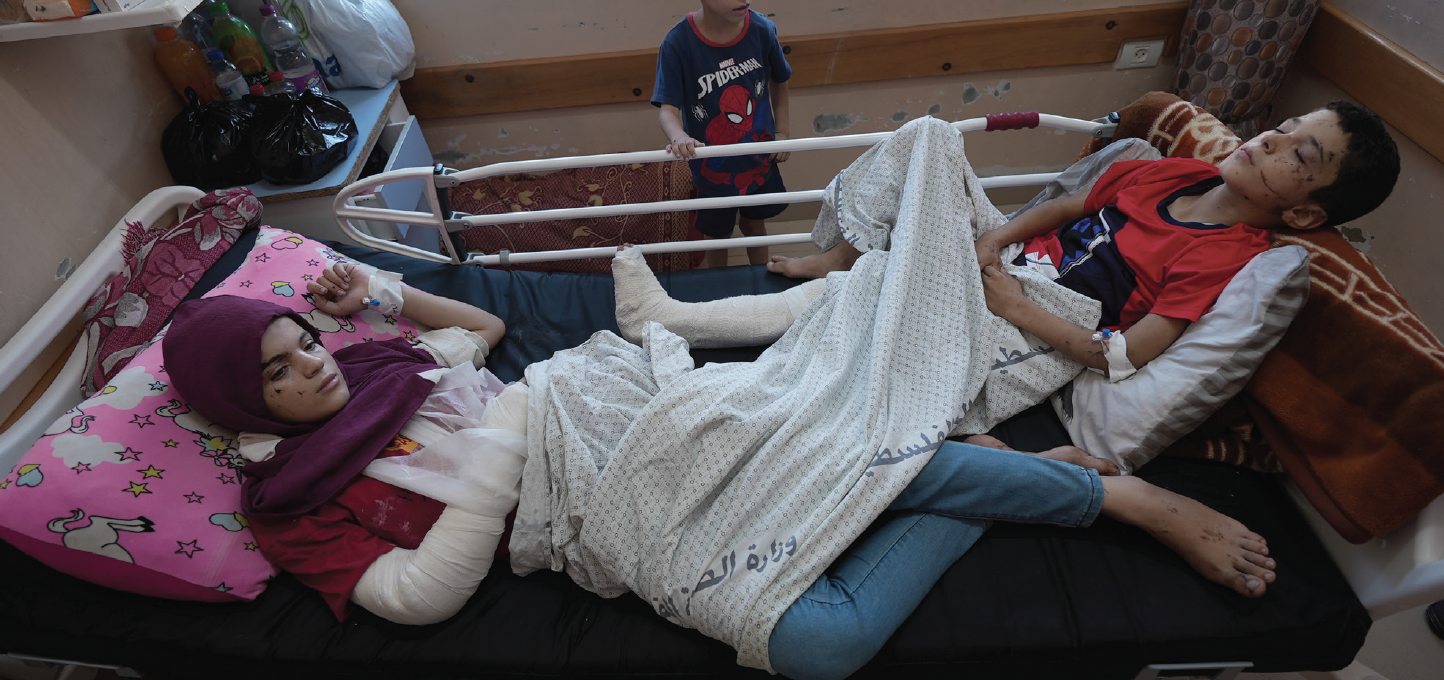
Gaza is facing an extraordinary prosthetic and rehabilitation crisis, with more than 6,600 people estimated to require care following amputation while only eight active prosthetics and orthotics technicians are available across the territory’s four functioning P&O workshops.
The scale of the challenge is detailed in the Gaza Rehabilitation Task Force Situation Report covering January to June 2026, led by the World Health Organization.
As of 27 June, the report records 173,480 people injured since 7 October 2023, of whom an estimated 43,370 have potentially life-changing injuries, including amputations, spinal cord injuries and brain injuries. Approximately 2% of Gaza’s pre-conflict population is now living with severe conflict-related injury.
For the prosthetics and orthotics community, however, one figure in the report stands out above almost all others: Gaza currently has only eight active P&O technicians, while the Rehabilitation Task Force estimates that at least 40 are required to respond to existing prosthetic demand.
More than 6,600 people estimated to need prosthetic care
According to Ministry of Health data cited in the report, 4,636 new patients with amputations have been identified since October 2023.
When combined with an estimated pre-conflict caseload of around 2,000 patients, the overall requirement now exceeds 6,600 people.
The clinical profile makes the challenge even more complex.
Around 76% of amputees have lower-limb amputations, while 32% have above-knee amputations requiring more complex prosthetic intervention. A further 225 patients require residual-limb revision surgery before their prosthetic pathway can progress.
Yet only 502 patients have so far been fitted with permanent prosthetic limbs.
This leaves thousands of people either awaiting definitive prosthetic provision, still progressing through surgical and rehabilitation pathways, or unable to access services at all.
Existing backlog could take more than three years to clear
The workforce shortage may be the single biggest barrier to resolving that backlog.
The Task Force estimates that, with only eight technicians currently working across four functional prosthetic workshops, clearing the existing caseload could take more than three years unless workforce capacity is urgently expanded.
That estimate is particularly important because the caseload is unlikely to remain static.
New amputations, revision procedures, socket replacements, repairs and paediatric growth will continue creating additional demand.
The report explicitly calls for a sustainable programme to train, retain and expand the prosthetics and orthotics workforce, while also warning that variations in salaries and incentives between organisations may be contributing to movement of personnel between providers.
For international O&P organisations considering how best to support Gaza, workforce development may therefore be every bit as important as donating prosthetic components.
Children account for 18% of amputations
The paediatric burden is another major concern.
Children account for 18% of amputations and 31% of spinal cord injuries and traumatic brain injuries recorded by the Ministry of Health. At the same time, the Task Force reports that no specialised paediatric rehabilitation service is currently available in Gaza.
For P&O providers, paediatric amputations create a particularly long-term clinical requirement.
Children require repeated socket replacement as they grow, and component prescription, alignment and rehabilitation needs change throughout development.
The implication is that Gaza’s current prosthetic requirement cannot be understood simply as several thousand initial fittings. It represents many more interventions over the coming years.
Rehabilitation capacity is overwhelmed
The wider rehabilitation system is facing similar pressure.
More than 43,000 trauma cases require ongoing rehabilitation, yet only 213 dedicated rehabilitation beds remain functional, with more than 700 high-priority patients already on waiting lists.
The report warns that damaged facilities, transportation problems, limited bed availability and insufficient community-based services are contributing to fragmented care, delayed follow-up and preventable complications such as contractures, pressure injuries and loss of function.
Around 30% of specialist rehabilitation beds are reportedly occupied by people with advanced pressure sores, further reducing capacity and increasing the likelihood of early discharge.
Prosthetic and rehabilitation supplies remain constrained
Supply-chain access is another fundamental problem.
The report states that no rehabilitation equipment intended for rehabilitation facilities entered Gaza between May 2024 and 14 April 2026, while pending assistive-product shipments had an average waiting time of 136 days as of 14 April.
Thousands of assistive devices remain held at the border, including more than 2,500 wheelchairs, while 4,250 people are on a Ministry of Health waiting list for assistive products.
The Rehabilitation Task Force is therefore calling for accelerated importation of rehabilitation equipment, prosthetics and assistive products, alongside expansion of specialist services and workforce capacity.
Four P&O workshops are functioning
Despite the scale of the crisis, some prosthetic infrastructure has been rebuilt or restored.
The capacity table on page six shows that Gaza currently has four functioning P&O workshops, compared with two before October 2023. Specialist rehabilitation capacity now also includes three hospitals providing a total of 213 beds.
However, the report makes clear that the increase in the number of workshops does not mean adequate capacity exists.
Humanity & Inclusion is operating two prosthetic service points in Khan Younis and Al-Zawayda and provided 36 temporary prostheses and 275 rehabilitation sessions for amputees during the reporting period.
Hamad Hospital for Rehabilitation and Artificial Limbs is also providing prosthetic and orthotic services alongside physiotherapy, occupational therapy, paediatric rehabilitation and other specialist services, but continues to report shortages of artificial limbs, rehabilitation equipment and spare parts.
A call for sustained international O&P support
The Task Force’s priorities are clear: increase the rehabilitation workforce, expand specialist inpatient services, accelerate the importation of prosthetic and rehabilitation supplies, improve continuity of care and strengthen patient tracking and clinical documentation.
For the IMEA CPO community, the report demonstrates that Gaza’s prosthetic crisis cannot be addressed by occasional fitting missions alone.
The territory requires trained CPOs and technicians, functioning workshops, consumables, component supply chains, paediatric expertise, rehabilitation capacity and a sustainable system for follow-up and replacement.
The headline numbers are stark: more than 6,600 people needing prosthetic care, only 502 permanent limbs fitted, and just eight P&O technicians trying to meet that demand.
Without a major expansion in professional and technical capacity, thousands of Palestinians may remain without definitive prosthetic rehabilitation for years.
- IMEA CPO
- World Health Organization – Occupied Palestinian Territory
- WHO Rehabilitation
- Humanity & Inclusion