

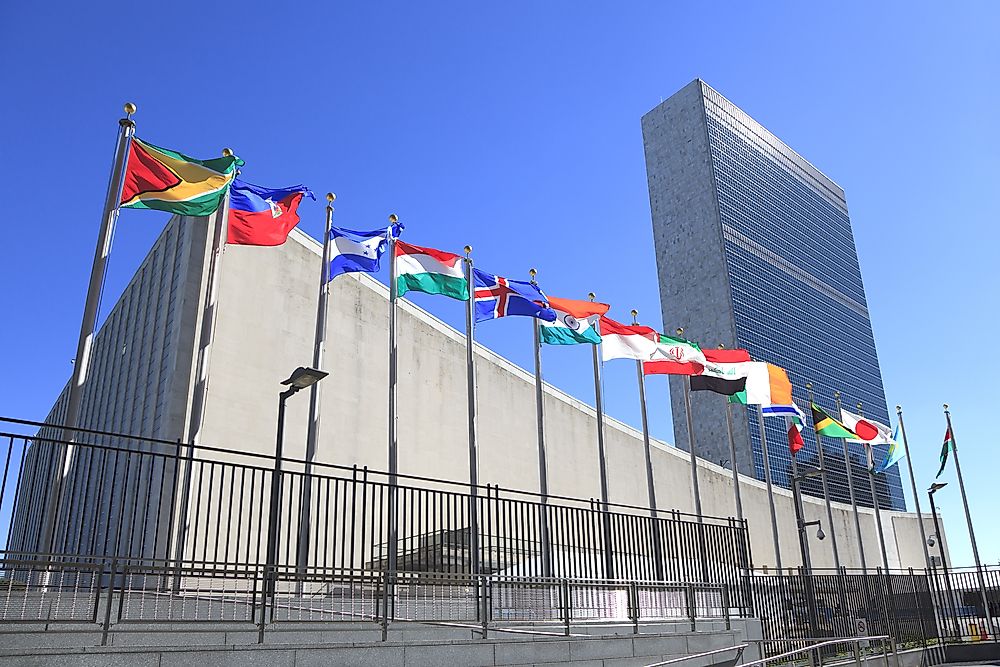
The United Nations General Assembly has adopted its first resolution dedicated to access to assistive technology, giving greater international recognition to the products and services that enable people to move, communicate, learn, work and participate in society.
The resolution, titled “Access to Assistive Technology,” was adopted by consensus on 2 September 2026 during the General Assembly’s 80th session. Pakistan introduced the initiative, which received support from more than 40 co-sponsoring Member States.
Its adoption places assistive technology more firmly within the international agendas for universal health coverage, disability rights, healthy ageing, education, employment, humanitarian response and sustainable development.
Assistive technology includes physical products such as prosthetic limbs, orthoses, wheelchairs, hearing aids, spectacles and communication devices, as well as the systems and professional services required to assess, prescribe, fit, train, maintain and repair them.
The resolution’s significance is therefore not limited to recognising particular devices. It acknowledges that access depends upon functioning national systems capable of delivering appropriate products safely and sustainably.
A major global access gap
According to the World Health Organization and UNICEF, more than 2.5 billion people currently require at least one assistive product. This figure is expected to exceed 3.5 billion by 2050 as populations age and noncommunicable diseases become more prevalent.
Almost one billion people are estimated to lack access to the products they need.
The disparity between countries is particularly severe. An analysis covering 35 countries found that access ranged from approximately 3% in some poorer nations to as high as 90% in wealthier countries.
Cost is only one barrier. People may also encounter limited awareness, shortages of qualified personnel, weak referral systems, unsuitable products, inadequate follow-up, inaccessible facilities and unreliable procurement and supply chains.
For prosthetic and orthotic users, receiving a device without the associated clinical service is rarely enough. Appropriate care may require assessment, prescription, measurement or digital capture, fabrication, fitting, alignment, gait training, adjustment, maintenance and eventual replacement.
Children require particularly responsive systems because growth can make frequent adjustments or replacement devices necessary.
What the resolution calls for
The resolution encourages governments to integrate assistive technology into health, education, employment and social-protection systems rather than treating it as a small or isolated disability programme.
Among its principal areas of emphasis are:
- Incorporating assistive technology into universal health coverage and primary healthcare
- Developing coordinated national strategies and action plans
- Establishing or reviewing national priority assistive-products lists
- Allocating appropriate public budgets
- Supporting local production, sustainable supply chains and responsible innovation
- Expanding the specialist and community-level workforce
- Improving data collection and monitoring
- Including assistive technology in humanitarian preparedness and response
- Involving users and organisations of persons with disabilities in policymaking
- Strengthening international cooperation and knowledge exchange
WHO already promotes a systems approach based on five interconnected areas: people, policy, products, provision and personnel. Its work also encourages countries to create national priority-product lists that can guide production, procurement, service provision and reimbursement. WHO’s assistive-technology programme provides tools and technical resources for this process.
Strong representation from the IMEA region
The resolution has particular relevance to the Middle East, Africa, Central Asia and South Asia, where unmet need is often compounded by conflict, displacement, poverty, long travel distances and shortages of rehabilitation professionals.
Countries from across the wider IMEA region were among its co-sponsors, including Algeria, Angola, Azerbaijan, Bangladesh, Botswana, Burundi, Chad, Egypt, Eswatini, Gabon, Ghana, Iran, Kazakhstan, Kuwait, Lebanon, Lesotho, Liberia, Malaysia, Maldives, Mali, Morocco, Oman, Pakistan, Qatar, Rwanda, Saudi Arabia, Senegal, Sri Lanka, Sudan, Tajikistan, Turkmenistan, Uzbekistan and Yemen.
This broad support is important because the region contains both rapidly developing healthcare markets and communities in which even basic rehabilitation remains difficult to obtain.
War and humanitarian emergencies have also created urgent demand for prosthetic, orthotic, mobility and communication services. Yet emergency responses do not always budget for long-term rehabilitation, device replacement or local technical capacity.
The resolution’s inclusion of assistive technology within humanitarian preparedness and response could help shift attention from the initial distribution of products towards sustained service delivery.
What it means for prosthetics and orthotics
For the P&O profession, the resolution creates a stronger policy platform from which to advocate for investment. It supports the argument that prosthetic and orthotic services should form part of essential healthcare infrastructure rather than depend primarily on charitable projects or individual out-of-pocket payments.
However, increasing access must not be interpreted simply as purchasing more devices.
A prosthesis or orthosis must be appropriate for the user, environment, clinical condition and intended activity. Poorly selected or improperly fitted products may be abandoned and can cause pain, skin damage, instability or additional functional limitations.
National implementation should therefore include:
- Education and career pathways for prosthetists and orthotists
- Recognition of professional competencies and scopes of practice
- Quality standards for products, materials and fabrication
- Fair reimbursement for clinical services, not only components
- Regional service centres linked to community and primary-care systems
- Maintenance, repair and replacement arrangements
- Outcome measurement and product-use monitoring
- Direct participation by assistive-technology users
Local manufacturing and digital production may contribute to affordability and supply resilience, but technology must remain connected to clinical governance. Scanning, computer-aided design and additive manufacturing can improve certain workflows, yet they do not remove the need for professional assessment, design approval, fitting and follow-up.
From international commitment to national action
The resolution is an important political milestone, but it does not automatically create funded services. Its impact will depend on how Member States translate it into legislation, budgets, procurement programmes, workforce plans and measurable delivery targets.
Governments across the IMEA region now have an opportunity to assess their existing systems more systematically.
Useful first steps would include measuring national need, identifying service gaps, consulting users, establishing priority-product lists and mapping the workforce and facilities already available. Countries could then develop realistic plans covering procurement, local production, clinical provision, training, repair and long-term financing.
The resolution also gives professional associations, rehabilitation organisations and organisations of persons with disabilities a new advocacy instrument. It can be used to encourage ministries of health, education, labour and social development to treat assistive technology as a shared responsibility.
The central message is clear: access to a prosthesis, orthosis, wheelchair, hearing aid or other assistive product can determine whether a person can attend school, earn an income, live independently and participate in community life.
Recognising that importance at the General Assembly is historic. The next task is ensuring that the commitment reaches the people who are still waiting.
- United Nations: General Assembly adopts text on assistive technologies
- UN draft resolution A/80/L.110: Access to Assistive Technology
- Global Disability Innovation Hub: UN General Assembly adopts landmark resolution
- WHO and UNICEF: Global access to assistive technology
- WHO: Improving access to assistive technology
- WHO: Priority Assistive Products List