

The most technologically advanced prosthetic foot may not be the one a person ultimately chooses.
A major randomized crossover study has found a striking difference between laboratory measurements and user preference when comparing three categories of prosthetic ankle-foot devices. Although a powered foot produced biomechanics that were frequently closer to those of people without limb loss, only 21% of participants selected it as their preferred option.
The findings, recently highlighted by Amplitude, raise an important question for prosthetists: what should “better” mean when biomechanics, clinical mobility tests and the experience of the person wearing the prosthesis point in different directions?
Three types of prosthetic feet compared
The peer-reviewed study published in PLOS ONE involved 91 experienced prosthesis users with unilateral transtibial limb loss. Researchers conducted the trial at four United States Veterans Affairs and military medical centres.
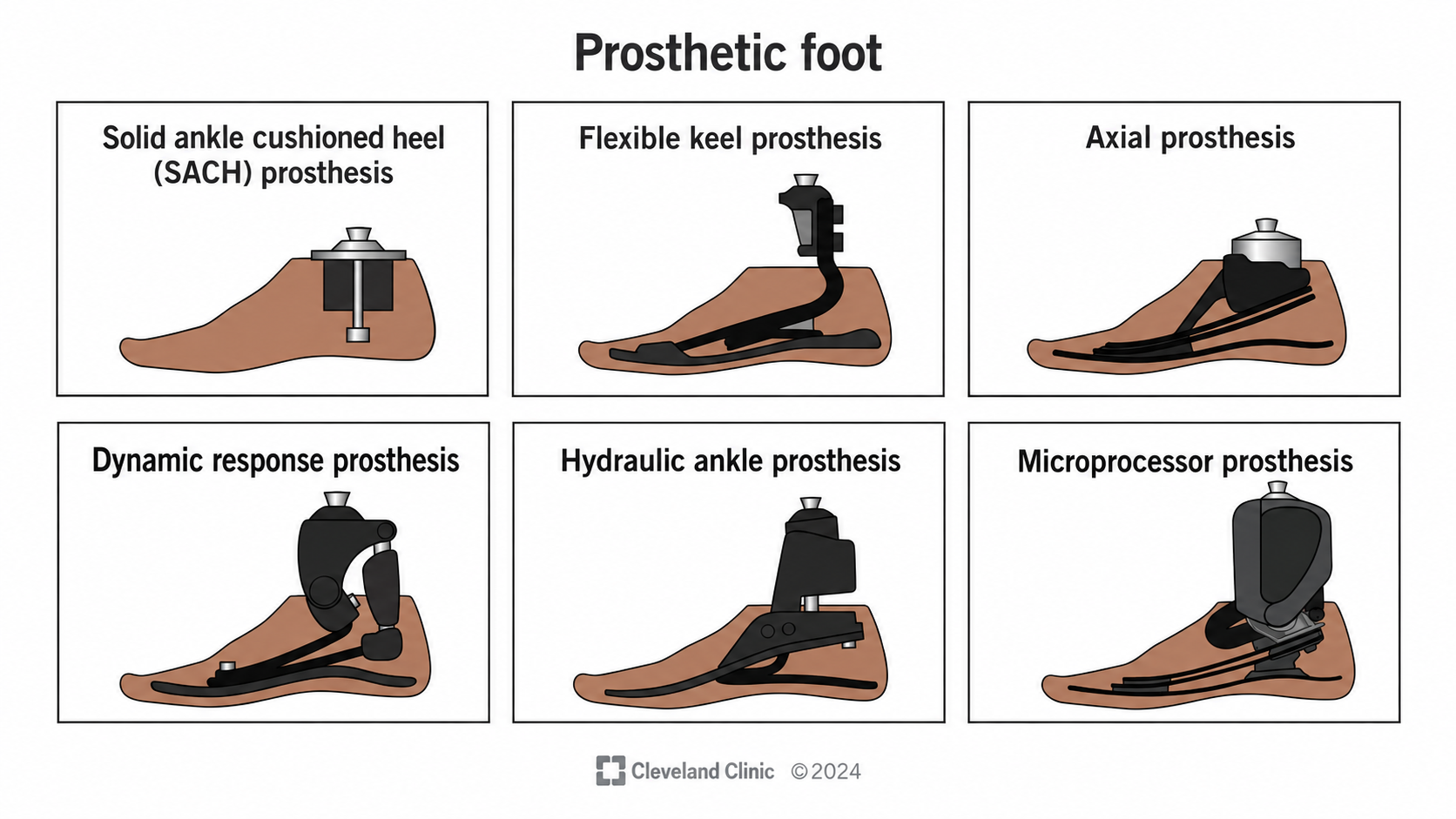
Each participant trialled three categories of ankle-foot technology:
- Non-articulating energy-storing-and-returning feet, known as ESR feet
- Articulating ESR feet
- A powered ESR ankle-foot device
Participants used each device for one week before completing mobility assessments and questionnaires. Researchers duplicated participants’ well-fitting sockets to reduce socket-related variation and provided device-specific training.
A subgroup of 29 participants also underwent detailed full-body gait analysis at controlled walking speeds.
At the end of the study, 41% preferred the conventional ESR category, 38% selected an articulating device and just 21% chose the powered foot.
Powered technology changed biomechanics
Gait analysis proved much more sensitive to differences between devices than conventional clinical mobility tests.
Of 49 biomechanical parameters analysed, 19 changed significantly according to device category. Most of these differences occurred at the ankle, including ankle range of motion, moments, plantarflexion and power generation.
Across the significant parameters, the powered device most frequently produced results closest to the control group without musculoskeletal impairment. It was closest to the control values in 20 comparisons, compared with ten for ESR feet and nine for articulating devices.
This suggests that powered technology can reproduce certain elements of ankle mechanics more effectively. However, more natural-looking biomechanics did not automatically translate into greater satisfaction or preference.
Users rated conventional ESR feet more highly
Participants rated ESR feet more favourably than powered devices for satisfaction, utility, frustration and perceived response. The powered foot also received lower scores relating to sound.
Meanwhile, widely used clinical tests detected remarkably few differences between the categories. These included the Six-Minute Walk Test, Four Square Step Test, Amputee Mobility Predictor and assessments involving stairs and hills.
The Timed Up and Go test identified a statistically significant advantage for ESR feet, but the average difference was only 0.4 seconds—well below the reported minimal detectable change of 3.6 seconds.
The results show that a person may perform similarly on a short clinical assessment while experiencing meaningful differences in comfort, confidence, responsiveness or day-to-day usability.
Technology must fit the person’s life
The study does not establish one category as the best prosthetic foot. Instead, it demonstrates why component selection cannot be reduced to a specification sheet or a single mobility score.
Powered devices may offer biomechanical advantages, but users can also be influenced by weight, sound, familiarity, charging requirements, perceived control and how a foot responds during daily activities. Cost, servicing and access to technical support may further affect whether an advanced component is practical over the long term.
These considerations are particularly relevant across the IMEA region, where prosthesis users encounter very different environments and funding systems. A component may need to cope with uneven terrain, stairs, heat, dust, long travel distances and limited access to repair facilities. In some settings, battery charging and replacement parts can be as important as laboratory performance.
For clinicians, the findings support a multidimensional approach combining physical assessment, the user’s goals, trial feedback and validated patient-reported outcome measures. Where possible, users should experience suitable alternatives under conditions that resemble their real lives rather than being assessed only on a level clinic walkway.
Important limitations
The results should not be interpreted as evidence that users generally reject powered feet.
Only one powered product—the Ottobock Empower—represented the powered category, whereas the ESR and articulating categories included a broader range of devices. Participants were also experienced, generally high-functioning prosthesis users in stable health, so the findings may not apply directly to new amputees or people with lower mobility levels.
The one-week acclimation period may also have favoured familiar technology. Most participants used their previously prescribed ESR foot during the ESR phase, giving them substantially more experience with that category than with the articulating or powered alternatives.
Nevertheless, the study provides one of the most comprehensive comparisons yet of prosthetic feet across biomechanical, functional and patient-reported domains.
Its central message is clear: advanced biomechanics and advanced technology are valuable, but neither can define a successful prescription on its own. The best prosthetic foot is not necessarily the one that looks most natural in the gait laboratory. It is the one that delivers meaningful, sustainable benefits in the life of the individual who will wear it.
- Amplitude: When the “Best” Prosthetic Foot Isn’t the Favorite
- PLOS ONE: Multisite randomized crossover trial of prosthetic ankle-foot devices
- ClinicalTrials.gov study record