 By
By
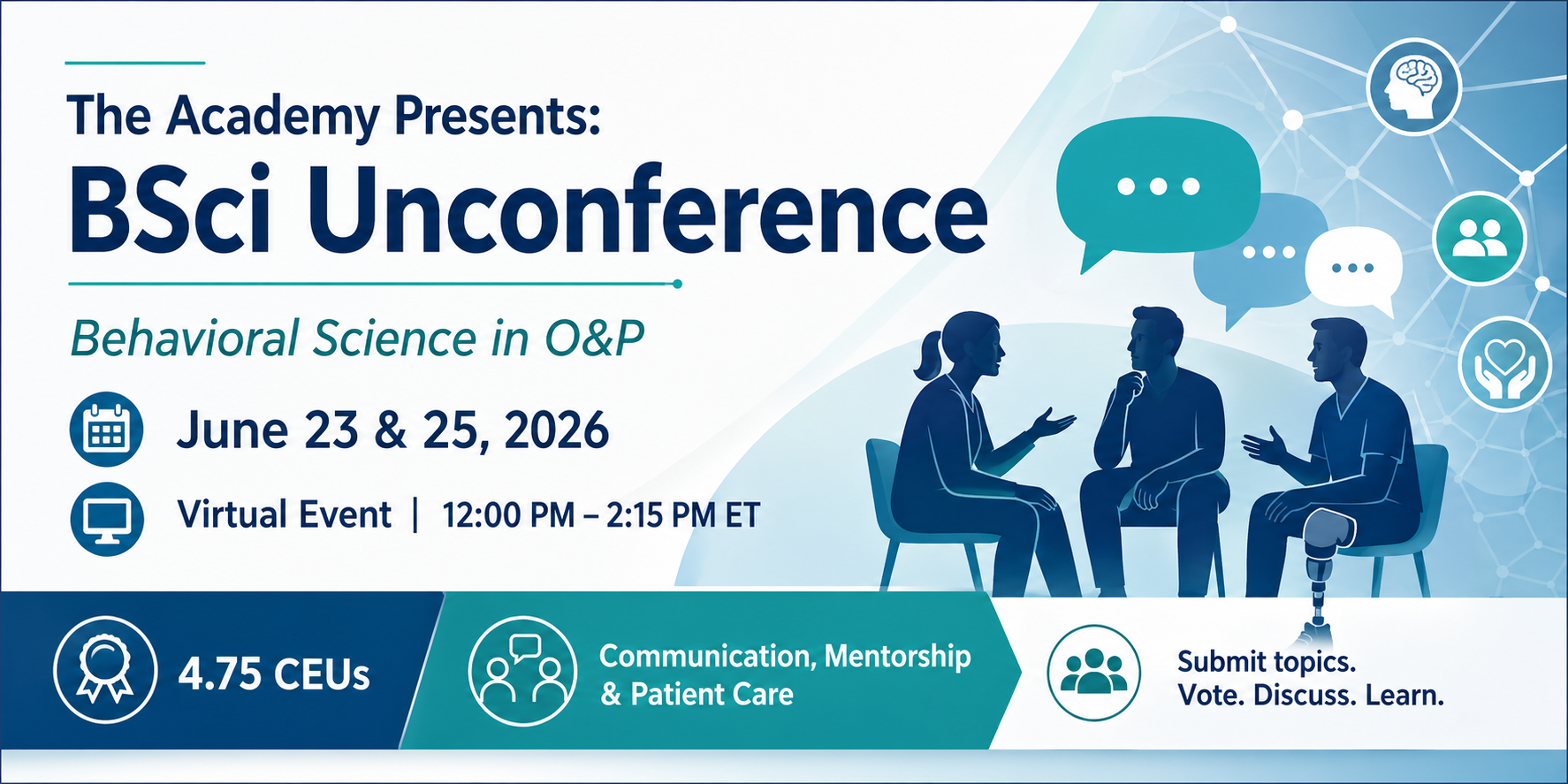
The American Academy of Orthotists and Prosthetists will host a two-day virtual Behavioral Science Unconference designed to put O&P professionals at the centre of the agenda-setting process.
The event, The Academy Presents: BSci Unconference, will take place online on June 23 and June 25, 2026, from 12:00 PM to 2:15 PM ET. The programme offers 4.75 CEUs and is structured around an “unconference” format, meaning participants help determine the final discussion topics rather than simply attending a fixed lecture programme.
For orthotists, prosthetists, technicians, educators and clinic leaders, the format is highly relevant. Many of the most difficult challenges in O&P care are not purely technical. They involve communication, expectations, trust, behaviour change, team culture, professional boundaries, feedback, mentorship and difficult conversations with patients, families and colleagues.
The Academy says the event will allow participants to submit topics, vote on submissions and engage in live peer-led discussions. Active collaborators must register and submit topics by April 19, 2026, while learning participants can register by June 21, 2026. Event access information will be sent to registered attendees by email one to three days before the event.
The discussion categories include professionalism in the workplace, interdisciplinary communication, clinical and career mentorship, giving and receiving feedback, patient education at an appropriate learning level, and difficult clinical or workplace conversations. The Academy is also inviting participants to suggest other behavioural science topics relevant to O&P practice.
This is particularly important for patient-centred prosthetic and orthotic care. A technically excellent device can still fail if the patient does not understand the treatment plan, cannot manage the device, does not feel heard, or lacks confidence in the clinical recommendation. Behavioural science helps clinicians think more clearly about motivation, adherence, health literacy, shared decision-making and communication style.
For IMEA CPO readers, the event also highlights a growing priority for the profession globally: O&P services need both technical excellence and better human-centred care systems. In busy clinics, humanitarian programmes, rehabilitation centres, government services and private practices, the ability to communicate clearly and work effectively across disciplines can directly affect outcomes.
The unconference model may also be useful for the wider O&P education community. Because participants help shape the content, the final agenda can reflect real clinical and workplace challenges rather than only top-down assumptions about what professionals need to learn. This makes the event especially relevant for practitioners who want to contribute practical experiences from daily care.
Event Details
Event: The Academy Presents: BSci Unconference
Host: American Academy of Orthotists and Prosthetists
Format: Virtual, two-day unconference
Dates: June 23 and June 25, 2026
Time: 12:00 PM – 2:15 PM ET
CEUs: 4.75
Category: Unconference
Registration: Register through the Academy event page
Registration Options
The event offers two participation routes:
- Active Collaborator: For attendees who want to submit discussion topics, vote on submissions and actively contribute to live discussions or presentations. Registration and topic submission close April 19, 2026.
- Learning Participant: For attendees who prefer to observe, listen and reflect without submitting topics or helping finalise the agenda. Registration closes June 21, 2026.
Why This Matters for O&P Professionals
The Behavioral Science Unconference is relevant because it focuses on the human factors that shape clinical success:
- How clinicians explain complex treatment options to patients and families
- How teams manage difficult conversations in clinic and the workplace
- How O&P professionals give and receive feedback effectively
- How mentorship supports clinical confidence and career development
- How interdisciplinary communication improves patient care
- How behavioural science can improve adherence, trust and outcomes
For O&P professionals, this is an opportunity to move beyond device delivery and take a deeper look at the behaviours, conversations and relationships that determine whether care actually works.