 By
By
Oman’s orthotics, prosthetics, and rehabilitation services sit within a comparatively strong, centralised public healthcare system—yet demand is rising fast due to diabetes, stroke-related disability, and an increasing need for long-term mobility support. As in many IMEA markets, the opportunity is not only about devices, but about strengthening the full pathway: referral, assessment, fabrication, fitting, physiotherapy, follow-up, and repairs—so outcomes remain consistent beyond the initial fitting.
Prevalence & demand drivers (key statistics)
Diabetes
Oman has one of the higher diabetes burdens in the region. The International Diabetes Federation (IDF) estimates for 2024:
- 17% diabetes prevalence among adults (20–79)
- ~412,300 adults living with diabetes
This is a major driver of demand for diabetic foot orthoses/offloading, protective footwear, Charcot management, and amputation prevention programs.
Stroke
Stroke remains a meaningful contributor to disability and rehabilitation needs. Oman Observer reporting (Jan 2024) notes:
- Stroke-related deaths contribute ~6.58% of total deaths, with an age-adjusted mortality rate ~39.08 per 100,000
Clinical data from a Muscat tertiary setting also highlights the risk profile: diabetes and hypertension are highly prevalent among stroke patients.
Persons with disabilities
Oman’s national e-census reporting indicates:
- 42,304 Omani citizens with disabilities (1.55% of Omani citizens) (2020 e-census, reported 2021)
(As in many countries, disability prevalence varies by definition and measurement method.)
Amputations (diabetes-linked)
Oman-specific amputee totals are not consistently published as one national figure, but the diabetic foot burden is clearly significant. An Oman Medical Journal clinical note cites Ministry of Health data indicating:
- Diabetes is responsible for ~47% of all lower-limb amputations in Oman
Oman O&P system snapshot
Oman’s model is best described as hospital-anchored rehabilitation with government-led service development and expanding infrastructure:
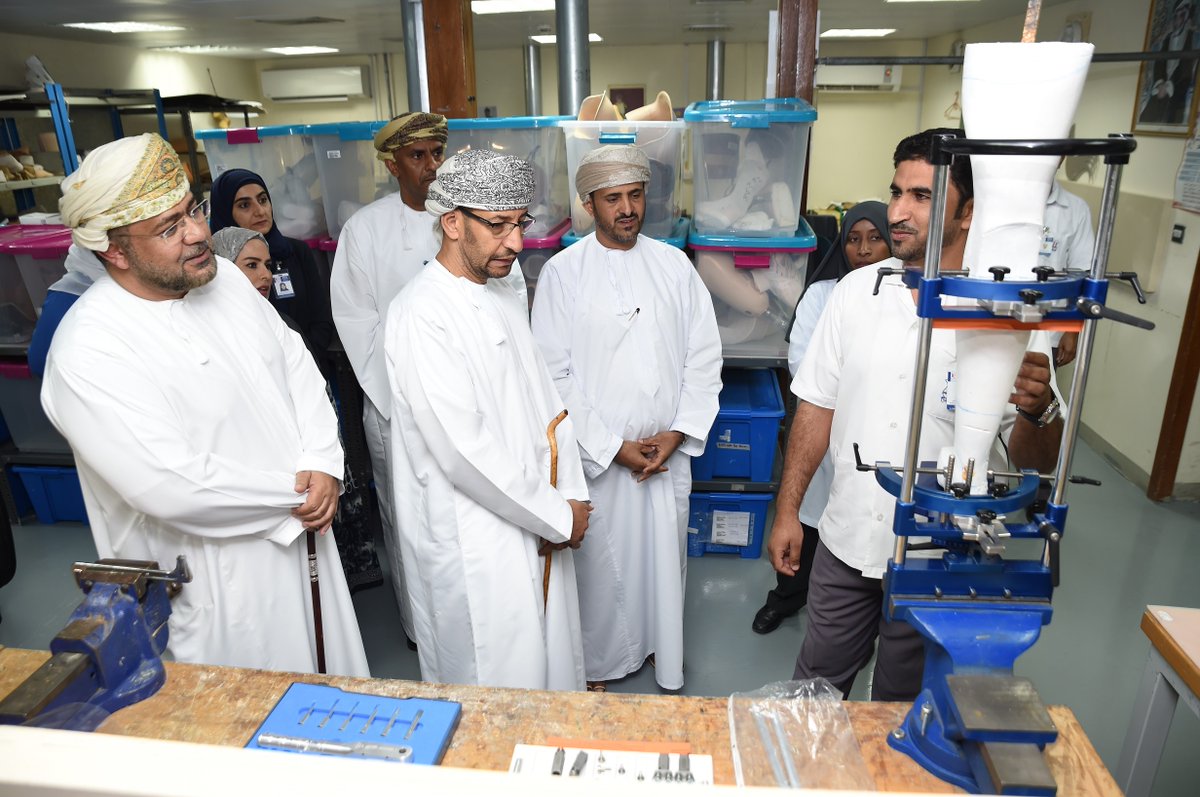
- A major national orthopaedic/trauma hub in Muscat, with dedicated prosthetics and orthotics capacity growth at Khoula Hospital
- Rehabilitation service delivery within major referral hospitals, including structured therapy programs at the Royal Hospital
- New national capacity planning: Oman’s Ministry of Health signed an agreement (Mar 2025) to establish a National Rehabilitation and Public Health Center (South Al Batinah), indicating an intent to scale services and workforce development
Top orthotic & prosthetic service providers in Oman
A practical list of the most visible service anchors and pathways:
1) Khoula Hospital (Muscat) – Prosthetics & Orthotics Department / Services Centre
A key national facility for orthopaedic and trauma care, with a dedicated P&O department and expanded infrastructure for manufacturing, fitting, and training.
2) Royal Hospital (Muscat) – Rehabilitation Services
Major referral hospital with multidisciplinary rehabilitation services supporting post-acute recovery and long-term therapy needs (critical for stroke, complex orthopaedics, and mobility care).
3) Sultan Qaboos University Hospital (SQUH) – Tertiary referral and academic care
A leading academic hospital supporting specialist care, training, and multidisciplinary pathways that interface with orthopaedics and rehabilitation demand.
4) National Rehabilitation and Public Health Center (planned; South Al Batinah)
A Ministry of Health-backed initiative to expand rehab capacity (adult/paediatric), including prosthetics-related services as described in reporting.
Key challenges
- Rising NCD burden (diabetes + stroke) is increasing the long-term orthotic and rehab caseload
- Need for stronger diabetic foot prevention-to-protection pathways to reduce avoidable amputations, given MoH-linked amputation contribution attributed to diabetes
- Ongoing pressure on repairs/maintenance capacity as device utilisation grows (especially for users outside Muscat)
Growth opportunities (what comes next)
- Scale diabetic foot services: screening + rapid offloading + protective footwear/orthoses + referral protocols (high ROI in avoided ulcers/amputations)
- Post-stroke orthotic access: earlier AFO provision and follow-up integrated with rehab teams to improve mobility outcomes
- Hub-and-spoke service design: central fabrication with regional clinics for fitting and repairs—reducing travel and improving continuity
- Workforce and infrastructure growth aligned to the planned national rehabilitation centre (training, standards, outcomes tracking)
IMEA CPO outlook
Oman is a high-potential market where the healthcare system can support standardised, outcomes-driven rehabilitation—but demand will continue to rise with diabetes at ~17% adult prevalence and ongoing stroke-related disability. The biggest near-term wins are strengthening diabetic foot prevention, expanding repair/maintenance pathways, and scaling multidisciplinary rehabilitation capacity through national investments now underway.