 By
By
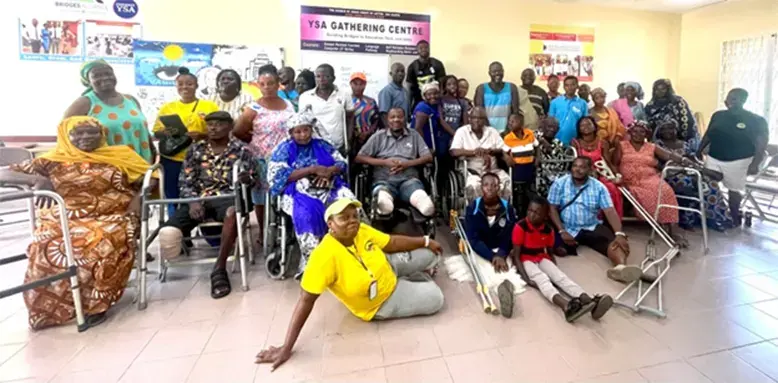
A growing call is emerging in Ghana for a more dignified, inclusive, and system-wide response to the needs of people living with limb loss.
The Smiles of Hope Foundation has urged stakeholders to rethink how amputee care is approached in Ghana, drawing attention to continuing gaps across healthcare, rehabilitation, and broader social inclusion. According to reporting by Asaase Radio, the foundation is advocating for reforms that move beyond sympathy and instead centre dignity, access, and long-term support for amputees.
The message is an important one for the rehabilitation sector. In many settings, amputee inclusion is still too often discussed only in terms of medical intervention, when the lived reality extends much further. Access to prosthetic and rehabilitation services, psychosocial support, community reintegration, and economic participation all shape whether a person with limb loss can return to an active and independent life.
Smiles of Hope’s wider work reflects that broader understanding. The Ghana-based non-profit says it has worked with at least 1,000 amputees, alongside four public hospitals, one Orthopedic Training Centre, and a multidisciplinary group of professionals including a clinical psychologist, prosthetist, social worker, physiotherapist, medical practitioner, legal expert in disability issues, and mental health professional. The organisation says its aim is to help amputees and their caregivers become better informed, better supported, and better positioned for improved quality of life.
For the O&P community, the significance of this conversation goes beyond policy language. A dignity-driven approach implies earlier referral into rehabilitation pathways, stronger coordination between surgical and prosthetic services, improved follow-up, and a greater emphasis on the social and vocational outcomes that matter to patients and families. It also reinforces the importance of listening to amputees directly when designing services, systems, and support programmes.
In Ghana, as in many IMEA markets, this kind of advocacy highlights the need for rehabilitation systems that are not only clinically capable, but also person-centred. For prosthetic and orthotic professionals, NGOs, training institutions, and policymakers, the challenge is not simply to restore mobility, but to ensure that people living with limb loss are able to participate fully in society with dignity.
The call from Smiles of Hope adds to a wider regional conversation: that amputee inclusion should not be treated as a charitable afterthought, but as a serious rehabilitation, disability rights, and public health priority.
Asaase Radio report on the Smiles of Hope Foundation call
Smiles of Hope Foundation