 By
By
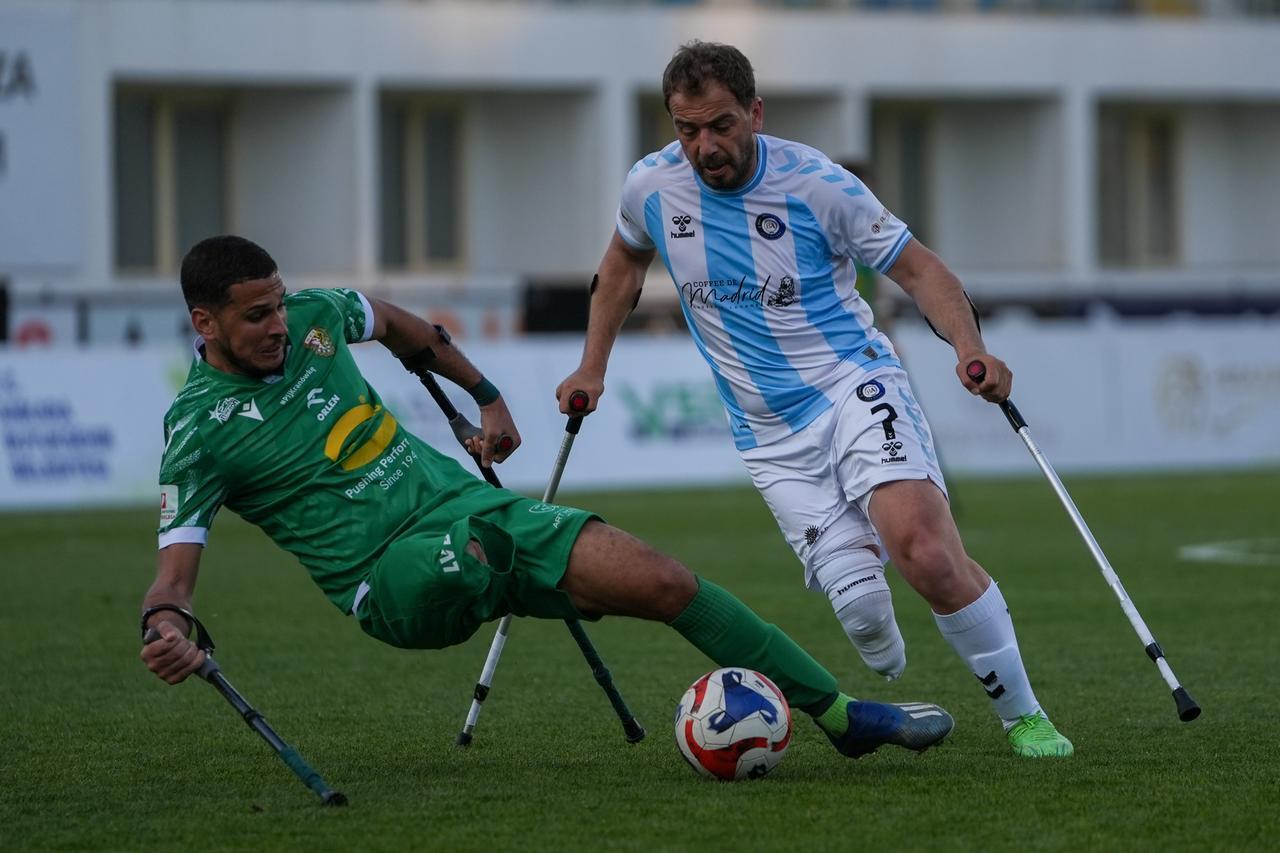
Türkiye’s Başkent Amputee Football Club have won the first-ever EAFF Amputee Football Europa League, defeating Poland’s Śląsk Wrocław 2–1 in the final in Ankara.
According to Türkiye Today, the final was played on April 25, 2026, at Etimesgut Municipality Atatürk Stadium. Başkent made a fast start when Ömer Güleryüz scored in the fourth minute, but Śląsk Wrocław responded almost immediately through Łukasz Mazurowski to level the match. Güleryüz then scored again in the 12th minute, giving the Turkish side the decisive goal in a tightly contested 2–1 victory.
The result gave Başkent the inaugural Amputee Football Europa League title and added another major achievement to Türkiye’s growing record in amputee football. The European Amputee Football Federation confirmed the final result as Başkent 2–1 Śląsk, with Italy’s Vicenza defeating Olympique 2–0 in the third-place match.
The tournament was held in Ankara from April 23–25, 2026, hosted by Başkent Ampute Futbol Gücü Spor Kulübü. EAFF described Başkent as the reigning 2025 Amputee Football Champions League winners and said the Europa League brought together six European clubs for a new international club competition.
For the prosthetics, orthotics and rehabilitation community, the result is more than a football headline. Amputee football demonstrates what coordinated rehabilitation, sport-specific training, adaptive equipment, mobility confidence and community support can make possible. It also shows how sport can shift public perception of limb loss from limitation to performance, competition and identity.
Türkiye has become one of the strongest nations in global amputee football. In 2024, the Turkish national amputee football team won the European Amputee Football Championship for the third consecutive time, beating Spain 3–0 in France. Anadolu Agency reported that the goals came from Rahmi Özcan, Ömer Güleryüz and Fatih Şentürk, underlining the depth of Turkish amputee football talent at national level.
The new Europa League title shows that this strength is also developing at club level. Başkent’s win in Ankara reflects the growth of structured amputee football beyond national teams, creating more competitive pathways for players, coaches, clubs and supporters.
For O&P professionals, amputee football also raises important clinical and technical questions. Players rely on strength, balance, endurance, upper-limb loading, skin management, residual-limb care, injury prevention and sport-specific rehabilitation. While many outfield amputee football players compete using forearm crutches rather than running prostheses during play, their wider mobility, training, recovery and daily life still depend on high-quality prosthetic and rehabilitation support.
This is why the growth of amputee football matters for the wider assistive technology sector. Competitive sport can drive innovation in prosthetic design, socket comfort, suspension, liners, rehabilitation protocols, pressure management and return-to-sport pathways. It also gives younger amputees visible role models and a reason to see rehabilitation as a route to participation, not only recovery.
Why This Matters for O&P and Rehabilitation Professionals
Başkent Amputee FC’s European title highlights several important themes for clinicians, technicians, rehabilitation providers and adaptive sport organisations:
- Amputee sport can create powerful motivation for rehabilitation and long-term mobility.
- Club-level competitions help build stronger pathways for athletes with limb loss.
- Türkiye’s success shows the value of sustained investment in adaptive sport.
- Football can help challenge stigma around amputation and disability.
- O&P services remain essential for daily mobility, training readiness, skin health and long-term participation.
- Strong rehabilitation systems can support athletes from early recovery to elite competition.
For the IMEA region, Başkent’s success is a reminder that amputee football has the potential to become a major platform for rehabilitation, inclusion and public awareness. With the right clinical support, coaching structures and community investment, sport can become one of the most visible expressions of what life after limb loss can look like.
- Türkiye Today original article
- EAFF Amputee Football Europa League
- European Amputee Football Federation
- EAFF Europa League final video: Śląsk Wrocław vs Başkent
- Anadolu Agency: Türkiye wins European Amputee Football Championship for third time in a row
- TRT World: Türkiye wins European Amputee Football Championship