 By
By
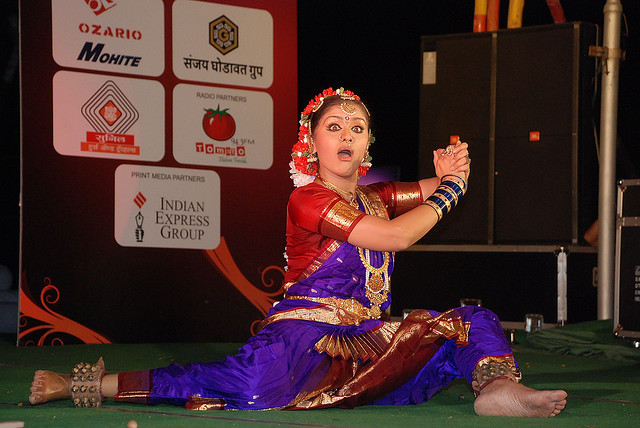
Indian dancer and actor Sudha Chandran has once again reflected on one of the most defining moments of her life: losing her leg as a teenager and rebuilding her identity through dance, family support, rehabilitation and a prosthetic limb.
In a recent Times of India report, Chandran recalled the emotional trauma that followed her amputation after a road accident when she was 16. She described how, at the time, she felt she did not want to live, but her parents refused to allow her life and dreams to end with the loss of a limb. The report highlights how their belief became central to her recovery and return to the stage.
For the prosthetics and orthotics community, Chandran’s story is more than a celebrity account of resilience. It is a clear reminder that amputation care is not only surgical or mechanical. Recovery depends on psychological support, family encouragement, rehabilitation, prosthetic access, clinical follow-up, training, and the patient’s own goals.
Chandran’s comeback was marked by a demanding Bharatanatyam performance of around three hours in front of an audience of more than 1,000 people, according to the same report. Her mother stood throughout the performance, a moment Chandran remembers as a symbol of strength, belief and shared endurance.
Her journey is closely associated with the Jaipur Foot, the low-cost prosthetic limb system developed in India and widely known for improving mobility access for people with lower-limb amputations. The Bhagwan Mahaveer Viklang Sahayata Samiti, the organisation behind Jaipur Foot services, has described Chandran as a Bharatanatyam exponent and brand ambassador connected with the Jaipur Foot story.
The Jaipur Foot has long been recognised as an important example of prosthetic innovation designed for local cultural and functional needs. Its design has been associated with the ability to support movements important in South Asian daily life, including barefoot walking, squatting and sitting cross-legged, functions that are often difficult with conventional prosthetic designs.
Chandran’s experience also became part of Indian popular culture through the Telugu film Mayuri and the Hindi film Naache Mayuri, both inspired by her life and return to dance. These films helped bring the story of amputation, prosthetic rehabilitation and human determination to a wider audience across India.
For today’s O&P professionals, her story remains relevant because it captures the real purpose of prosthetic care. A prosthesis is not simply a replacement part. It is a tool that can help a person return to identity, livelihood, performance, family life, education, sport and social participation.
In Chandran’s case, the goal was not only to walk again. It was to dance again. That distinction matters. Successful rehabilitation should be shaped around what the person wants to return to, whether that is walking to school, working in a field, managing a household, returning to employment, competing in sport, or performing on stage.
Her story is especially meaningful for India and the wider IMEA region, where access to prosthetic care remains uneven and many people still face financial, geographic and social barriers after amputation. It also demonstrates the importance of locally appropriate prosthetic solutions, affordable service models, rehabilitation training, and long-term emotional support.
Why This Matters for O&P and Rehabilitation Professionals
Sudha Chandran’s journey highlights several important lessons for prosthetists, orthotists, technicians, rehabilitation teams and assistive technology providers:
- Prosthetic success should be measured by participation, not only walking ability.
- Family and psychosocial support can be critical to recovery after amputation.
- Affordable prosthetic systems can have life-changing impact when paired with training and follow-up.
- Cultural context matters in prosthetic design, especially in regions where people squat, sit cross-legged or walk barefoot.
- Rehabilitation goals should be built around the patient’s own identity and ambitions.
- Public figures with limb loss can help reduce stigma and change how society views disability and assistive technology.
For the O&P sector, Chandran’s story is a reminder that every prosthetic limb is connected to a much larger human journey. The best outcomes occur when technology, clinical skill and personal determination work together.
- Times of India original article
- Times of India feature on Sudha Chandran and her prosthetic journey
- Jaipur Foot official website
- Bhagwan Mahaveer Viklang Sahayata Samiti leadership page
- Jaipur Foot genesis page featuring Sudha Chandran
- India Today photos: Sudha Chandran performs with specially-abled children