 By
By
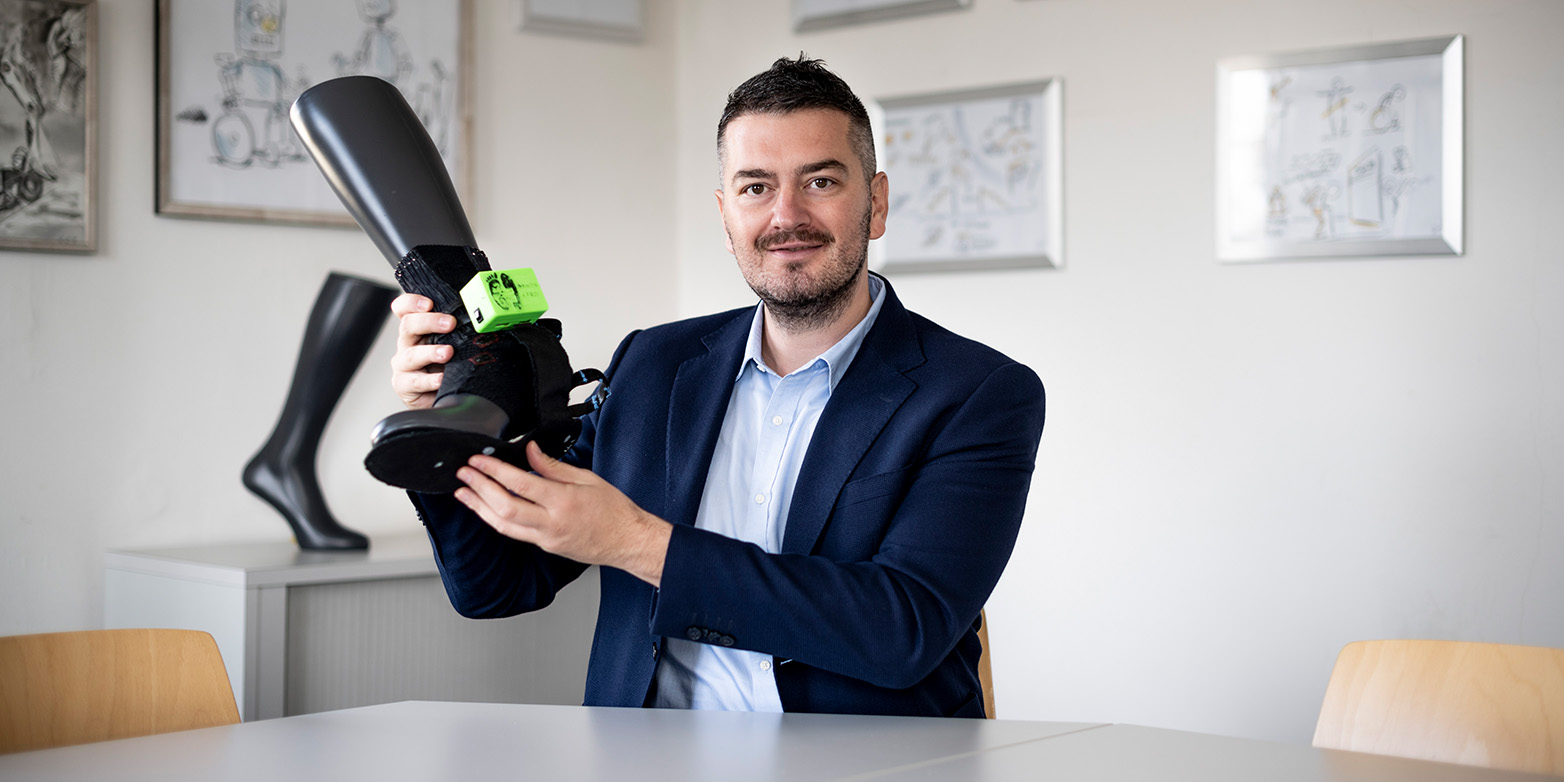
Researchers are making significant progress toward a new generation of prosthetic limbs that behave more like natural human legs. By using biomimetic signals—electrical patterns designed to mimic the body’s own nerve communication—scientists are improving the connection between the brain and advanced prosthetic devices, potentially allowing amputees to move more naturally and with less mental effort.
Teaching Prosthetic Limbs the Language of the Nervous System
When people walk, their brain and nervous system constantly exchange signals that control muscle movement and respond to sensations from the feet and legs. Conventional neuroprosthetic systems attempt to recreate this communication using simple electrical pulses delivered through implanted electrodes.
However, these artificial signals often differ significantly from natural nerve activity. As a result, users can experience unnatural sensations such as tingling (known as paraesthesia) and may find prosthetic control mentally demanding.
To overcome this limitation, researchers led by Professor Stanisa Raspopovic at ETH Zurich are developing stimulation patterns that closely imitate the signals normally produced by the body’s sensory receptors.
Simulating Natural Foot Sensation
A key tool in this research is a computer model called FootSim, which reproduces how sensory receptors in the foot respond to pressure, vibration and movement during walking.
The model was created using experimental data collected from human volunteers whose feet were stimulated at different locations while nerve responses were recorded. By analysing these responses, scientists could recreate the patterns of signals typically sent from the foot to the brain during movement.
These simulated signals are then transmitted to the user through electrodes connected to nerves in the residual limb, enabling the prosthetic device to communicate with the nervous system in a more natural way.
Early Trials Show Promising Results
In initial clinical tests involving people with lower-limb amputations, prosthetic systems using biomimetic stimulation produced encouraging outcomes. Participants were able to:
- Climb stairs more quickly
- Make fewer errors during movement tasks
- Maintain balance while performing simultaneous cognitive tasks
Researchers also observed that users could focus on other activities while walking, suggesting the brain required less effort to interpret the signals produced by the prosthesis.
These findings indicate that biomimetic stimulation may allow prosthetic limbs to integrate more seamlessly with the nervous system.
Implications for the Future of Neuroprosthetics
The work represents an important step toward neuroprosthetics that restore more natural movement and sensory feedback. By replicating how nerves communicate in biological limbs, engineers hope to develop prosthetic systems that feel more intuitive and reduce the cognitive burden often associated with advanced prosthetic control.
Beyond artificial limbs, the same principles could potentially be applied to other medical technologies, including spinal implants and brain-stimulation devices used in neurological rehabilitation.
Moving Toward Truly Integrated Prosthetics
The long-term goal of biomimetic prosthetic research is to bridge the gap between machine and biology. As scientists continue to decode how the nervous system encodes touch, pressure and movement, prosthetic limbs may eventually respond and adapt almost like natural limbs.
For people living with limb loss, that future could mean prosthetic devices that are not only functional—but truly integrated with the body’s own sensory and motor systems.