 By
By
For clinicians and engineers working in rehabilitation, orthotic design is often evaluated through clinical metrics: alignment, biomechanics, and measurable gait correction. But for many stroke survivors, the real test of assistive technology happens outside the clinic—in everyday life.
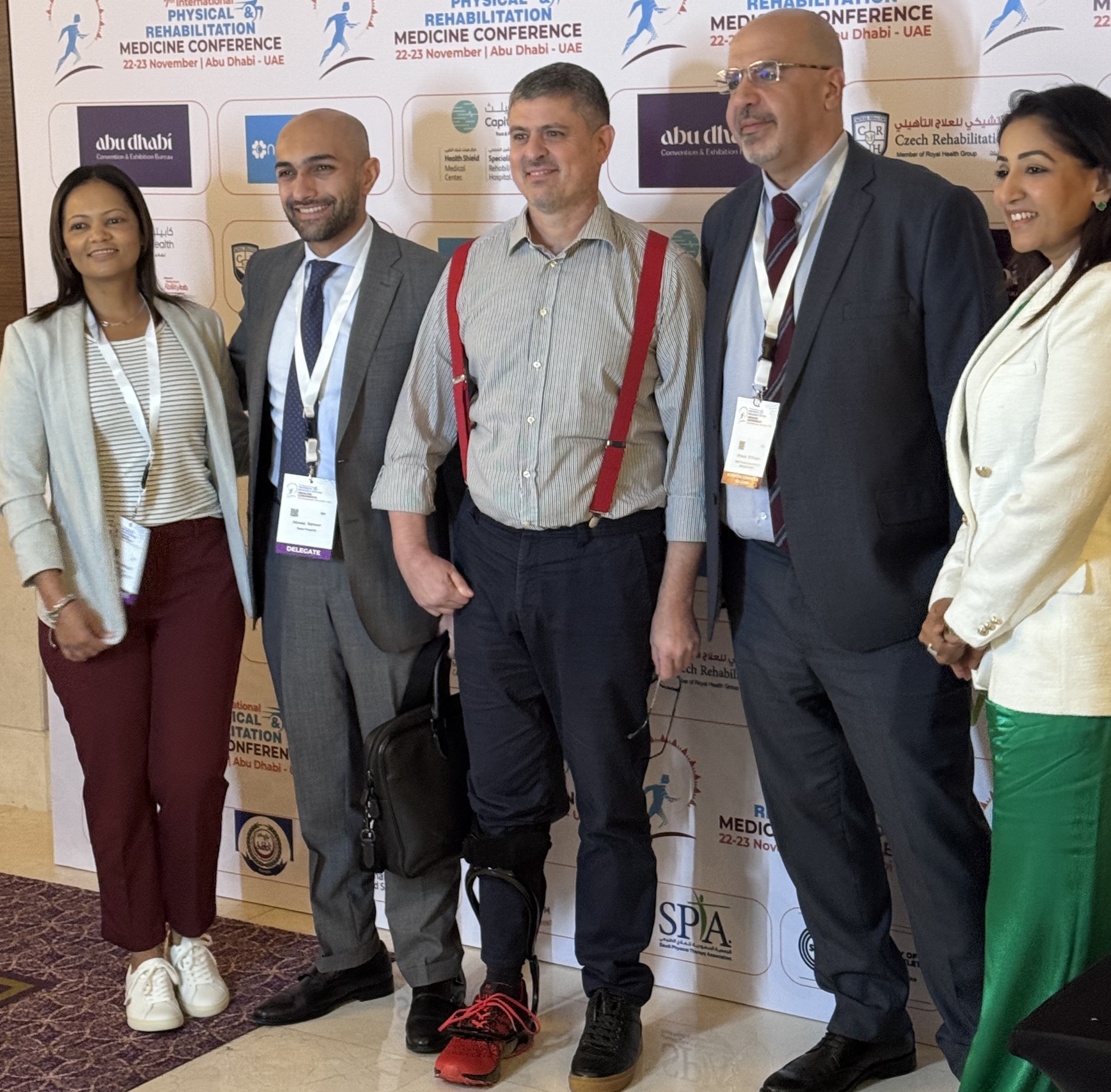
Marco Giovannoli, an aeronautical engineer, author and stroke survivor, recently shared his personal experience using different ankle–foot orthoses (AFOs) during his recovery journey. His reflections highlight an important conversation within rehabilitation: the difference between what works in controlled clinical environments and what works in real-world mobility.
Life After Stroke: Beyond the Clinic
Following his stroke, Giovannoli faced the challenge many survivors encounter—learning to walk again. During his rehabilitation he used several orthotic devices, including traditional internal AFOs made from plastic and carbon fiber, as well as an external orthotic system designed to attach to the outside of footwear.
Internal AFOs remain the most commonly prescribed orthotic solution for foot drop and post-stroke gait impairment. They are typically designed to provide precise biomechanical control by stabilising the ankle joint and guiding foot positioning during walking.
From a clinical standpoint, this approach offers clear advantages:
- Controlled alignment of the ankle and foot
- Predictable biomechanical performance
- Established prescription protocols
- Proven rehabilitation outcomes in many patient groups
However, Giovannoli notes that daily life often introduces variables that cannot easily be replicated in a clinical setting.
The Hidden Energy Cost of Mobility
Stroke survivors frequently live with reduced endurance and neurological fatigue. In this context, even small barriers to mobility can become significant.
According to Giovannoli, internal AFO systems can sometimes introduce practical challenges that are rarely discussed in clinical conversations. These may include:
- Dependence on specific footwear
- Multi-step donning procedures
- Two-handed adjustments that are difficult with hemiparesis
- Frequent refitting as gait patterns change during recovery
While none of these factors diminish the clinical effectiveness of internal AFOs, they can influence whether a device is consistently used outside therapy sessions.
For many patients, usability and energy conservation become as important as biomechanical optimisation.
A Different Approach to Orthotic Design
External orthotic devices—such as the TurboMed system—follow a different design philosophy. Rather than being worn inside the shoe, the device attaches to the exterior of footwear, providing dorsiflexion assistance while remaining independent of the shoe interior.
This design offers several potential advantages for some users:
- Compatibility with multiple types of footwear
- Simplified one-handed donning
- Reduced need for specialised shoes
- Adaptability to different walking environments
For stroke survivors who must carefully manage energy levels and functional limitations, these features can influence long-term adherence to orthotic use.
Usability Determines Real Outcomes
A central message in Giovannoli’s reflection is that assistive technology must work within the reality of everyday life. If a device is too complex, too tiring to manage, or too restrictive, it risks being abandoned—even if it performs well during clinical evaluation.
From the perspective of someone rebuilding mobility after a stroke, orthotic success may be defined less by perfect alignment and more by practical independence.
Mobility, in this sense, is not just a biomechanical outcome. It is closely linked to:
- Energy conservation
- Personal autonomy
- Psychological confidence
- Social participation
Rethinking Success in Rehabilitation Technology
For clinicians, engineers and designers working in neurorehabilitation, Giovannoli’s experience raises an important question: how should success in assistive technology be measured?
Traditional clinical metrics remain essential, but they may need to be complemented by a deeper understanding of patient experience and real-world usability.
As rehabilitation technology continues to evolve, a growing emphasis on user-centred design may help bridge the gap between clinical performance and everyday function.
Ultimately, the goal is not simply to correct gait mechanics—but to enable people to live more independently, confidently and with dignity after neurological injury.