 By
By
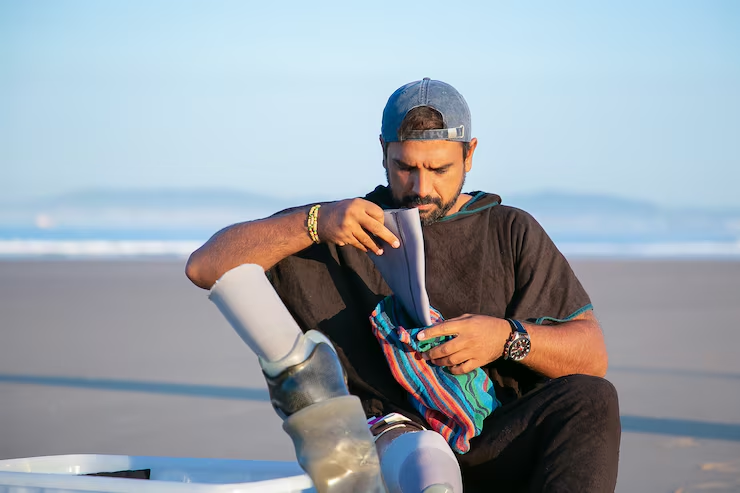
Managing heat, sweat, and skin irritation inside the prosthetic socket remains one of the most persistent challenges in lower-limb prosthetics. Traditional silicone or gel liners insulate the residual limb—a design that provides cushioning and suspension but can trap moisture and heat, leading to friction injuries, discomfort, and reduced prosthesis use. Temperature-regulating liners aim to address this socket microclimate issue to improve comfort and possibly functional outcomes for users.
The Evidence: What Does the Research Say?
A recent year-long, double-blinded crossover study compared liners enhanced with phase-change materials (PCMs) to conventional gel liners in transtibial (below-knee) amputees. PCM technology works by absorbing excess heat when a residual limb warms up and releasing it as temperatures fall, helping stabilize the thermal environment at the skin–liner interface.
Key clinical findings include:
-
No statistically significant improvements in core functional metrics such as daily step counts or distance walked when comparing PCM liners to conventional liners.
-
Some users demonstrated better gait symmetry or higher activity levels during PCM liner use, suggesting potential biomechanical benefits for certain individuals, even if group-wide measures weren’t statistically significant.
-
Clinician-reported trends and prior research indicate reduced residual limb temperatures and delayed onset of perspiration with PCM liners, which may translate into perceptible comfort improvements for users.
Clinical Interpretation:
While the current data don’t yet confirm significant functional performance advantages, the comfort trends and potential for better skin-microclimate control are noteworthy. For many patients, improved tolerance of daily prosthesis wear—including reduced sweating and skin irritation—can be as clinically meaningful as objective performance metrics. Larger studies are needed to clarify how temperature-regulating liners influence long-term skin health, activity levels, and user satisfaction.
Best Available Prosthetic Liner Solutions for Thermal and Comfort Needs
Below are three liner solutions from reputable manufacturers widely used in clinical practice. These selections focus on comfort, temperature management, and overall suspension properties.
1. ALPS Silicone Pro Liner
-
Type: Silicone prosthetic liner
-
Why it’s notable: ALPS offers a range of liners with materials engineered for comfort and thermoregulation; the Silicone Pro Liner is designed to conform to residual limb contours while allowing some natural thermoregulatory exchange due to its silicone composition and fabric construction.
-
Clinical use: A solid general-purpose liner that balances cushioning, fit, and moisture management—suitable for many transtibial patients.
2. Össur Prosthetic Liner Relax 3C
-
Type: Silicone liner from a leading prosthetics manufacturer (Össur)
-
Why it’s notable: While not PCM-specific, Össur’s liners—including the Relax and Iceross series—are designed with performance and skin health in mind. Össur invests heavily in R&D and offers a broad portfolio tailored to different activity levels.
-
Clinical use: Ideal for clinicians seeking a proven silicone liner with balanced cushioning and thermal comfort for users without phase-change technology.
3. ALPS Silicone Gel Liner
-
Type: Gel-based silicone liner
-
Why it’s notable: Gel liners—especially premium silicone gels—offer excellent shock absorption and can distribute pressure evenly, which may enhance microclimate exchange compared with thicker, non-breathable liners.
-
Clinical use: Well-suited to users with sensitive skin or high suspension needs, and can serve as an effective alternative when PCM liners aren’t available or indicated.
Recommendations for Clinicians
When to consider temperature-regulating liners:
-
Patients who report significant heat discomfort, sweating, or skin irritation inside their socket.
-
Individuals in warmer climates or with high activity levels where thermal load is a known barrier to comfort.
-
Cases where enhanced liner microclimate control could improve wear time and overall satisfaction.
Points to discuss with patients:
-
Expectations: Set realistic expectations that while comfort may improve, functional gains (e.g., walking distance) may not change dramatically.
-
Trial periods: If possible, conduct short-term wear trials to evaluate subjective comfort benefits in everyday activities.
-
Skin health monitoring: Regular checks for skin irritation, hotspots, moisture-related issues, and volume changes remain essential.
Final note:
Emerging liner technologies—especially those incorporating phase-change materials or advanced breathable designs—represent a promising direction for enhancing prosthetic comfort. Continued research, larger clinical trials, and real-world evidence will further refine selection criteria and optimize outcomes for individual patients.


.jpeg)

-1.png "Gaza Fund (1)-1")