 By
By
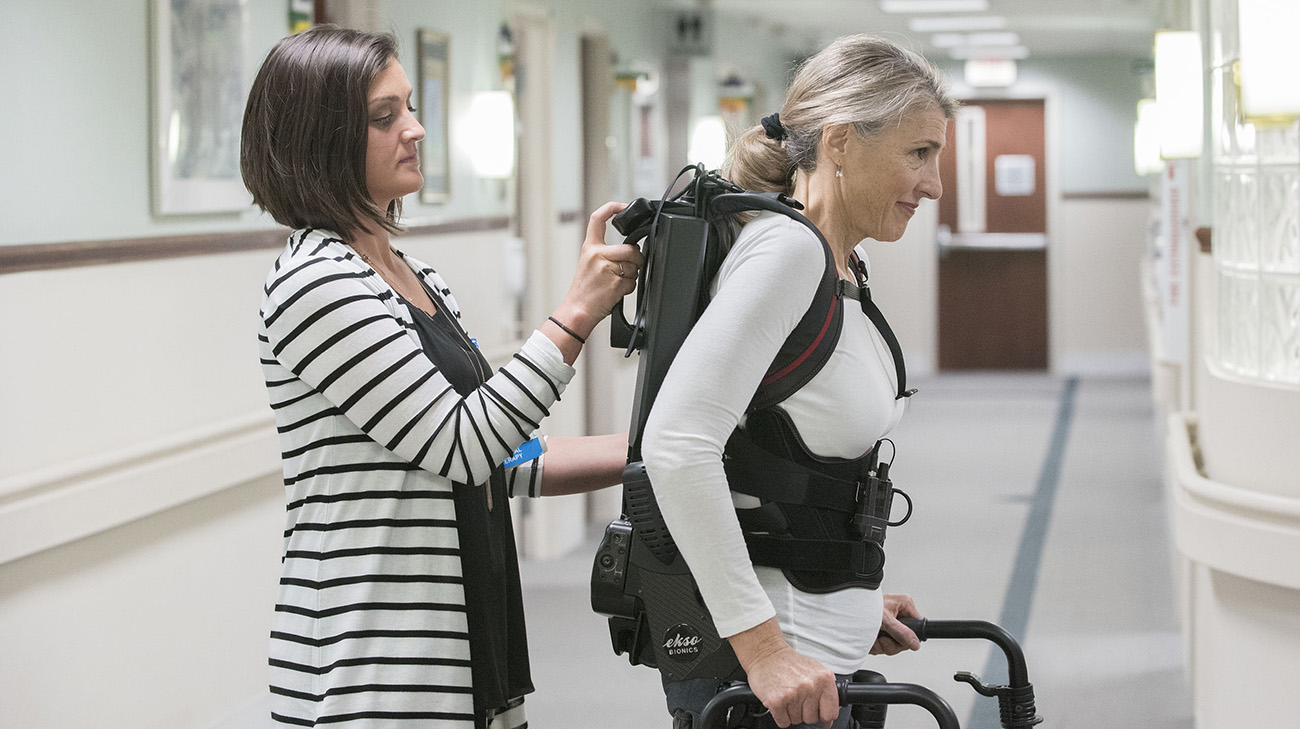
A new Cleveland Clinic study suggests that powered exoskeleton-assisted gait training can be a safe and feasible option for some people with multiple sclerosis, adding to growing interest in how robotic rehabilitation tools might support mobility in neurorehabilitation settings. The study focused on outpatient physical therapy use of a powered exoskeleton in people with MS and found that, while individual outcomes varied widely, the overall approach was workable and did not raise major safety concerns.
According to Cleveland Clinic, mobility problems affect an estimated 50% to 80% of people with multiple sclerosis, contributing to falls and reduced quality of life. That makes gait rehabilitation an important part of long-term MS management, particularly for patients with more advanced walking limitations.
The study reviewed medical records from 21 people with MS who completed physical therapy gait training using a powered exoskeleton at Cleveland Clinic’s neurorehabilitation clinic. Cleveland Clinic reported that the group was 76% female, had an average age of 56, and largely consisted of people with progressive MS who already relied on a mobility aid. PubMed’s abstract of the published paper likewise describes the work as a retrospective chart review of 21 patients undergoing outpatient gait training with a powered exoskeleton.
Patients completed between three and 85 training sessions, with a median of 11, according to both the Cleveland Clinic article and the published abstract. Five patients experienced adverse effects during the study period, but Cleveland Clinic said none of those events were serious and none forced patients to stop training. The study’s authors concluded that powered exoskeleton gait training in this setting appeared safe and feasible, but also emphasized that changes in mobility outcomes without the exoskeleton were highly variable from one patient to another.
That variability is important. The study does not appear to show that exoskeleton-assisted therapy is superior to conventional gait training. Cleveland Clinic’s coverage quotes François Bethoux, MD, as noting that exoskeleton use in MS remains relatively new compared with stroke and spinal cord injury rehabilitation, and that more research is needed to understand who benefits most and how much value the technology adds over standard therapy methods.
For IMEA CPO readers, the significance of the study lies less in a breakthrough claim and more in what it says about clinical direction. Exoskeletons are increasingly being discussed not just as impressive rehabilitation technologies, but as tools that may have a practical role for selected patient groups when integrated into structured therapy programmes. In MS, where walking ability can be affected by weakness, fatigue, spasticity, and balance problems, even feasible and safe use in a real-world outpatient setting is a meaningful step. This is an inference based on the study findings and Cleveland Clinic’s framing.
The wider rehabilitation question now is which patients are most likely to respond, how durable any gains are outside the device itself, and whether exoskeleton-supported gait training can justify its cost and workflow demands in everyday clinical practice. Cleveland Clinic’s own reporting points in that direction, presenting the findings as a platform for deeper study rather than a final answer.
That makes this an important study, but also a careful one. It supports continued interest in exoskeleton-assisted rehabilitation for MS, while stopping short of claiming that the technology is ready to replace traditional gait training methods. For clinics and rehabilitation providers, that is probably the most useful takeaway: the approach appears workable and safe, but the evidence still needs to mature.