 By
By
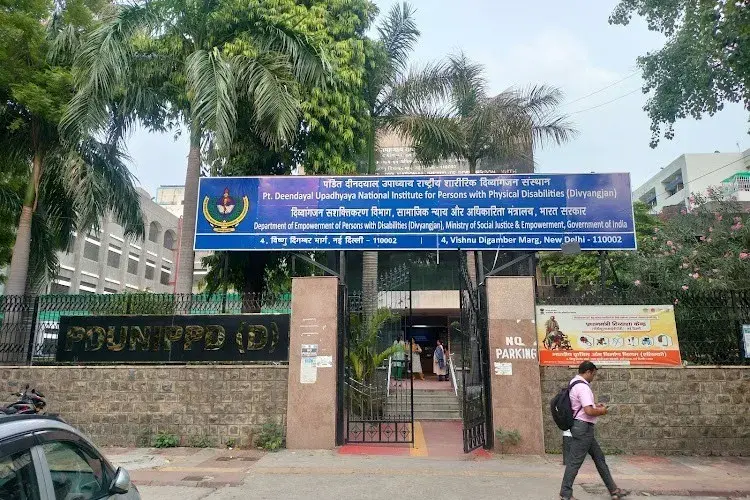
Motorica India has completed a three-day Continuing Rehabilitation Education programme at the Pt. Deen Dayal Upadhyaya National Institute for Persons with Physical Disabilities, known as PDUNIPPD, in New Delhi. The programme focused on advancements in socket technology for trans-humeral myoelectric prostheses and brought together students, clinicians, prosthetists and orthotists for practical, hands-on training.
The initiative combined PDUNIPPD’s clinical and educational expertise with Motorica’s technical input in upper-limb prosthetic technology. Participants were introduced to contemporary prosthetic systems, with an emphasis on how advanced devices can be applied in real rehabilitation settings.
Practical Training in Socket Design, EMG and Digital Prosthetic Fitting
The training included demonstrations, workshops and lab-based sessions covering socket design, material selection and device customisation. The programme placed particular emphasis on improving comfort, functional outcomes and long-term adoption for people using upper-limb prostheses.
A key element of the programme was live EMG assessment using Motorica systems. Participants were shown how muscle signals can be captured and translated into prosthetic movement, supporting a clearer understanding of patient-specific calibration, clinical fitting and rehabilitation planning.
The sessions moved from theory into application, covering casting, lamination, fitting trials, functional testing, app-based tuning and patient-training simulations. This reflects the growing role of digital tools in prosthetic care, especially as myoelectric systems become more clinically accessible and technically sophisticated.
Why This Matters for India’s O&P Workforce
For India’s prosthetic and orthotic community, the programme highlights an important shift: advanced upper-limb prosthetic care requires not only access to devices, but also structured training for clinicians, technicians and students.
Myoelectric prostheses depend on a strong relationship between socket fit, signal capture, component selection, user training and ongoing adjustment. This means the clinical team must understand both the human interface and the digital control system. Poor socket design or inconsistent EMG capture can limit function, even when the device itself is technically advanced.
PDUNIPPD’s Prosthetics and Orthotics department describes the profession as a blend of clinical and technological skills, including patient assessment, custom design, fabrication and fitting of prostheses and orthoses. This makes programmes like this particularly relevant for preparing students and practising clinicians to work with newer generations of prosthetic technology.
Building on Previous Training Initiatives
The Delhi programme builds on Motorica India’s wider educational activity in the country. According to the report, Motorica previously held an advanced training session at Mobility India Institute in Bengaluru, covering emerging technologies such as photogrammetry alongside practical workshops.
Motorica India’s own platform describes the company as focused on research and development in modern medical technologies and the production of functional prostheses. Its upper-limb prosthetic portfolio includes active and bionic hand solutions for people with amputations and congenital limb differences.
Industry and Academic Collaboration
The CRE programme attracted certified prosthetists and orthotists, final-year students, postgraduate students and academic faculty from across India.
G. Pandian, Head of the Department of Prosthetics and Orthotics at PDUNIPPD, said continuous upskilling is becoming increasingly important as prosthetics changes rapidly. He noted that the training programme helps prepare the next generation of prosthetists and orthotists with practical skills and confidence to work with modern technologies.
Kavinder Beniwal, Chief Operational Officer of Motorica India, said the company’s goal is to make advanced prosthetic solutions more intuitive, reliable and connected to the lives of users. He described the collaboration with PDUNIPPD as part of a shared commitment to learning, innovation and improved independence for Divyangjan.
IMEA CPO Perspective
For IMEA CPO readers, this programme is a useful example of how industry-academic collaboration can support the next phase of prosthetic service development. Across India, the Middle East and Africa, the challenge is not only to introduce advanced devices, but to ensure that clinicians and technicians have the training, confidence and infrastructure to use them safely and effectively.
Advanced myoelectric prosthetics require a full clinical pathway: assessment, casting, socket design, EMG site identification, fabrication, fitting, calibration, patient training and follow-up. When these steps are taught together, students and clinicians gain a more realistic understanding of how technology performs outside the classroom or showroom.
The Motorica India–PDUNIPPD programme also reinforces a wider point for the region: innovation in O&P must be paired with workforce development. Without skilled clinicians and technicians, even the most advanced prosthetic systems may fail to deliver their full benefit to patients.