 By
By
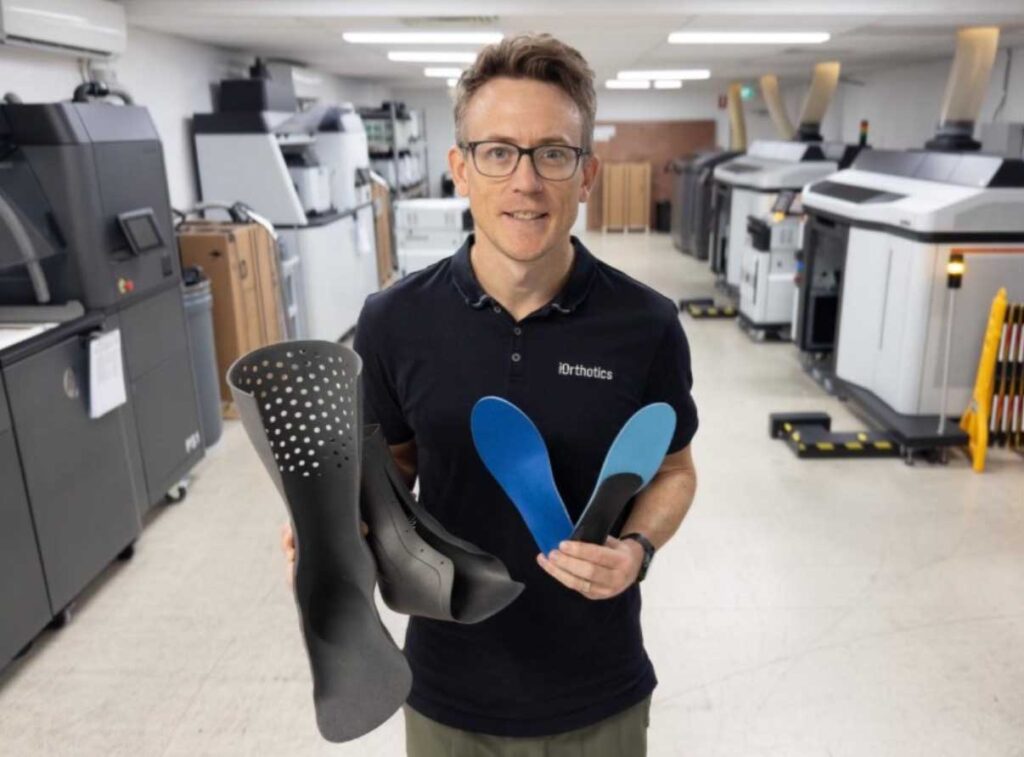
I am regularly asked, “Why 3D printed?” There are obvious environmental and manufacturing benefits, although speaking from my clinical perspective–it is the design freedom that is most important. The ability to have an unrestricted design envelope, being able to design and manufacture devices lighter, thinner, fully-custom and quicker are just a few of the benefits. It also enables the modification of orthotic designs and thicknesses based on individual patient requirements.
When it comes to Ankle-Foot Orthoses (AFOs), University of California Biomechanics Laboratory devices (UCBLs), Supramalleolar Orthoses (SMOs), custom braces and even foot orthotics–fitting into footwear has always been an issue. Traditional manufacturing methods can restrict patients to a select range of orthopedic footwear. Devices have historically been bulky, thick and not overly aesthetically pleasing. 3D digital design and 3D printing allows us to reshape this approach with new, innovative orthotics that were previously unattainable and fit better into a wider range of shoes. At the end of the day, it is patient compliance and positive outcomes that drives us as clinicians.
We’re continually looking at how we can improve our orthotic devices at Performance Labs, powered by iOrthotics. We look to improve orthotic designs, materials, manufacturing methods and turnaround times. Our introduction of 3D Printed Polypropylene into our orthotic shell range is a direct result of years of targeted research and development with our clinical partners and the University of Queensland–driven by real-world feedback from both clinicians and patients.
Available for Custom Foot Orthotics, SMOs, UCBLs and AFOs, 3D Printed Polypropylene (PP) brings a host of benefits. We’ve made sure this material works the way clinicians expect.
- It grinds and heat-molds like traditional extruded polypropylene.
- It is 15% lighter than current 3D printing materials, helping reduce device weight without sacrificing durability.
- Compared to milled PP, each pair of foot orthotics reduces waste by approximately 4 lb.
- Overall shell production waste is reduced by around 90% (compared to other 3D printed materials).
Because Performance Labs and iOrthotics are led by clinicians–podiatrists, orthotists, and pedorthist–we keep patient outcomes at the centre of every innovation. Our collaboration with the University of Queensland has ensured this material is clinically relevant, mechanically sound, and ready for daily use. We believe the future of orthotics lies in clinician- and patient-led design innovation, with a strong focus on sustainability–and this material delivers on all fronts.
Adding 3D Printed PP to our orthotic range isn’t just a technical upgrade–it’s a reflection of our purpose-driven approach to innovation, designed to enhance your workflow and prioritize what matters most: patient outcomes. All of our products are designed, manufactured and hand-finished right here in the USA, with a fast 5-day turn around on digitally scanned foot orthotics and all backed by our Performance Fit Guarantee.
It’s all part of our commitment to delivering high-quality, reliable orthotic solutions–quickly, sustainably, and with the confidence that comes from being clinician-led.
By Dean Hartley (Podiatrist & Adjunct Engineering Fellow–University of Queensland)






.jpeg)

-1.png "Gaza Fund (1)-1")