 By
By
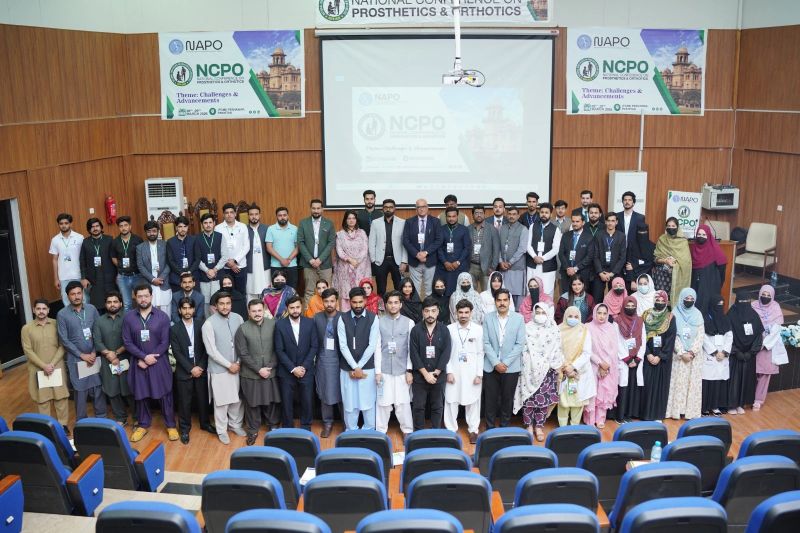
The first day of the National Conference on Prosthetics and Orthotics Sciences (NCPO 2026) in Peshawar has marked an important moment for Pakistan’s rehabilitation sector, bringing together a broad gathering of prosthetics and orthotics professionals in what appears to be one of the country’s most visible recent national O&P meetings.
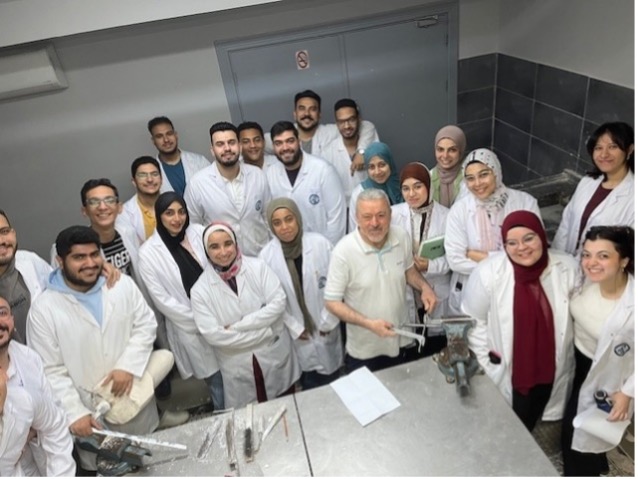
A group photo shared from the opening day captured what organisers described as a remarkable gathering of professionals, underlining both the scale of participation and the growing sense of momentum around Pakistan’s P&O community. (oppak.com)
That matters because Pakistan’s O&P sector is at an important stage of development. The country already has established institutions such as the Pakistan Institute of Prosthetic and Orthotic Sciences (PIPOS) in Peshawar, which has long played a major role in training and service development, while newer academic progress is also visible. In late 2025, Khyber Medical University’s Institute of Physical Medicine & Rehabilitation received approval to launch MS Prosthetics & Orthotics and MS Occupational Therapy programmes, a step reported as the first of its kind in Pakistan. Together, these developments suggest a profession that is becoming more academically structured and more visible nationally. (pipos.gov.pk, pni.net.pk)
In that context, the opening-day group photo carries more meaning than a standard event image. It signals professional identity, national coordination, and the visible presence of a field that often works quietly behind the scenes of rehabilitation. For orthotists and prosthetists in Pakistan, such a gathering is important not only for networking, but for building stronger links between clinical practice, education, research, and advocacy. This is an inference based on the stated aims of the conference and the current stage of sector development in Pakistan. (oppak.com)
The conference’s focus on both challenges and advancements is also especially relevant. Across Pakistan, rehabilitation demand remains significant because of trauma, congenital conditions, limb loss, clubfoot, neurological disability, and broader assistive technology needs. Institutions in Peshawar, including rehabilitation programmes linked to PIPOS and service centres in Khyber Pakhtunkhwa, have long worked under pressure to meet substantial need. A national conference creates space to discuss not just devices and techniques, but also workforce development, access, training quality, innovation, and professional recognition. (pipos.gov.pk)
For IMEA CPO readers, NCPO 2026 is notable because it reflects a wider shift seen across emerging rehabilitation markets: the profession grows faster when it has visible meeting points, stronger academic pathways, and a clearer collective voice. Pakistan’s O&P sector may still face many challenges, but a national gathering of this kind suggests increasing confidence, stronger professional cohesion, and a willingness to shape the sector’s future more actively. That conclusion is an inference, but it is well supported by the event’s national framing and the parallel academic developments underway in the country. (oppak.com, pni.net.pk)
The first day of NCPO 2026 therefore stands as more than a conference opening. It is a visible reminder that Pakistan’s prosthetics and orthotics community is organizing, connecting, and building a stronger professional foundation for the years ahead.