 By
By
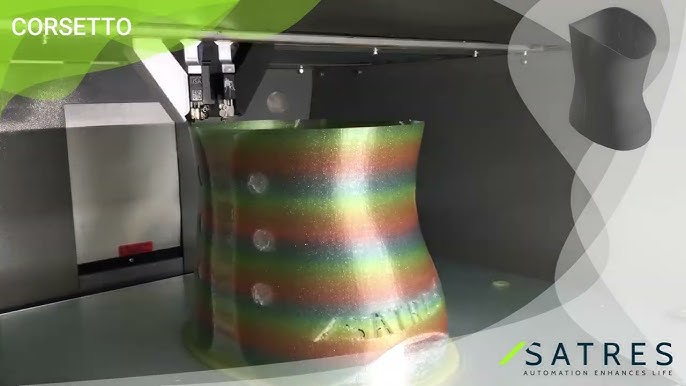
For many orthotics providers, the question is no longer whether digital spinal fabrication works. The real question is whether it can make financial sense at clinic or lab level. With the Satres Helios HS Ortho positioned at a printer cost of $32,000, the business case depends on one simple idea: if a service can produce spinal braces faster, with lower waste, and with fewer manual production bottlenecks, then the printer stops being a technology purchase and starts becoming a capacity and margin tool.
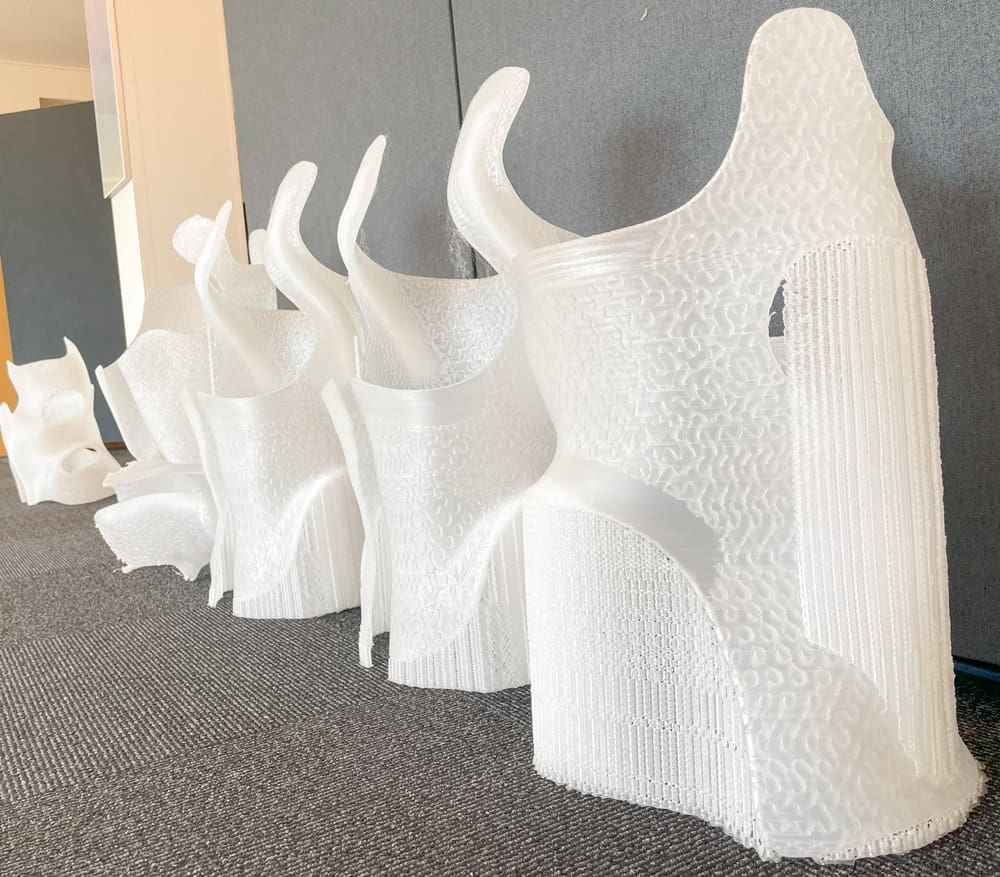
That argument is helped by the Helios’ published positioning. Qaadir describes the Satres Helios HS Ortho as a machine designed to “revolutionize 3D printing in orthopedics,” with the ability to print orthopedic corsets up to 5× faster than traditional 3D printers, completing them in 6–10 hours instead of 30–40 hours, while reaching print speeds of up to 500 mm/s. Qaadir also says the system offers lower production costs than plaster casting or milling because of reduced material waste, streamlined workflows, and higher productivity.
Those claims matter because spinal services are often constrained by three things: turnaround time, technician labour, and remake risk. A digital spinal workflow can shorten the path from scan to finished brace, reduce dependence on traditional manual fabrication steps, and make it easier to standardize output across cases. The Helios is also built around a large-format orthopedic workflow, with a published print volume of 600 × 600 × 800 mm, 50 μm resolution, extruders up to 400 °C, a heated bed up to 90 °C, and support for up to four extruders with automatic switching. In practical terms, that makes it suitable for full-size orthopedic devices rather than only small accessory parts.
So how does that translate into ROI?
The most useful way to think about the printer is not through total brace selling price, but through contribution per case. In other words: after material, labour, and routine production costs, how much gross contribution does each spinal case generate toward recovering the machine investment?
Using the user-supplied printer cost of $32,000, the payback math is simple:
- At $250 gross contribution per brace, the printer pays back after 128 cases
- At $400 gross contribution per brace, the printer pays back after 80 cases
- At $600 gross contribution per brace, the printer pays back after about 54 cases
Those are not market prices; they are planning scenarios. The actual number depends on your clinic model, your country, whether you bill brace design separately, and whether scanning, fitting, review, and follow-up are charged as part of the same episode.
What matters is that the breakeven threshold is not impossibly high. A clinic or lab producing:
- 8 spinal cases per month at $250 contribution per case would recover the printer in about 16 months
- 12 cases per month at $400 contribution per case would recover it in about 6.7 months
- 20 cases per month at $400 contribution per case would recover it in about 4 months
- 15 cases per month at $600 contribution per case would recover it in about 3.6 months
This is where the Helios’ speed becomes commercially important. If a printer can genuinely bring corset print time down to 6–10 hours, compared with the much longer print times Qaadir cites for other systems, then a service can potentially move from “digital showcase capability” to “repeatable production capacity.” Faster cycle times do not just save time; they increase the number of cases a single machine can support each month.
The second source of ROI is waste reduction. Qaadir explicitly frames the Helios as lower cost than plaster casting or milling because of reduced material waste and more streamlined workflows. For spinal labs, that can be significant. Traditional brace pathways often carry hidden cost in plaster, manual finishing time, repeated adjustments, storage, and technician dependency. A cleaner digital pathway can reduce some of that operational drag, even before the first “extra” brace is sold.
The third source of ROI is service expansion. This machine is not limited to spinal work. Qaadir also lists braces and orthoses, custom helmets, orthopedic insoles, and prosthetics among the supported use cases. That means the printer can potentially support a broader digital fabrication strategy after the spinal service is established. In business terms, this matters because the printer does not have to earn back its cost through scoliosis or spinal corsets alone. It can become a shared production asset across multiple custom orthopedic lines.
For IMEA CPO readers, this is especially relevant in markets where there is strong unmet demand for scoliosis management, trunk orthoses, and pediatric spinal care, but where traditional fabrication capacity is limited or too slow. A digital spinal fabrication service built around scanning, CAD, and in-house printing can create competitive advantage in four areas: speed, consistency, visibility, and referral confidence. If a clinic can promise faster delivery, reproducible digital records, and a more modern patient experience, that can strengthen referral relationships with orthopedic surgeons, pediatricians, rehabilitation physicians, and physiotherapists.
Still, the ROI case should be treated honestly. The $32,000 printer cost is not the full startup cost. A real service model may also need:
- a scanner
- CAD workflow
- staff training
- post-processing tools
- service and maintenance budget
- marketing and referral development
- working capital for materials and fittings
That means the true project investment may be higher than the printer alone. On the other hand, the printer itself is often the largest visible capital line, so it remains the simplest benchmark for deciding whether the service is commercially viable.
The smarter way to evaluate the Helios, then, is this: if your clinic can consistently generate enough spinal cases to produce at least $400 of contribution per case on 10 to 15 cases a month, the printer can plausibly pay for itself within the first year. If your case flow is lower, the business case becomes harder unless you also plan to use the machine for orthoses, helmets, insoles, or other custom devices. That conclusion is a business inference based on the machine’s published capabilities and the math above, not a promise of guaranteed returns.
In other words, the Satres Helios is not automatically an ROI story just because it is fast. It becomes an ROI story when three things are true: you have clinical demand, you have a disciplined digital workflow, and you treat the printer as a production platform, not just a technology statement piece.
For providers who can do that, a $32,000 Helios may be less a cost than a route into a scalable digital spinal fabrication business.