 By
By
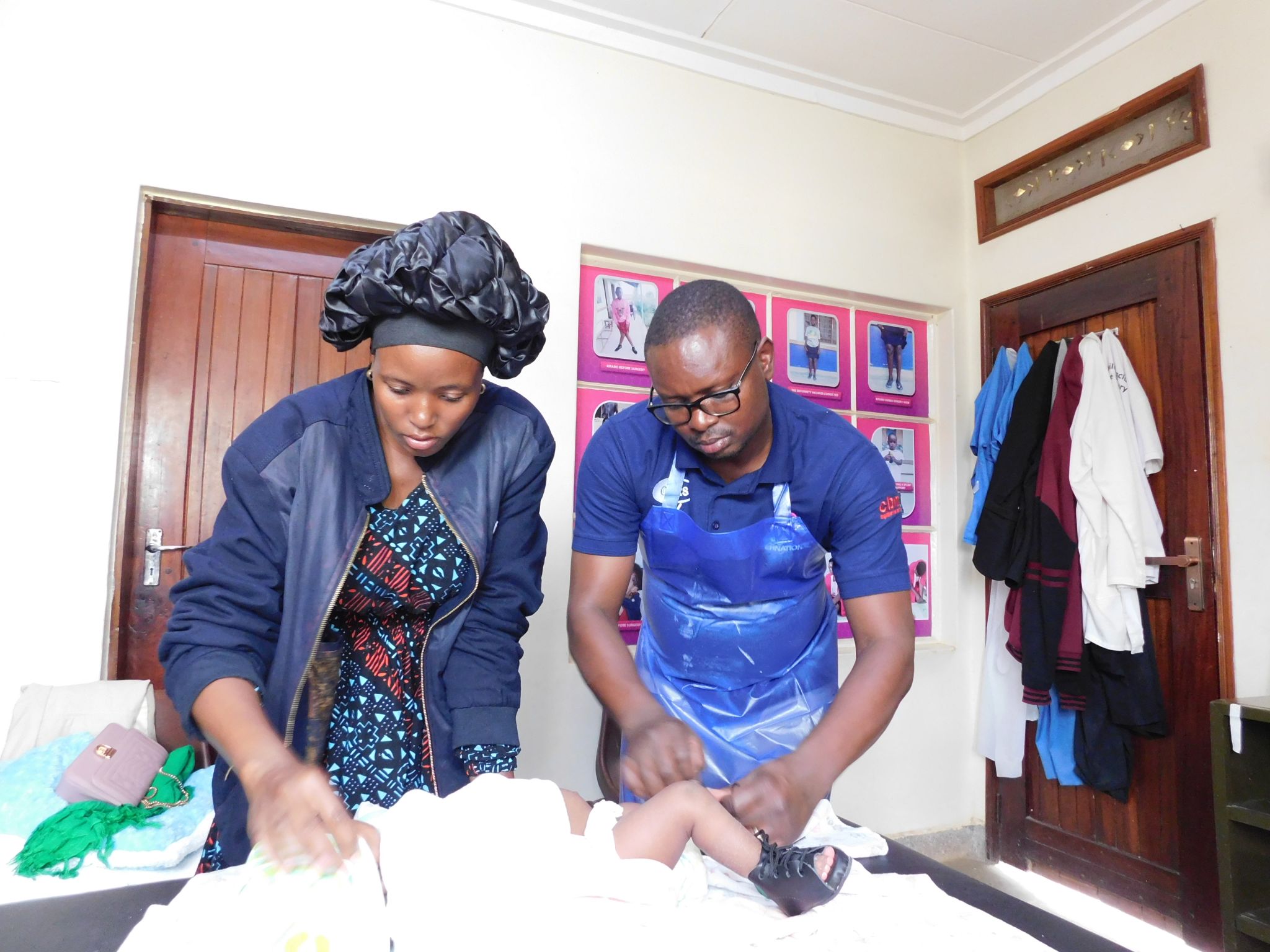
Ruharo Mission Hospital has continued to strengthen access to clubfoot care in Uganda through its OURS Programme, using early assessment, Ponseti casting, and assistive device provision to support children with correctable lower-limb deformities.
In a recent update, the hospital said its clubfoot clinic focused on helping children through assessment, treatment using the Ponseti method, and the provision of assistive devices, underlining the importance of early intervention in improving mobility and long-term quality of life.
The work sits within the wider mandate of the Orthopaedic and Rehabilitation Services (OURS) Programme at Ruharo Mission Hospital in Mbarara, which provides holistic rehabilitation support for children with conditions including clubfoot, cerebral palsy, post-burn contractures, bow legs, and hydrocephalus. The hospital says the programme combines physiotherapy, occupational therapy, orthopaedic care, assistive devices, and surgical referral support, reflecting a broader model of disability-inclusive child rehabilitation rather than a narrow single-condition clinic.
Clubfoot remains one of the most important early childhood orthopaedic conditions in Uganda. Walimu, one of the organisations supporting national clubfoot work, says that around one child in every 800 births in Uganda is born with clubfoot, and that the national goal is to ensure children access quality treatment using the Ponseti method before their first birthday. Walimu also says the wider Uganda clubfoot programme aims to bring services closer to communities, strengthen health-worker capacity, improve awareness, and increase early referral.
That context makes Ruharo’s clinic especially important. In practical terms, clubfoot care works best when children are identified early, started on serial casting quickly, and supported through the full treatment pathway. The Ponseti method has become the global standard for clubfoot correction because it offers a structured non-surgical approach in many cases, but the success of that approach still depends heavily on timely diagnosis, trained staff, follow-up, and family support. This final point is a clinical inference drawn from the programme model described by Ruharo, Walimu, and MiracleFeet.
The hospital said the latest clinic activity was made possible through the support of Walimu, CBM, and MiracleFeet, a partnership model that reflects how clubfoot services in Uganda are increasingly being built through coordinated national and international collaboration. Walimu describes itself as a Ugandan health research and implementation organisation focused on strengthening frontline care, while MiracleFeet says it works with the Ministry of Health of Uganda to support the national clubfoot programme across clinics nationwide. CBM continues to position disability-inclusive health and rehabilitation as a core part of its global mission.
For IMEA CPO readers, the significance of this story goes beyond one clinic session. It highlights a practical truth about pediatric orthopaedics and rehabilitation in emerging markets: outcomes improve when early detection, low-cost evidence-based treatment, assistive support, and partnership-led service delivery are brought together in the same pathway. In the case of clubfoot, that can mean the difference between a child growing up with avoidable disability and a child gaining the chance to walk, play, and participate more fully in school and community life. That conclusion is an inference based on the programme goals and treatment model described by the organisations involved.
Ruharo’s update also reinforces the role of mission and rehabilitation hospitals in extending specialist services beyond national referral centres. Although OURS mainly serves southwestern Uganda, Ruharo says clients also come from neighbouring countries including Congo, Rwanda, and Tanzania, showing how regional rehabilitation access often depends on a relatively small number of committed institutions and partnerships.
At a sector level, this is the kind of work that deserves closer attention. Clubfoot treatment may not have the profile of high-tech prosthetics or digital orthotics, but it remains one of the most cost-effective and life-changing interventions in pediatric rehabilitation. Ruharo Mission Hospital’s clinic is a reminder that timely, quality, and locally accessible care can still have transformative impact when the right systems and partnerships are in place.