 By
By
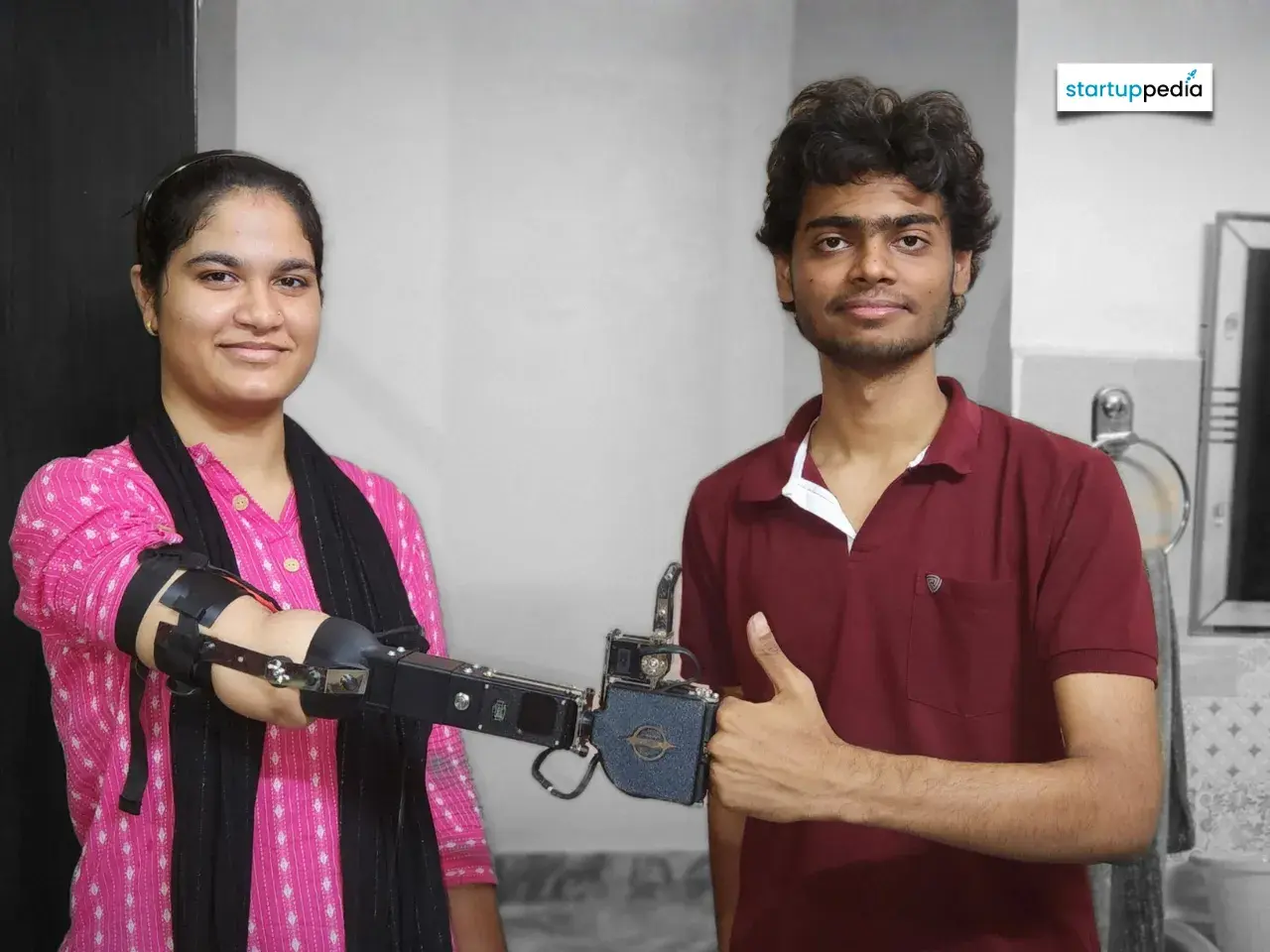
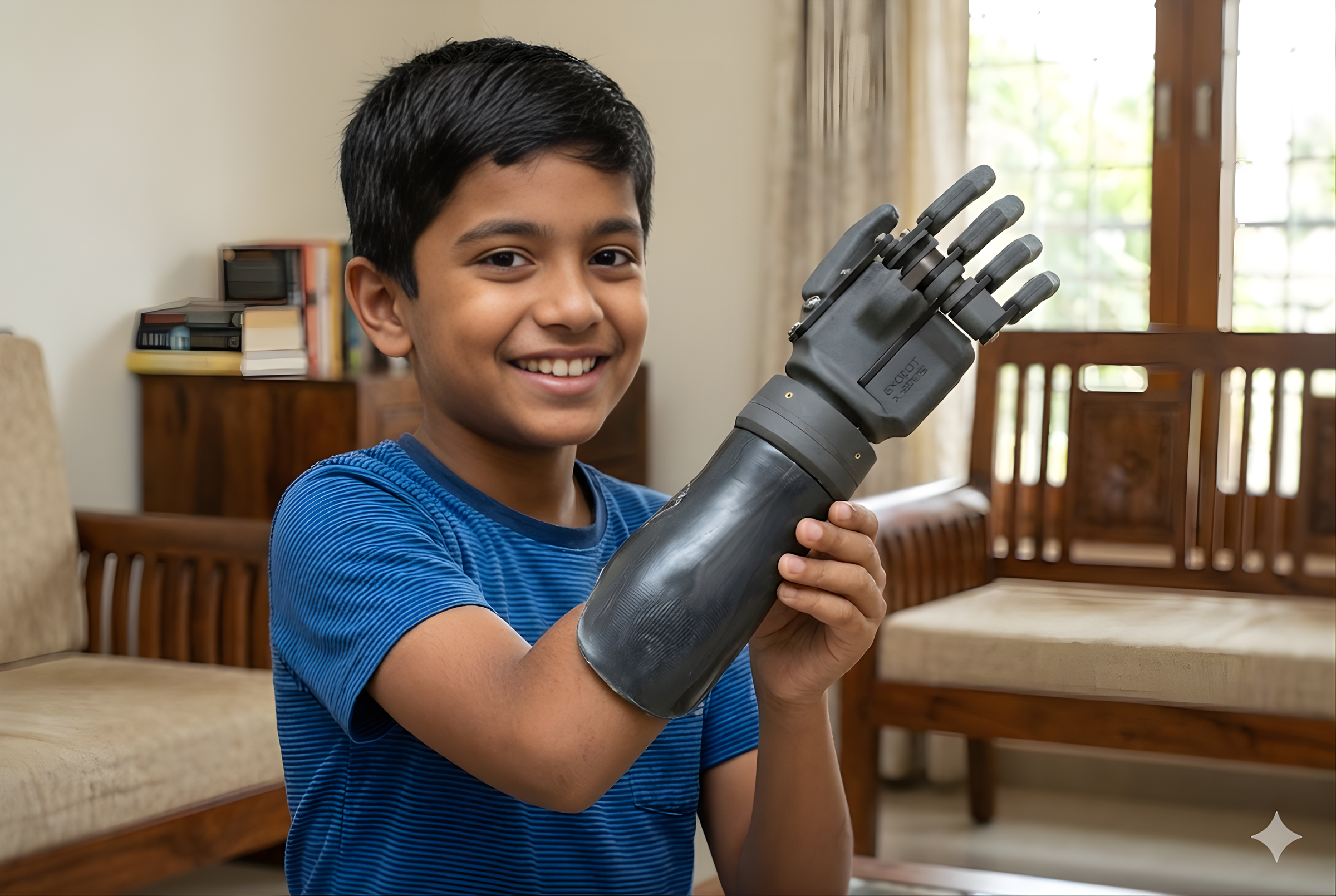
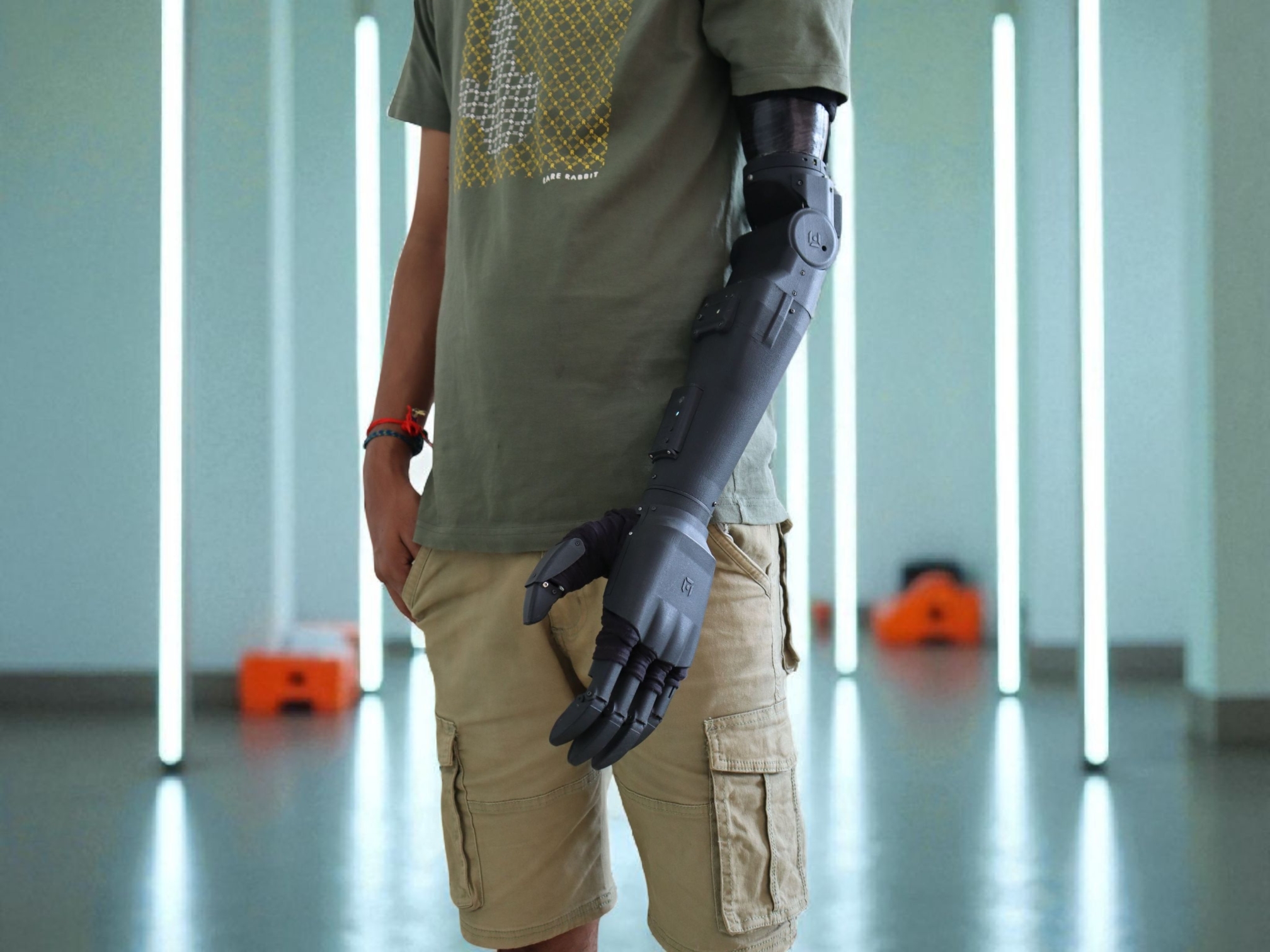
An 18-year-old engineering student from Prayagraj is trying to tackle one of the biggest unresolved problems in India’s upper-limb prosthetics market: the gap between basic low-function devices and advanced imported bionic hands that remain out of reach for most users. According to Startup Pedia, Ansh Mishra, founder of BRHM, has developed a myoelectric bionic hand designed to use muscle signals from the residual limb to control opening, closing, and grip functions.
The story is built around a personal motivation. Startup Pedia says Mishra was inspired by seeing his friend Shaheen live for 15 years without a hand, prompting him to develop a device that could offer more functionality at a far lower cost than imported alternatives. The article says BRHM was founded in 2023 and is focused on building affordable bionic hands in India rather than relying on expensive pre-made foreign components.
Despite the original article describing the device as “brain-controlled,” the more technically accurate description in the reporting is myoelectric rather than direct brain-computer control. Startup Pedia explains that the hand uses electrodes placed on the skin to capture electrical signals generated when the brain sends movement commands to the remaining limb muscles. Those signals are then processed so the user can control the prosthetic hand. That distinction matters, because it places the device in the same broader category as many EMG-based upper-limb systems rather than in the far more experimental brain-implant space.
According to the article, the BRHM hand includes an OLED screen for adjusting sensitivity and settings, a multi-sensor system intended to improve signal accuracy, and the ability to switch between different grip modes using muscle signals. Separate reporting summarized by NewsBytes and Startupro also says the prototype can reportedly lift up to 20 kg, while Startupro’s summary adds that the hand provides vibration feedback to help users judge grip pressure. Those latter claims appear to come from secondary summaries rather than a formal technical paper, so they should be treated as company-reported performance claims rather than independently validated clinical data.
Cost is the central selling point. Startup Pedia says advanced bionic prosthetics in India can cost roughly ₹15 lakh to ₹30 lakh, while BRHM is trying to cut costs dramatically through in-house design and manufacturing. NewsBytes reports the current prototype cost at about ₹40,000 and says Mishra expects an eventual market price of around ₹90,000. Because those figures come from media reporting and founder claims rather than a commercial launch sheet, they should be read as indicative rather than final. Even so, they suggest an attempt to create a much lower-cost entry point for functional upper-limb technology in India.
One interesting part of the story is the manufacturing philosophy behind it. Mishra told Startup Pedia that he used what he called “first-principle thinking” to redesign key components from scratch instead of assembling the product around costly off-the-shelf medical hardware. The article gives the example of a quick wrist disconnect component that he says might cost ₹45,000 on the market but can be produced by BRHM at much lower cost internally. For IMEA CPO readers, that is significant because affordability in upper-limb prosthetics is often determined as much by component architecture and manufacturing choices as by the electronics themselves.
The planned route to market also matters. Startup Pedia reports that BRHM is preparing for a commercial launch around August 2026, subject to CDSCO approvals, with an initial batch of 50 bionic hands. The company reportedly plans to work with prosthetists across India, who would integrate the hand with a custom socket and deliver a complete solution locally. That model is notable because it acknowledges that an upper-limb terminal device alone is not the full answer; fit, suspension, alignment, training, and follow-up all remain critical.
For IMEA CPO readers, the real importance of the story is not the “teen inventor” angle. It is the market problem being targeted. Upper-limb prosthetics remains one of the hardest segments to make both functional and financially accessible in emerging markets. Many users face a harsh trade-off between low-cost low-function options and advanced systems priced far beyond realistic reach. A device that can meaningfully narrow that gap would address one of the sector’s most persistent unmet needs. That is an inference, but it is strongly supported by the pricing and access issues described across the reporting.
At the same time, the bigger question is still ahead: whether BRHM can translate a promising prototype into a clinically robust, serviceable, regulator-approved product with dependable after-sales support. Upper-limb users do not just need an impressive demo. They need durability, reliable control, repair pathways, user training, and local clinical support. Until the product reaches commercial and clinical use, those questions remain open.
Why this matters
BRHM’s bionic hand is worth watching because it reflects a broader shift in India and other cost-sensitive markets: more local innovators are trying to use in-house engineering and digital fabrication principles to lower the price of functional assistive devices. Whether BRHM ultimately succeeds at scale or not, the direction is important. It shows that the next wave of upper-limb prosthetic innovation in the region may come not only from global incumbents, but also from smaller local teams trying to solve affordability and usability together.