 By
By

Dan Vale, Co-Founder of Sport Scientia, hopes to enlighten football scouting and medical teams with more data, allowing for informed decisions when picking transfers and rehabilitating players.
Sport Scientia insoles measure a players speed, gait, and other data which can be used to assess athleticism. One application being global scouting possibilities, with Vale saying “you don’t need talent to run fast, you can always coach execution.”
Football is requiring higher levels of physicality, with players seemingly becoming bigger and stronger. Arsenals defence now features a back four all over six foot tall.
Since 2020/21 season, the five fastest sprints recorded in the Premier League have all come from defenders. Gone are the days where athleticism was reserved for wingers and strikers, now every player needs to be an elite athlete regardless of position.
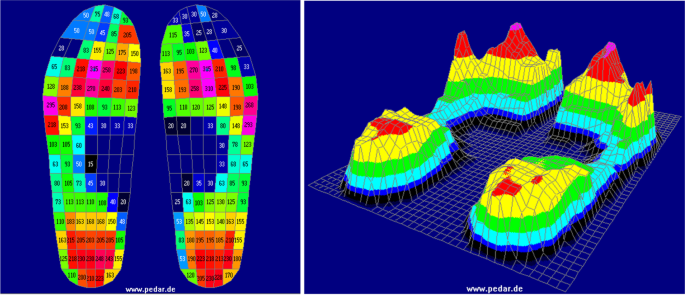
The technology itself can sit under or in any current insole, if a company wanted to use the technology in their insoles. It features 18 sensors across each pair, collecting 500 bits of data per sensor per second.
Vests and watch straps have been the go-tos for wearable technology, inspiring Sport Scientia’s insole. Sport Scientia saw a gap in the market as the only other insoles were accelerometers.
By bringing lab technology used by practitioners to the pitch, medical staff can now access data in the environment where players get injured, instead of in the gym.
Rather than overloading physios with buckets of raw data, the information is displayed on a platform, making the data accessible and relevant to the correct departments. Actionable decisions can then be made by physios and scouts, who can brief head coaches with evidence based opinions.
Assessing injury and recovery
Vale says: “Everybody has their own gait analysis, not everybody walks at a 50:50 split. But the science tells you if your gate is 70:30, that’s not normal. That’s an injury, either progressing, healing, or getting worse.”
Injury may not be predictable, but patterns which indicate injury can now be understood through technology. It is important to note the data and technology can not tell you how to recover, but inform practitioners with better data to enable them to do their jobs.
Each individual has their own baseline, which can be measured using a repeatable sequence of exercises, creating a personal ‘ideal’ spot for an athlete to be at.
“Once that’s done, you have a reference point to get back to, individual to each user.” Says Vale. Deviations in gait and contact time from their baseline can help practitioners assess if an athlete is back to their best, or still recovering from an injury.
Kieran Tierney attempted to play through injury towards the end of the 2020/21 season for Arsenal, having twisted his ankle but not reporting it to the medical staff. He went on to suffer a much worse injury, in part due to playing through the pain. With Sport Scientia’s insoles, he would not have been able to hide his injury.
Club’s with poor injury records could largely benefit from having access to underlying data.
“That’s an ideal world where we believe the best use case of our technology to be.” Vale adds.
Currently live data feedback isn’t available, although the technology does exist for future editions to contain such features. Because of this, the insole is best used analysing training sessions rather than matches.
Scouting
Data cuts through preconceived ideas of players, it gives an objective reference point to analyse athleticism. Regions such as Asia have often been overlooked partly due to European perceptions.
Originally the project was designed for scouting, as Vale explains “I wanted to build a platform that would allow young players in Asia and Asia Pacific to be able to showcase their skills in Europe. That’s how this developed.”
Currently the Premier League has seven players from Asia, highlighting a large underrepresentation and a scouting market yet to be capitalised on. Arséne Wenger identified the Japanese market in 2013 as having lots of potential, and clubs are now starting to realise its potential.
“I would love for our data to be used in every transfer for an U21 player. Which means at academy level, they have to have it, they have to build it… we are going to highlight in previous injuries, recovery time, quickness of speed.” Vale continues.
Sports, such as basketball, commonly focus on athleticism rather than skill set in recruitment. Tim Duncan didn’t play basketball until he was 14, previously being a competitive swimmer and Dikembe Mutombo was previously a goalkeeper before turning to basketball at 16. Both now are in the Hall of Fame, and Duncan has a legitimate claim to being the greatest player of all time.
The NBA is already using Sport Scientia’s technology, reflecting how the football world has room to catch up to other sports when it comes to data analytics.
Some of the limitations behind implementation in football could be where the power dynamics lie in football. Vale says “I believe, if you give this to a 16 year old, they will love it because it will validate their value. You give this to a 28 year old or a 30 year old, they will hate it because it will devalue them.” As it may highlight an athlete leaving their physical prime.
Clubs may decide to invest in under appreciated athletic ability using this data, whilst also avoiding splashing the cash on players hiding injuries. There is large potential for great economic gains for any club who uses this data correctly.




.jpeg)

-1.png "Gaza Fund (1)-1")