 By
By
A new Freiburg-linked commentary has drawn fresh attention to one of the most important frontiers in prosthetic innovation: restoring sensation, not just movement, to artificial limbs.
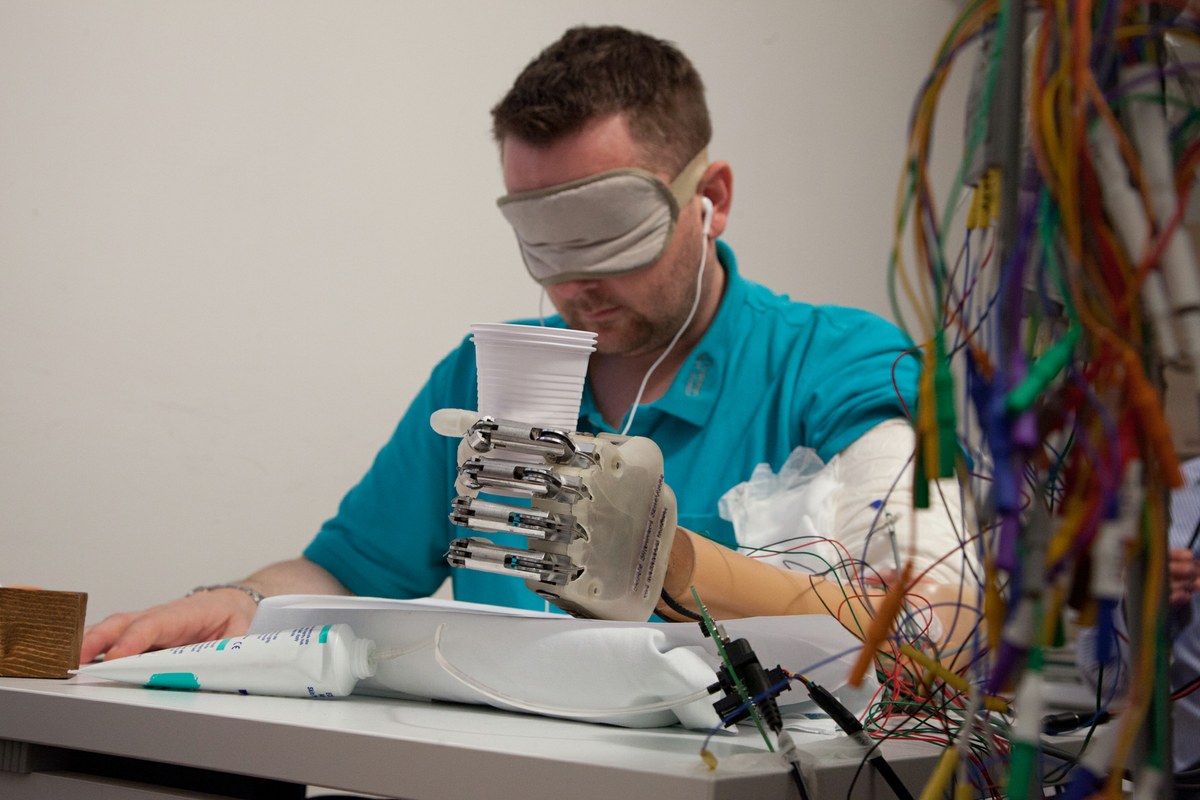
While modern prosthetic systems have made major advances in mechanics, control, and materials, researchers continue to argue that the next real leap in function will depend on giving users meaningful sensory feedback so that prostheses feel less like external tools and more like integrated parts of the body. Freiburg’s wider neurotechnology research ecosystem has been active in this field for years, including work on implanted electrodes that allow amputees to perceive information from prosthetic hands through direct nerve stimulation.
The scientific case for sensory restoration is now well established. Reviews of somatosensory neuroprostheses describe how stimulation of the peripheral or central nervous system can evoke sensations that appear to come from the missing limb. When paired with sensors on the prosthesis, this kind of feedback can improve functionality, embodiment, and prosthesis adoption, while potentially reducing the heavy reliance on visual monitoring that still characterises much of prosthetic use today.
That matters because even highly advanced prosthetic devices remain limited when users cannot feel what the device is doing. Sensory input from the hand helps regulate grip force, hand shaping, and finger position, while sensory input from the foot and leg is crucial for walking, balance, and responding to instability. Without that feedback, prosthesis users often need to watch the device closely and invest more cognitive effort in simple everyday tasks.
Freiburg has a particularly relevant place in this story. University of Freiburg researchers have publicly described earlier work in which ultra-thin electrodes were implanted into the ulnar and median nerves of an amputee, enabling sensory data from an artificial hand to be transmitted through the peripheral nervous system so the user could perceive shape and consistency while grasping objects. Freiburg’s BrainLinks-BrainTools team has also highlighted more recent work showing continuous sensory feedback through thin-film intraneural electrodes, underscoring the institution’s long-standing role in neuroprosthetics research.
The broader research literature suggests why this area is receiving renewed attention. A 2023 review in Current Opinion in Biomedical Engineering argues that somatosensory neuroprostheses have made major progress over the past decade, but still face important hurdles before they can achieve widespread clinical adoption outside the lab. The same review highlights an especially important point: sensory and motor prosthetic systems are often developed separately, even though co-development may accelerate progress in both.
That idea is increasingly being echoed in newer work. A December 2025 review in npj Biomedical Innovations on lower-limb prostheses noted that sensory restoration and neural control strategies are beginning to converge, with growing interest in bidirectional neuroprostheses that can both read user intent and return meaningful sensory information. In practical terms, this is the path toward prosthetic systems that are not only more controllable, but more natural, stable, and intuitive in daily use.
For the O&P sector, the importance of sensory restoration goes beyond technological elegance. Better sensory feedback could improve:
- functional control
- confidence and embodiment
- balance and gait quality
- comfort and skin management
- long-term device acceptance
These expected benefits are grounded in the review literature, which repeatedly links restored sensation to improved function and embodiment, while also stressing that lack of feedback is one of the major remaining limitations of current prosthetic systems.
At the same time, the field is not yet at routine clinical deployment. Researchers continue to point to key barriers including long-term implant reliability, interface safety, home-use validation, regulatory translation, and real-world service integration. The 2023 review specifically argues that testing of home use of closed-loop prostheses will be critical for clinical adoption, while Freiburg’s own research updates have emphasized that electrode longevity and material choice remain decisive for durable implant systems.
For IMEA CPO readers, this matters because sensory restoration represents the kind of innovation that could eventually redefine the upper end of prosthetic care, especially in advanced upper-limb systems and future lower-limb neuroprostheses. But it also raises a strategic question for emerging markets: how can regions that still struggle with access to basic prosthetic services prepare for a future in which leading-edge care includes neural interfaces, sensory feedback, and more integrated brain-body-device systems? That is an inference, but it follows directly from the widening gap between research progress and routine service availability.
The Freiburg-linked commentary therefore matters not simply because it highlights an exciting research direction, but because it reinforces a broader shift in the profession. The future of prosthetics is no longer only about lighter components, stronger materials, or better alignment. It is increasingly about restoring sensation, reducing cognitive burden, and building prostheses that behave more like living extensions of the user. For clinicians, engineers, educators, and manufacturers, that is a signal worth watching closely.
- University of Freiburg: Prostheses with Sensory Feedback
- Current Opinion in Biomedical Engineering: Sensory restoration for improved motor control of prostheses
- Nature Materials review: Sensory feedback for limb prostheses in amputees
- npj Biomedical Innovations: Somatosensory restoration and neural control strategies in lower-limb prostheses