 By
By
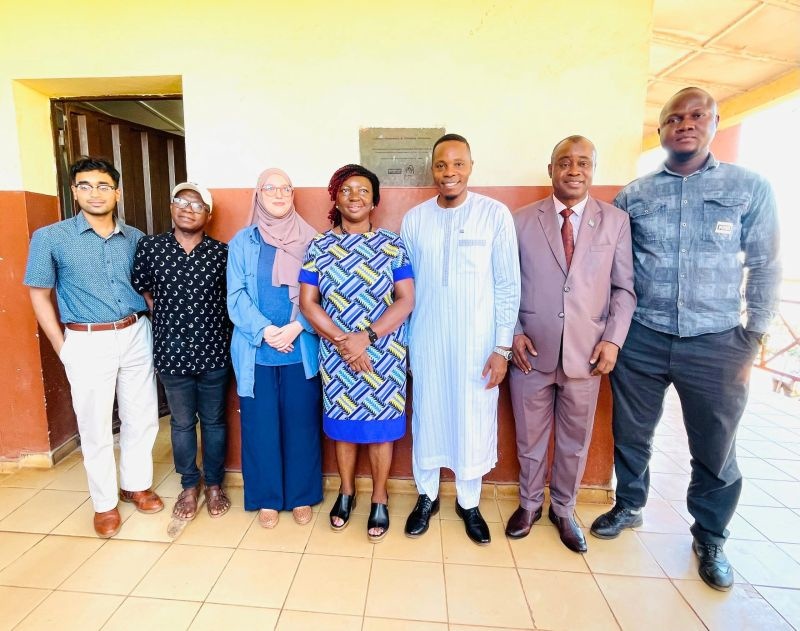
Sierra Leone is continuing to strengthen its orthotics and prosthetics sector through international collaboration, in a move that highlights both the scale of unmet rehabilitation need in the country and the growing recognition that sustainable O&P development depends on more than device supply alone.
A widely cited partnership framework involving the government of Sierra Leone and international collaborators has focused on expanding clinical capacity, improving infrastructure, strengthening supply chains, and increasing access to services for people who need prosthetic and orthotic care.
The underlying challenge is significant. Publicly available research has described Sierra Leone as having a very limited O&P workforce and only a small number of prosthetic and orthotic departments nationwide. One published study reported four prosthetic and orthotic departments in government hospitals in Freetown, Makeni, Bo, and Kono, with a relatively small pool of staff serving the country.
That shortage has real consequences for patients. Earlier published work comparing prosthetic and orthotic service delivery in Sierra Leone and Malawi found that many users in Sierra Leone were less satisfied with service delivery and follow-up, while about half of the devices surveyed needed repair. The same research highlighted pain, poor comfort, and limited ability to walk on uneven ground as major issues, underlining how access to a device alone is not enough if service quality, fitting, follow-up, and maintenance are weak.
Against that backdrop, international collaboration has taken on a broader systems-building role. A partnership described by MIT’s K. Lisa Yang Center for Bionics and Sierra Leone’s Ministry of Health and Sanitation set out six areas of focus: data collection and clinic operations, education, supply chain, infrastructure, new technologies, and mobile service delivery. The intention was not simply to donate equipment, but to help strengthen the national O&P sector in a more integrated and sustainable way.
That kind of approach is especially important in Sierra Leone because research on assistive technology systems in the country suggests that access barriers are deeply structural. A Journal of Global Health Reports case study found that targeted systems-level investment could strengthen relationships across the assistive technology network in Sierra Leone, while also reinforcing a recurring reality: cost remains a major barrier both for providers trying to deliver assistive products and for users trying to obtain them.
For the O&P sector specifically, supply chain weakness remains one of the biggest practical obstacles. More recent rehabilitation literature on low- and middle-income countries has again cited Sierra Leone as an example where delays in prosthetic and orthotic care are driven by persistent shortages of materials and components, with some users reportedly needing to pay upfront to source materials before fabrication can begin. That makes international collaboration especially relevant when it improves not only skills and clinical methods, but also the material and operational foundations of service delivery.
The Sierra Leone story also matters because it is not only about policy discussions. The country has been a site for practical experimentation in lower-cost and digitally enabled prosthetic production, including rural transtibial prosthetic work and wider assistive technology network investments. These efforts suggest that Sierra Leone is becoming an important case study in how low-resource settings can combine training, innovation, and partnership to expand access to rehabilitation care.
For IMEA CPO readers, the significance of this development lies in the model it represents. Sierra Leone does not have the market size of larger African economies, but it offers a clear example of how orthotics and prosthetics sectors can be developed through training, systems strengthening, outreach, and supply-chain support, rather than relying only on episodic missions or imported product availability. That is an inference from the structure of the collaboration and the published barriers facing service delivery in the country.
It also reinforces a wider lesson for the profession across emerging markets: the strongest rehabilitation outcomes are usually achieved when collaboration improves the full pathway — workforce, infrastructure, materials, technology, and access — instead of treating prosthetics and orthotics as a narrow technical service disconnected from the broader health system. Sierra Leone’s progress in this area may still be gradual, but it points toward a more resilient and sustainable direction for O&P development in Africa.
- MIT collaboration with Sierra Leone on orthotic and prosthetic care
- Journal of Global Health Reports case study on assistive technology in Sierra Leone
- Observational study on low-cost transtibial prosthetics in Sierra Leone
- Study on satisfaction with prosthetic and orthotic devices and services in Sierra Leone