 By
By

A newly developed smart insole from Osnabrück University of Applied Sciences could help people with diabetes identify harmful pressure patterns earlier, potentially reducing the risk of diabetic foot syndrome and its serious complications. The prototype, created by mechanical engineering student Moritz Kampe, continuously measures plantar pressure during walking and highlights unusual loading patterns that may otherwise go unnoticed.
The need for earlier detection is significant. According to the university and the original report, around one in three people with diabetes will develop diabetic foot syndrome at some point. Because persistently high blood sugar can damage both nerves and blood vessels, patients may fail to notice pressure points, minor wounds, or poorly distributed loads inside the shoe. Reduced circulation can then slow healing, allowing small injuries to progress into chronic inflammation or more severe tissue damage.
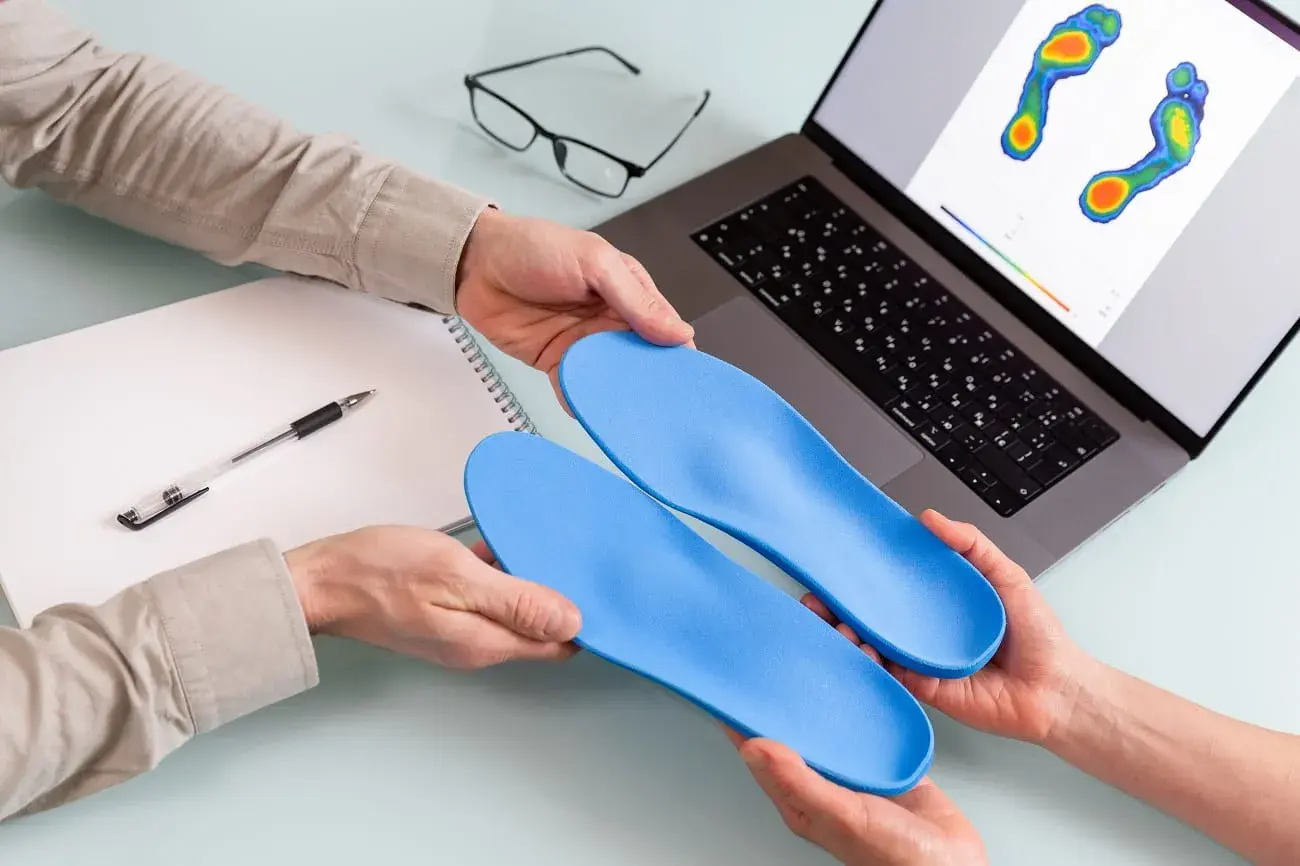
Kampe’s prototype addresses that challenge with a flexible insole containing five measurement points positioned at key areas of the foot, including the heel, forefoot, and toes. Pressure sensors made from the polymer Velostat are embedded between textile layers and connected to a compact electronic board that processes signals in real time. The collected data is transmitted via Bluetooth, then analysed and displayed as diagrams and heatmaps showing how pressure is distributed during gait.
The system does more than simply record force. An algorithm detects steps, stance phases, and swing phases, enabling the device to map loading patterns throughout the rolling motion of the foot. That kind of continuous monitoring could make the technology especially relevant for daily-life use, where subtle repetitive overloading may be missed outside the clinic environment.
Professor Jens Schäfer of Osnabrück University of Applied Sciences said the project shows that medically relevant monitoring can be achieved using comparatively simple and cost-effective tools. That point is important for the wider orthotics, footwear, and rehabilitation sectors, because affordability will be critical if smart monitoring technologies are to move beyond pilot projects and become practical prevention tools for larger diabetic populations.
The prototype is still at an early stage, and further development will be needed before it can become a market-ready product. According to the report, the next phase includes evaluating long-term stability, day-to-day usability, and recyclability, with those questions being explored through the ReSiST-AR project. That initiative runs from October 2025 to September 2027 and is funded by the state of Lower Saxony and the European Regional Development Fund (ERDF).
For the prosthetics, orthotics, pedorthics, and diabetic foot care community, the development points to a growing convergence between smart textiles, sensor-based monitoring, and preventive foot care. Rather than intervening only after ulceration or tissue breakdown has occurred, technologies like this could help clinicians and patients identify risk earlier, support better offloading decisions, and strengthen long-term limb preservation strategies.