 By
By
Decades of war in Sudan and South Sudan have left thousands of people without one or both limbs. In South Sudan, prosthetic and orthotic services are inadequate to meet current needs. The ICRC supports three Physical Rehabilitation Centres located in Juba, Wau and Rumbek to fabricate artificial limbs to help amputees restore mobility and functional independence.
In 2025, the ICRC provided physical rehabilitation services to more than 3,700 people, up from 3,300 patients last year and the highest figure in a decade. This includes delivery of 751 prostheses & ortheses, 608 wheelchairs, and 2,109 walking aids.
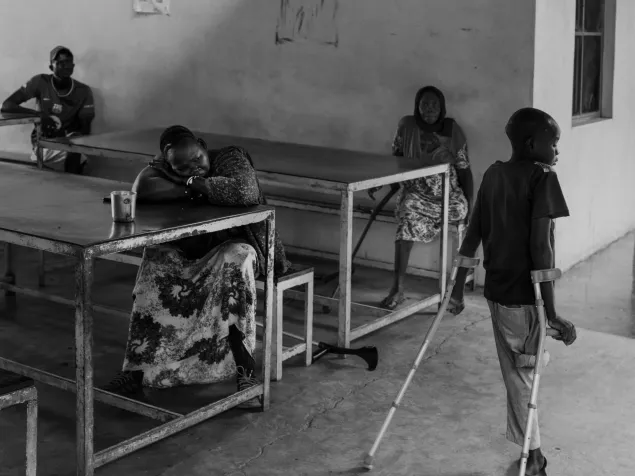
12-year-old Abdel Majid Juma carries out exercises designed to prepare him to receive an artificial limb. Juma lost his leg in a bomb blast at the beginning of the ongoing conflict in Sudan. He was amputated at a Khartoum hospital that did not offer orthotic and prosthetic services. Here at the ICRC-supported Physical Rehabilitation Center in Juba, specialists are in the process of fabricating a new limb to help restore mobility and his general function.
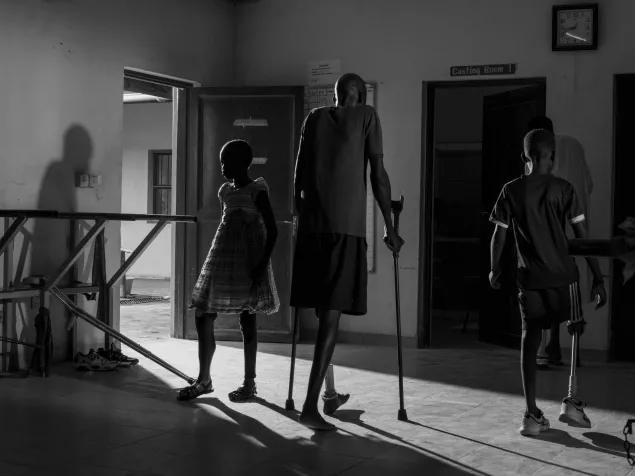
Patients learning how to walk with their artificial limbs at the ICRC-supported Physical Rehabilitation Center in Juba.
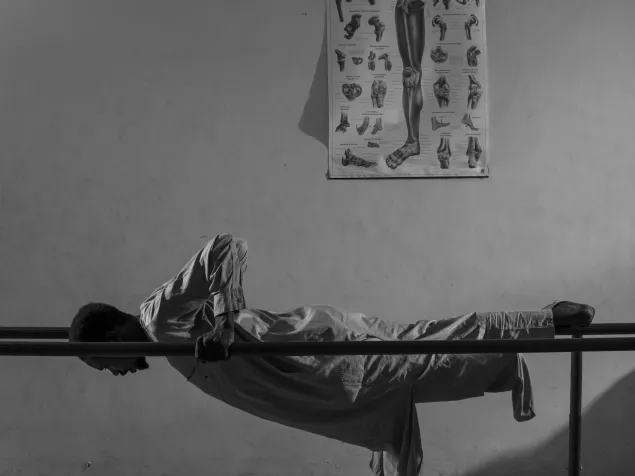
Issa Idriss Hassan, 43, trains on parallel bars at the ICRC-supported Physical Rehabilitation Center at Wau Teaching Hospital in Western Bahr El Ghazal. He suffered multiple gunshot wounds during the conflict in Sudan, and delayed access to care led to severe infection and amputation. The exercise helps strengthen his muscles as he prepares to receive an artificial limb.

Issa Idriss Hassan, 43, trains on parallel bars at the ICRC-supported Physical Rehabilitation Center at Wau Teaching Hospital in Western Bahr El Ghazal.
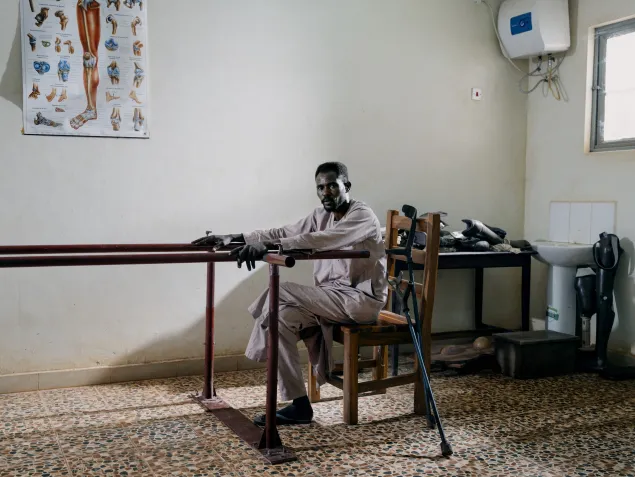
Issa Idriss Hassan, 43 at the ICRC-supported Physical Rehabilitation Center at Wau Teaching Hospital in Western Bahr El Ghazal.
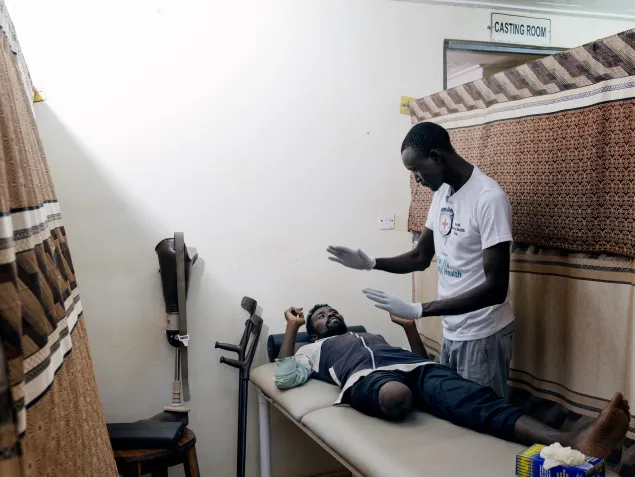
When patients usually arrive at the ICRC-supported Physical Rehabilitation Centers such as this one in Wau, Western Bahr El Ghazal, specialists immediately carry out an assessment to determine the patient’s condition and needs in specific areas, including their need for physiotherapy and psychosocial support. The patient will also be assessed by the ortho-prosthetist of the Center.
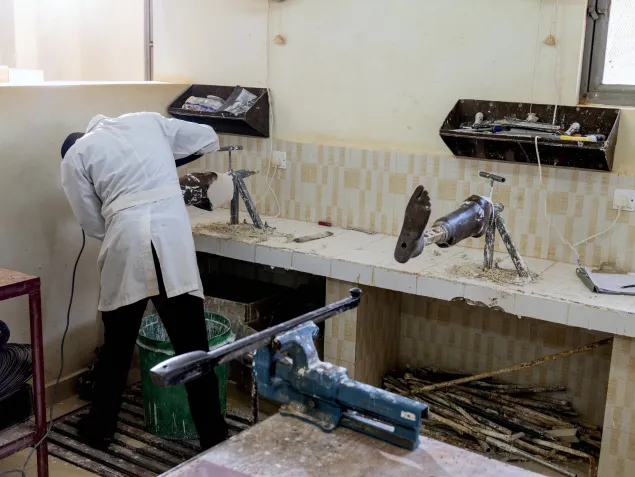
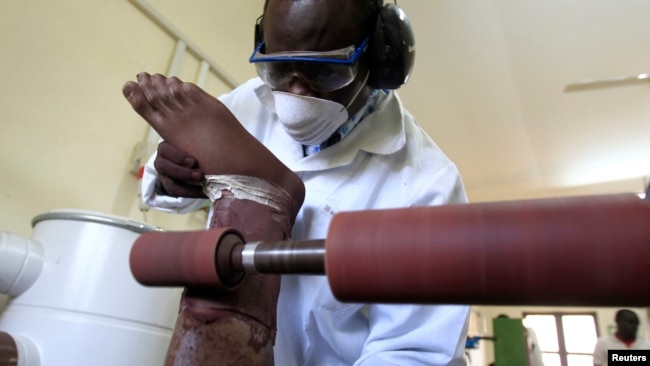
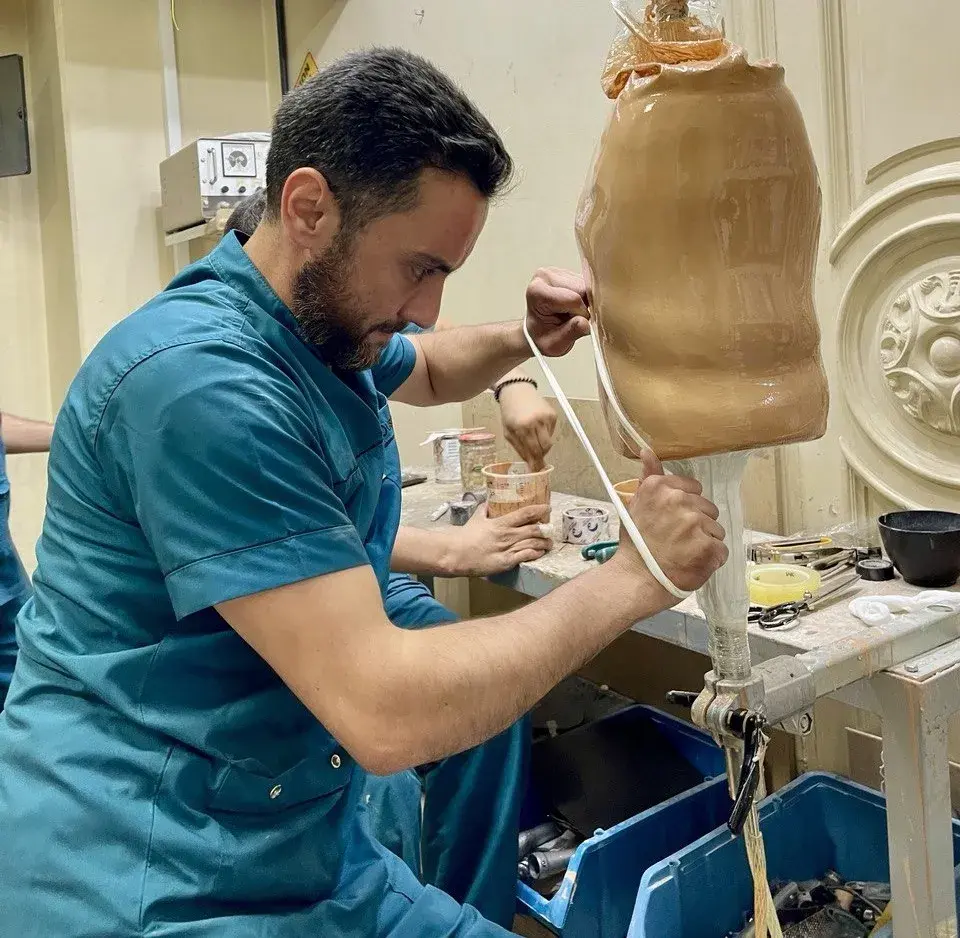
A specialist at the ICRC-supported Physical Rehabilitation Center in Wau prepares the final touches on an artificial limb. The process involves several steps — from measurements, casting, and mold adjustments to creating a diagnostic socket for fit and comfort. Once the test socket is approved, a durable final version is produced. The ICRC has supported the training of South Sudanese technicians in this field, including in Tanzania and Cambodia.
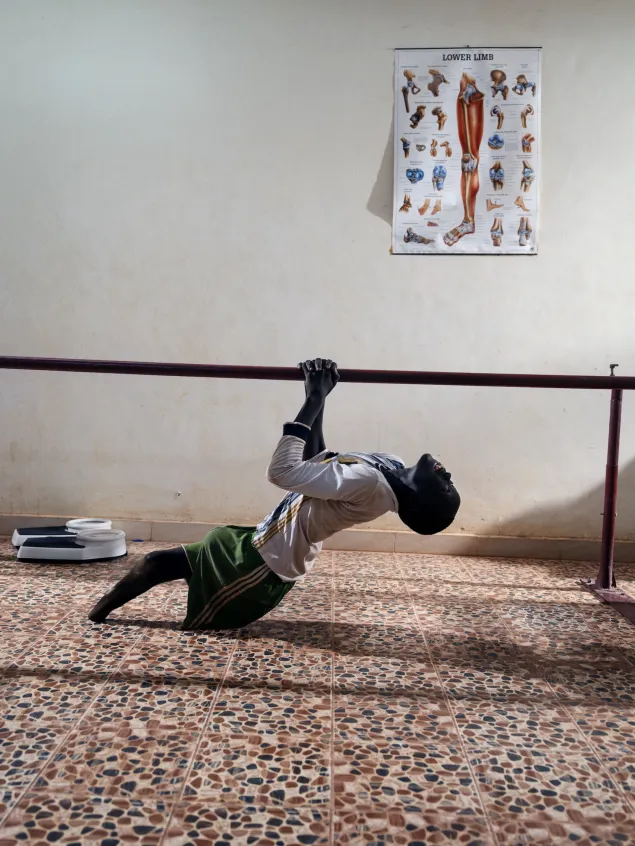
Dhorjang Deng Malual, 13, was born with a physical impairment and has never been able to walk. He is shown doing resistance training on parallel bars at the ICRC-supported Physical Rehabilitation Center at Wau Teaching Hospital in Western Bahr El Ghazal. The exercise helps strengthen his muscles as he prepares to receive artificial limbs that will improve his mobility and function.
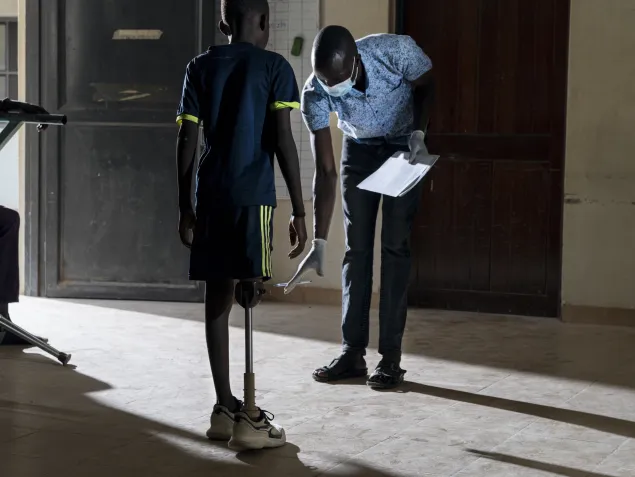
Physiotherapist Apeleo Samson Emor helps 12-year-old Abdel Majid Juma learn to walk with his newly fabricated artificial limb. Juma lost his leg in a bomb blast early in the conflict in Sudan and was amputated in a Khartoum hospital without prosthetic services. At the ICRC-supported Physical Rehabilitation Center in Juba, specialists have fabricated a new limb to help restore his mobility and function.