 By
By
Turkmenistan’s orthotics and prosthetics (O&P) ecosystem is predominantly public-sector led, anchored by Ministry of Health and Medical Industry facilities in Ashgabat and supported by expanding rehabilitation infrastructure. Recent policy updates suggest a stronger national focus on structured access: in December 2025, the Ministry approved a new procedure for providing prosthetic and orthopaedic devices to persons with disabilities, including options for free-of-charge and discounted provision—a significant signal of system formalisation and demand management.
Alongside policy, Turkmenistan has invested in modern rehabilitation facilities and specialist centres for trauma and orthopaedics—critical in a context where mobility needs are driven by NCDs (diabetes, cardiovascular disease/stroke), injury, and long-term functional impairment.
Prevalence & demand drivers (key statistics)
Diabetes
Diabetes is a growing driver of mobility complications and limb risk (ulcers → infection → amputation), increasing demand for protective footwear, custom foot orthoses/offloading, and prosthetic services. The IDF Atlas estimates:
- ~264,100 adults (20–79) living with diabetes in 2024 (up from 69,800 in 2011, projected 411,600 by 2050).
Stroke & cardiovascular disease
Stroke is a major contributor to disability and rehabilitation demand, often requiring AFOs/KAFOs, mobility aids, upper-limb supports, and long-term neurorehab. WHO country data lists stroke among the leading causes of death in Turkmenistan (with deaths per 100,000 reported by sex and overall).
Persons with disabilities
Turkmenistan has been working to strengthen evidence on disability needs. In 2022, the State Statistics Committee and UNICEF released results of the country’s first-ever survey of children and adults with disabilities—supporting more structured planning for health, education and protection services (including assistive technology).
Amputations & mobility impairment
Turkmenistan does not consistently publish a single consolidated national amputee total in the public domain. However, the combination of rising diabetes prevalence and significant stroke/cardiovascular burden strongly signals sustained need for prosthetic devices, orthotic bracing, and repair/maintenance pathways.
Turkmenistan O&P system snapshot
Turkmenistan’s O&P delivery is best understood as a centralised, hospital-anchored model, with expanding rehabilitation capacity in Ashgabat:
- A national policy framework for providing prosthetic and orthopaedic devices to persons with disabilities (free or discounted) was formalised via Ministry order signed 6 December 2025.
- Major specialist infrastructure includes an International Center of Traumatology (orthopaedics/trauma) and an International Rehabilitation Center providing multi-department rehab services, including orthopaedics and neuro rehab.
- Rehabilitation modernisation has included advanced gait and therapy technologies being installed in newer rehab facilities.
Top orthotic & prosthetic service providers in Turkmenistan
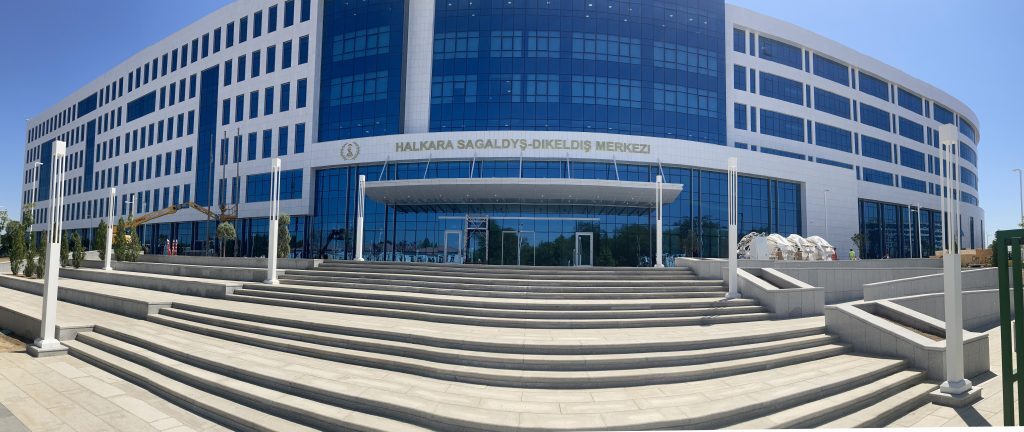
1) International Rehabilitation Center (Halkara Sagaldys–Dikeldis Merkezi) – Ashgabat
A flagship national rehabilitation facility offering multidisciplinary services, including orthopaedics (adult & paediatric), neurology, physiotherapy, rehabilitation and related diagnostics—important for post-injury and post-stroke pathways where orthoses are commonly prescribed.
2) International Center of Traumatology – Ashgabat
A specialist trauma and orthopaedics centre (180-bed design noted) supporting complex musculoskeletal pathways and clinical rehabilitation integration—key for injury-driven orthotic demand and orthopaedic referrals.
3) Ashgabat Trauma Center (Orthopaedic-focused national centre)
A large orthopaedic centre affiliated with the Ministry of Health, described as a major orthopaedic facility and training base for medical education—relevant to orthotic and post-surgical rehabilitation pathways.
4) State-funded Prosthetic & Orthopaedic Provision Pathway (Ministry of Health & Medical Industry)
Not a single “clinic,” but a national access route: the Ministry’s December 2025 procedure formalises how persons with disabilities receive prosthetic and orthopaedic devices free or at reduced cost, shaping referral and access flows across the system.
5) Private-sector rehabilitation providers in Ashgabat (emerging)
Private facilities exist that market rehabilitation services in Ashgabat; however, public documentation of full O&P fabrication capability is limited compared with the state centres above. (These providers may support physiotherapy follow-up even when devices are sourced via state pathways.)
Key challenges
- NCD-driven disability growth (especially diabetes and stroke) will continue increasing long-term orthotic/prosthetic demand.
- Centralisation can create access barriers for patients outside Ashgabat, especially for follow-up, repairs, and re-fitting.
- Service transparency/data availability: public reporting on device volumes, waiting times, and outcomes is limited—making system planning harder despite policy progress.
Growth opportunities (what comes next)
- Scale diabetic foot & limb-loss prevention: screening + risk stratification + early offloading orthoses + protective footwear to reduce avoidable amputations.
- Build repair/maintenance networks: regional repair days, mobile workshops, or satellite servicing linked to Ashgabat hubs to reduce downtime.
- Expand digital rehabilitation capacity (gait labs, objective outcomes) to improve prescription quality and track results—especially post-stroke and post-trauma.
- Operationalise the 2025 provision procedure with clear referral routes, timelines, and patient information to improve equity and continuity.
IMEA CPO outlook
Turkmenistan’s O&P environment is moving toward more structured access and stronger rehabilitation infrastructure, highlighted by the December 2025 national procedure for providing prosthetic and orthopaedic devices to persons with disabilities (free/discounted). With diabetes cases estimated at ~264,100 adults (20–79) in 2024 and stroke remaining a major health burden, the country’s next gains will come from prevention (diabetic foot), decentralised follow-up/repairs, and measurable rehab outcomes integrated across its specialist centres.