 By
By
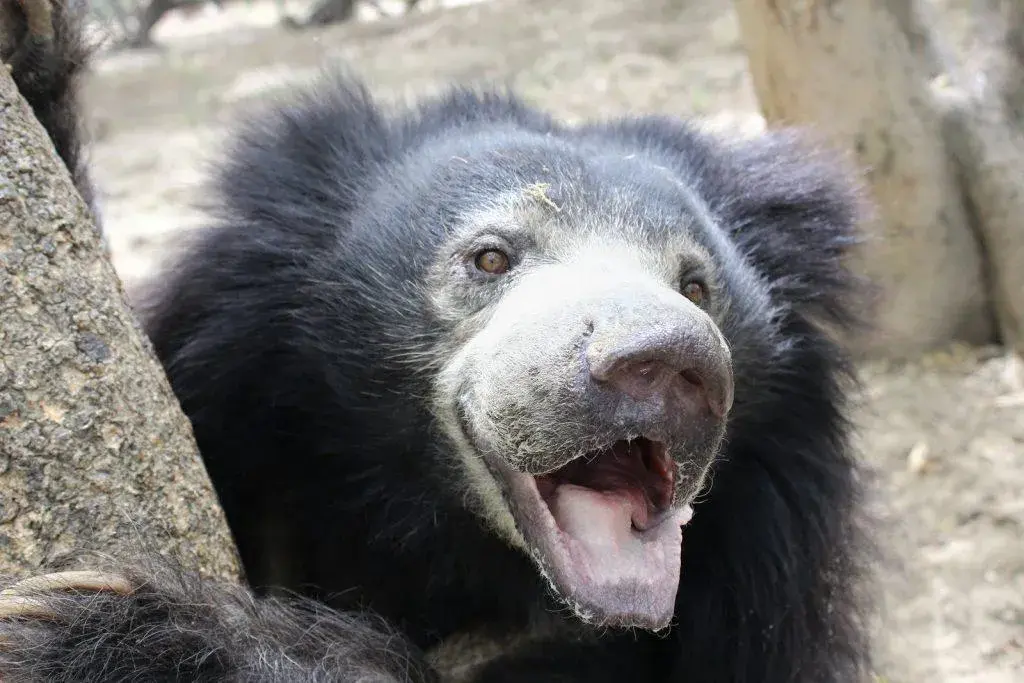
A rescued sloth bear in India has become the first known animal of his species to receive a prosthetic limb, marking a notable milestone in wildlife rehabilitation and adaptive mobility care. According to People, the bear, known as Vasi or Vasikaran, is now using the custom device to walk more comfortably, dig, climb, and play at the Bannerghatta Bear Rescue Centre in Bengaluru.
Vasi was rescued after suffering a severe injury to his left hind paw in a wire snare trap in 2019 in Karnataka. Wildlife SOS relocated him to the Bannerghatta Bear Rescue Centre, where the damage was found to be too extensive to save the paw, leading to amputation. Because of the injury and his long-term care needs, he could not be returned to the wild and instead became a permanent resident at the rescue centre.
Although Vasi adapted to life on three limbs, his caregivers observed that he was not moving comfortably. That led Wildlife SOS, working with Bannerghatta Biological Park and the Karnataka Forest Department, to explore whether a custom prosthetic could improve his mobility and long-term wellbeing. The team brought in animal orthotist Derrick Campana, widely known for creating prosthetics for other animals, to develop a limb strong enough to cope with typical bear behaviours such as digging and climbing.
The fitting process appears to have depended not only on technical design, but also on careful behavioural conditioning. Wildlife SOS said Vasi had been gradually prepared to accept something attached to his leg, helping him remain calm during the introduction and fitting of the prosthetic. Once the device was attached, he was able to place weight more evenly across all four limbs and began moving with greater confidence.
For rehabilitation professionals, the story is an unusual but powerful example of how prosthetic thinking can extend beyond conventional human clinical settings. While wildlife rescue is clearly very different from orthotic and prosthetic practice in hospitals and rehabilitation centres, the same core principles are visible: functional restoration, load distribution, tissue protection, user adaptation, and iterative fit for real-world activity. That comparison is an editorial interpretation based on the reported design and fitting process.
Wildlife SOS described Vasi as the first known sloth bear in the world to receive a prosthetic paw, and later highlighted the case as one of the rescue centre’s major veterinary milestones. The organisation says the prosthetic is removed periodically to prevent irritation, and that Vasi has adjusted well to the routine. Reports from both People and Wildlife SOS indicate that the device has supported more natural movement and improved comfort.
For IMEA CPO readers, the case also speaks to a broader point: innovation in prosthetics is increasingly being recognised not simply as a replacement technology, but as a tool to restore participation, comfort, and confidence in highly individual circumstances. In this instance, that philosophy has been applied in an extraordinary wildlife setting, but the underlying message will still resonate with clinicians, technicians, and rehabilitation teams working to improve mobility outcomes in complex cases. This final point is an analytical conclusion drawn from the reporting and the Wildlife SOS account.
People article on Vasi the sloth bear
Wildlife SOS story on Vasi
Bannerghatta Bear Rescue Centre overview