 By
By
The Hidden Medical History Behind Global Footwear — Modern Period (1800–Present)
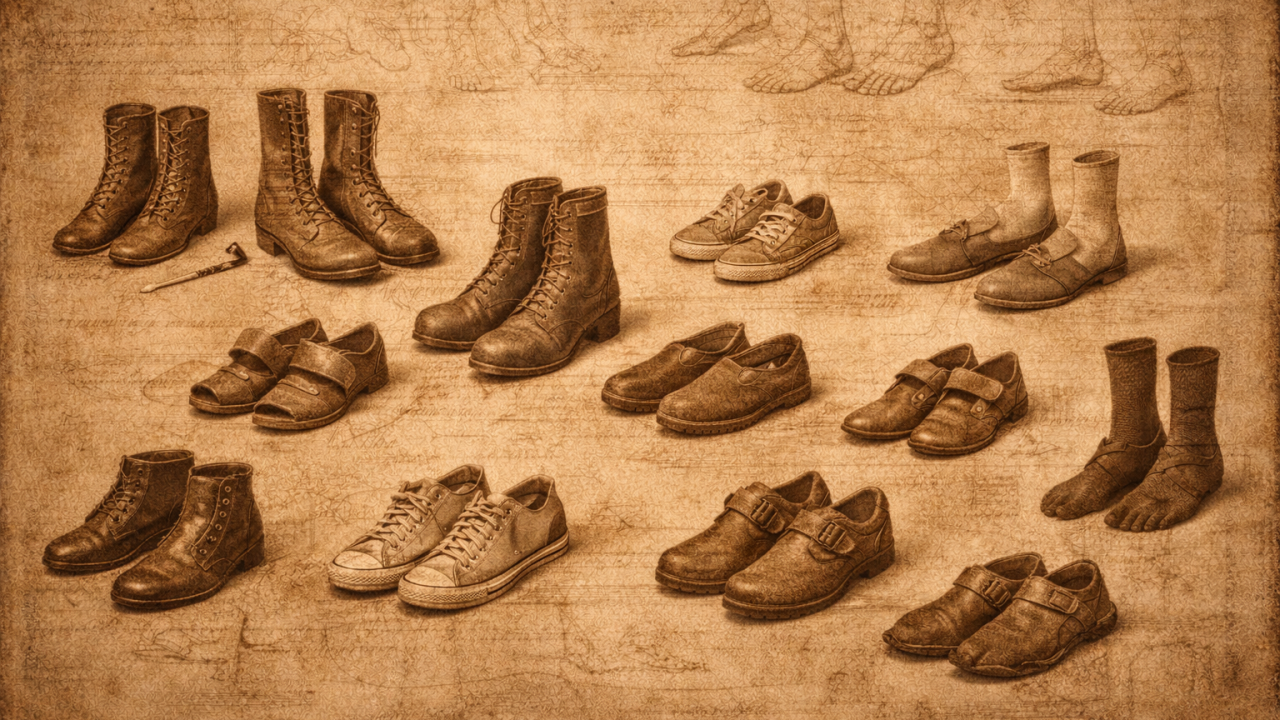
By the 19th century, the world had changed: industrialization accelerated injuries, urban diseases spread rapidly, and new scientific discoveries redefined anatomy, infection, and biomechanics. Footwear evolved from handmade cultural artifacts into engineered tools of protection, mobility, and medical necessity.
From button boots designed for arthritic hands to early sneakers built on orthopedic theories, the modern age reveals how deeply illness, disability, and chronic pain shaped the shoes of everyday life. The technologies we now consider normal arch supports, cushioned soles, braces, compression materials, and diabetic-friendly designs originated as responses to suffering.
Below is a detailed, era-spanning analysis of the footwear innovations that emerged from medical need between 1800 and today.
Victorian Button Boots
Victorian button boots, fastened with small side buttons, appear decorative in photographs but they were created with mobility challenges in mind.
They addressed:
- Arthritis of the fingers, making laces difficult
- Hand tremors from Parkinson’s or neurological disease
- Rheumatic swelling that made tying shoes painful
- Mobility impairments that required quick dressing
The buttonhook a small metal tool for fastening buttons became an essential Victorian assistive device, functioning like an early adaptive dressing tool used today.
Victorian footwear was an early experiment in universal design, centuries before the term existed.
High-Top Medical Boots (19th & Early 20th Century)
As polio, rickets, and congenital deformities became widespread public health issues, shoemakers and physicians collaborated to create high-top medical boots capable of:
- Hiding leg braces
- Supporting ankles weakened by paralysis
- Correcting clubfoot or severe pronation
- Stabilizing gait for individuals recovering from fractures
These boots often contained:
- Internal metal splints
- Reinforced heel counters
- Built-up lateral or medial soles
- Custom-casted leather molds
They were the direct ancestors of today’s custom orthopedic boots and ankle–foot orthotics (AFOs).
Surgical Recovery Slippers
With the rise of hospitals and battlefield medicine came footwear designed specifically for post-surgical care.
Recovery shoes protected:
- Amputation sites
- Sutured wounds
- Burned or grafted skin
- Post-traumatic swelling
- Diabetic or vascular ulcers
Many included:
- Open fronts for dressings
- Soft padding to reduce friction
- Rigid soles to prevent toe flexion
- Adjustable straps to accommodate fluctuating swelling
Every modern post-op shoe traces its history to these 19th- and early 20th-century medical advancements.
Arch-Support Shoes (Late 19th Century)
Fallen arches became a major medical concern during industrialization, with factory workers standing for long hours on unforgiving floors.
Enter the first arch-supporting footwear, pioneered by:
- Orthopedic surgeons
- Podiatric researchers
- Early sports scientists
These shoes introduced:
- Contoured footbeds
- Cork orthotics
- Heel stabilizers
- Metatarsal bars
They helped people suffering from chronic pain caused by plantar fasciitis, flat feet, or nerve compression. By the 1930s, arch support became a standard feature in both medical and athletic shoes.
Early Sneakers (Keds, Converse, 1910s–1920s)
Sneakers were not created for sport they were created to prevent injury.
Early sneaker features were based on:
- Shock absorption to protect inflamed joints
- Flexible soles for arthritic stiffness
- Lightweight construction for individuals with chronic fatigue
- Uniform footbeds to help workers with posture problems
Converse advertised shoes in the 1920s as beneficial for foot strain and supportive for “weak ankles.” Keds promoted “orthopedic comfort” decades before sneaker culture emerged.
Sneakers are perhaps the greatest example of a medical device evolving into global fashion.
Diabetic Shoes
As diabetes became more understood, specialized shoes emerged to prevent amputations caused by ulcers and neuropathy. Diabetic shoes include:
- Pressure-free toe boxes
- Interior seamless construction to avoid friction
- Rocker soles to reduce forefoot pressure
- Heat-molded insoles that distribute weight
- Extra depth to accommodate swelling
These shoes revolutionized medical footwear and drastically reduced amputation rates.
Lymphedema & Swelling-Friendly Shoes
Chronic swelling from lymphatic disorders, kidney disease, heart failure, and circulatory issues demanded adaptive designs.
Features included:
- Stretchable uppers
- Adjustable Velcro closures
- Wide openings for bandages
- Extra room for compression garments
These designs brought independence to people whose feet changed size dramatically throughout the day.
Compression Footwear
Emerging from vascular medicine in the mid-20th century, compression socks and shoes were developed to treat:
- Venous insufficiency
- Chronic edema
- Varicose veins
- Circulatory pain
- Orthostatic intolerance
Their influence spread into athletic footwear, where compression elements improved blood flow and muscle recovery another example of medical design shaping mainstream fashion.
Wide-Toe Box Shoes
Shoes accommodating bunions, arthritis, and connective tissue disorders became widely available only in the late 20th century.
Wide-toe footwear helps individuals with:
- Hallux valgus (bunions)
- Rheumatoid arthritis
- Hypermobile connective tissue (EDS, HSD)
- Chronic swelling
- Toe deformities
This design promotes natural toe splay, reduces joint pressure, and aids stability equally beneficial for the general population.
Minimalist / Barefoot Shoes
Emerging from gait studies and chronic pain research in the early 2000s, minimalist shoes removed heavy cushioning to allow:
- Natural foot motion
- Strengthening of intrinsic muscles
- Improved proprioception in neuropathy-prone individuals
- Relief for chronic plantar pain
- A more stable gait for certain musculoskeletal patterns
Though controversial, minimalist footwear came directly from medical theories about natural gait, not aesthetics.
Why the Modern Period Matters
The shoes we wear today athletic, orthopedic, fashionable, or therapeutic are the result of nearly two centuries of medical necessity. Modern footwear is deeply shaped by:
- Industrial injuries
- Chronic illness
- Longevity and aging
- War trauma
- Podiatric science
- Disability rights movements
- Biomechanical engineering
The innovations of this era gave rise to:
- adaptive fashion
- assistive technology
- custom orthotics
- therapeutic footwear
- athletic performance shoes
In other words: Modern shoes are the culmination of humanity’s 4,000-year attempt to protect one of its most vulnerable structures the foot.
This completes your revolutionary series, The Hidden Medical History Behind Global Footwear a global journey revealing how illness, disability, and survival shaped every major footwear trend from antiquity to the present.
Sources & Suggested Reading
Victorian & 19th Century Footwear
- McDowell, Colin. Shoes: Fashion and Function in the Victorian Age
- British Costume Society: Button boots & adaptive dress
- Royal College of Surgeons archives (Victorian orthopedics)
High-Top Medical Boots
- Polio and Orthopedic Device Museum Collections
- American Orthopaedic Journal, early brace documentation
- European Clubfoot Treatment Archives
Surgical Recovery & Diabetic Footwear
- Journal of Wound Care
- International Working Group on the Diabetic Foot
- Early surgical supply catalogs (1900–1940)
Arch Supports & Early Sneakers
- Bata Shoe Museum: Early sports footwear
- Running Injury Journal: Origins of arch support
- Converse & Keds historical advertisements
Compression & Swelling Footwear
- Journal of Vascular Medicine
- History of Compression Therapy, European Phlebology Society
Minimalist Footwear Studies
- Lieberman, Daniel. The Science of Foot and Gait
- Journal of Foot and Ankle Research
Thanks to -