 By
By
If the orthotics industry is serious about making custom ankle-foot orthoses affordable at scale, the conversation has to move beyond design novelty and toward manufacturing economics. That is why Farsoon’s newest generation of large-capacity additive manufacturing systems matters.
While the latest headline-grabbing announcement has focused on a giant 16-laser metal platform, the real long-term route to a “$20 custom AFO” is the same industrial logic Farsoon is now applying across its portfolio: bigger build volumes, more lasers, continuous production, and lower cost per part through throughput. Farsoon’s newly highlighted FS1521M metal system offers up to 16 or 32 fiber lasers and a build volume as large as 1530 × 1530 × 1650 mm, underscoring how aggressively the company is pushing large-format serial production thinking.
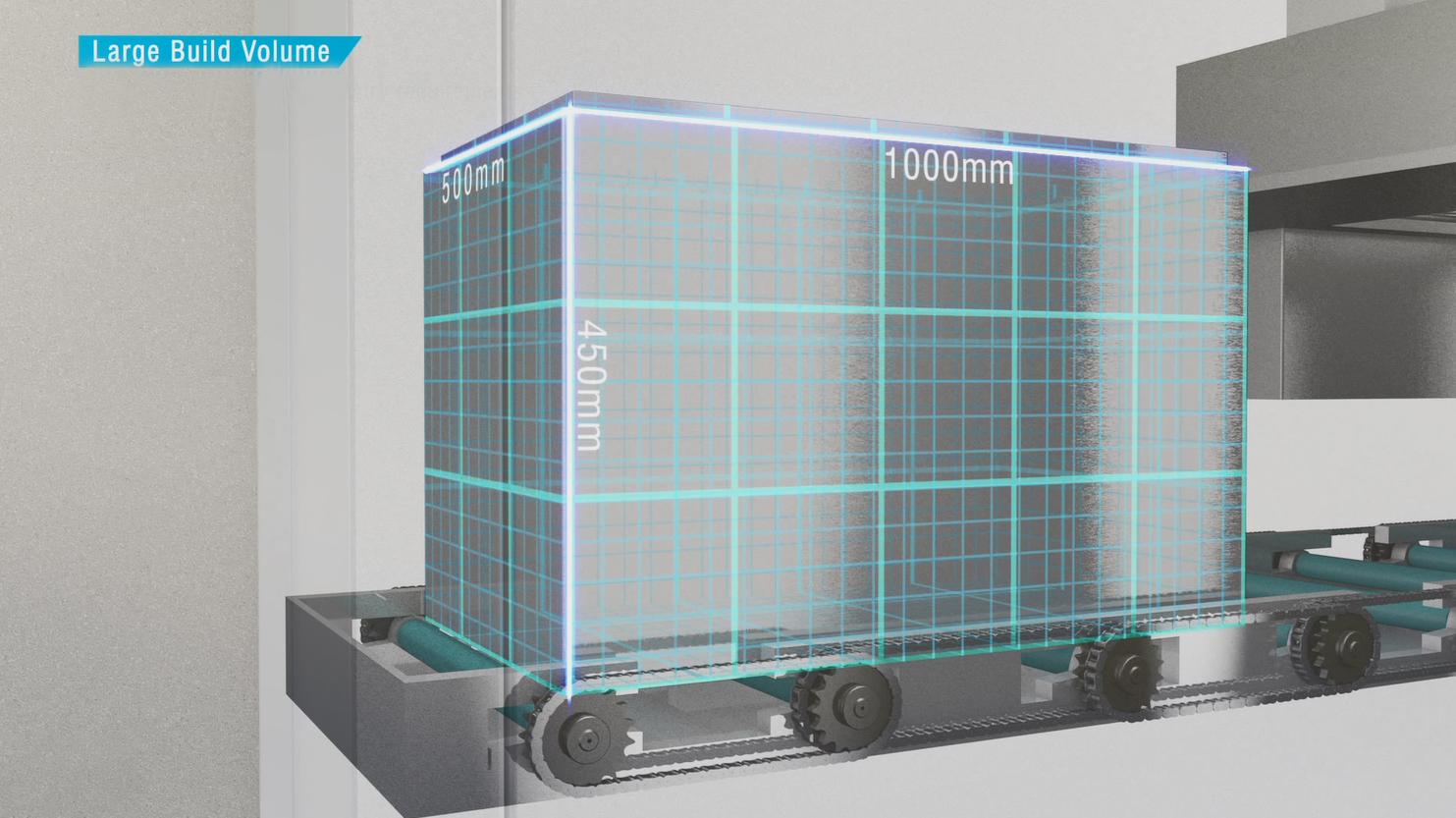
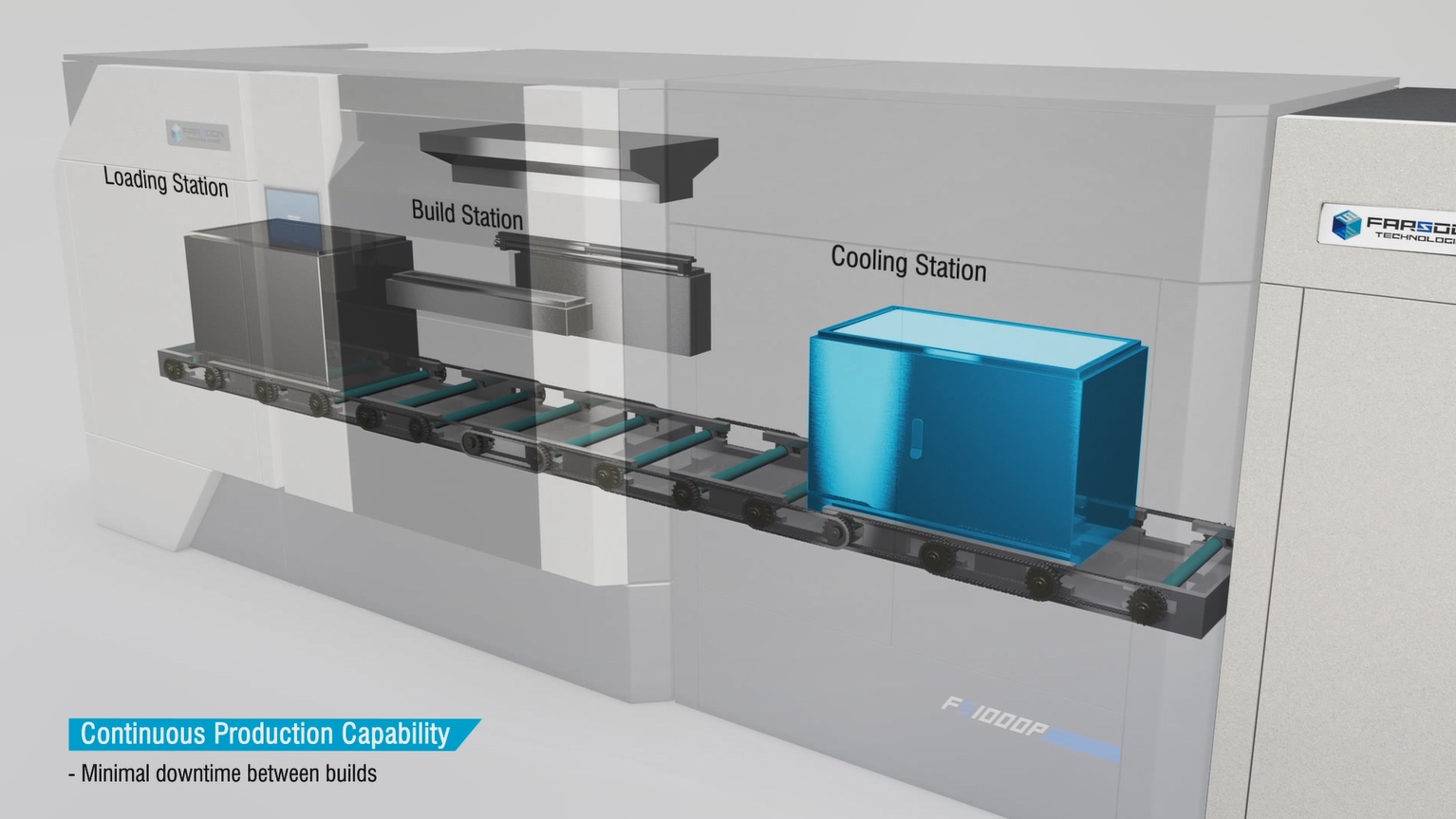
For orthotics and prosthetics, however, the more relevant machines are Farsoon’s polymer powder-bed systems, especially the Flight HT601P-4 and Flight HT1001P. The HT601P-4 combines a 600 × 600 × 600 mm build volume with quad 300-watt fiber lasers, while the HT1001P offers a 1000 × 500 × 450 mm build envelope and claims up to 10 times throughput yield per floor area compared with standard SLS systems within the same time frame. These are exactly the kinds of production parameters that start to change the economics of custom orthoses from “clever but expensive” to “repeatable and scalable.”
That matters because the historic weakness of many 3D-printed AFO workflows has not been whether an AFO can be printed at all. It has been whether the total delivered cost can compete with conventional fabrication once you include scanning, design labour, machine time, materials, post-processing, finishing, fitting, and remakes. A systematic review in Journal of Foot and Ankle Research noted that traditional AFO manufacturing is labour-intensive and associated with limited design flexibility and long wait times, while 3D printing has the potential to transform AFO production and service delivery.
The phrase “$20 custom AFO” should therefore be understood as a manufacturing target, not a guaranteed retail selling price. In most real clinical settings, the final price paid by a patient or payer still includes clinician assessment, gait analysis, casting or scanning, CAD work, fitting appointments, follow-up, overhead, and in many cases shipping or import costs. But the printed shell itself, or the manufacturing component of a simplified custom AFO workflow, can fall dramatically when one machine can nest very large batches and run with far less downtime between builds. That conclusion is an inference based on Farsoon’s throughput claims and the well-known distinction between manufacturing cost and delivered clinical cost.
This is where Farsoon’s large-capacity systems become strategically important. AFOs are relatively lightweight polymer devices, and many common AFO geometries are highly nestable. Once a manufacturer can fill a large polymer build with dozens, potentially hundreds, of orthotic components or subcomponents depending on design and orientation, the economics start to change sharply. The machine cost is still high, but the cost per part can fall because the fixed operating burden is spread across a far larger batch. Farsoon’s CAMS and large-format polymer platforms are explicitly designed around continuous manufacturing and higher machine uptime, which is precisely the type of production logic orthotics has lacked.
There is another important factor: open materials and process flexibility. Farsoon states that its polymer systems are designed as open platforms, which can matter enormously in orthotics manufacturing because materials, stiffness profiles, and post-processing choices have a direct impact on function and comfort. In a future high-volume AFO model, the winning factory is unlikely to be the one with the most elegant printer brochure; it will be the one that can reliably pair the printer with the right material set, the right design rules, and the right workflow for repeatable clinical outcomes.
For a $20 target to become realistic, three things have to happen at once. First, scan-to-design must be streamlined, ideally semi-automated. Second, print capacity must be industrial, not artisanal. Third, post-processing and fitting must be standardized enough to avoid eating up all the savings from printing. Farsoon’s large-capacity systems directly address the second of those three conditions, and indirectly support the third by making serial production a more credible model. The first condition, workflow automation, remains just as critical. This is an inference from the structure of orthotic production rather than a direct Farsoon claim.
Why does this matter so much for IMEA CPOs? Because in many parts of India, the Middle East, and Africa, the biggest barrier to broader orthotic access is not lack of clinical need. It is the mismatch between labour-heavy custom fabrication models and the price points that hospitals, NGOs, public systems, and families can actually sustain. A scalable digital AFO workflow built around large-volume polymer production could allow regional hubs to manufacture custom devices for multiple clinics, multiple cities, or even multiple countries from one production centre. That interpretation is a reasoned commercial inference from Farsoon’s production architecture and the access challenges common across IMEA markets.
In practical terms, the path to a very low-cost custom AFO is probably not one printer sitting inside every clinic. It is more likely to be a hub-and-spoke model: local scanning, centralized design or semi-automated design, high-volume batch printing, and distributed fitting. In that model, large-format systems such as the HT601P-4 and HT1001P become far more interesting than smaller lab printers because they are built for continuous yield, not occasional prototyping.
It is also worth being clear about what Farsoon’s newest metal headline does and does not mean for AFOs. The FS1521M itself is not the route to low-cost printed AFOs; polymer remains the more obvious path for most mainstream AFO production. But the significance of the metal announcement lies in what it reveals about Farsoon’s wider industrial strategy: the company is betting heavily on large-format, multi-laser, low-cost-per-part manufacturing. If that same logic continues to mature on the polymer side, orthotics manufacturers could benefit enormously.
The orthotics sector has talked for years about customization. What it now needs is customization at industrial scale. That is the real promise behind Farsoon’s large-capacity systems. They do not automatically make a custom AFO cost $20. But they may help make that number thinkable — especially when paired with smart nesting, standardized designs, automated workflows, and regional production hubs serving high-demand markets. For IMEA CPOs looking to expand access rather than simply impress with technology, that is where the real opportunity begins.