

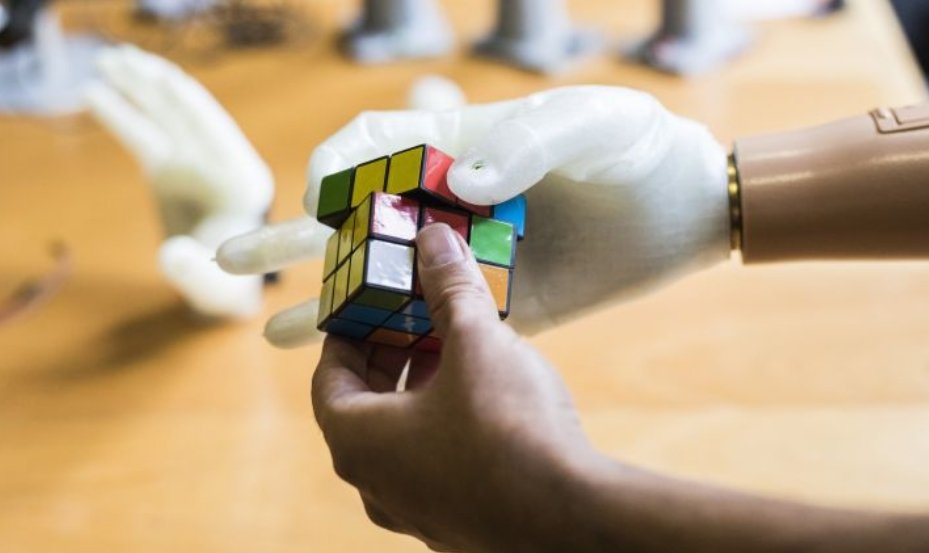
University of Melbourne-backed startup Meablex is developing what the university describes as Australia’s first fully integrated bionic arm, combining an adjustable socket, advanced muscle-sensing technology and a lightweight 3D-printed prosthetic hand.
The system is designed to address several persistent challenges associated with upper-limb prostheses, including socket discomfort, changes in residual-limb volume, inconsistent control signals and the cost of repeatedly replacing devices for growing children.
Clinical trials are expected to begin later in 2026. Subject to successful clinical validation and regulatory approval, Meablex is targeting a commercial launch in early 2027.
Startup formed after consultation with prosthetic users and clinicians
Meablex was founded by Senior Research Engineer Dr Alireza Mohammadi and colleagues following interviews with 60 people, including individuals with limb loss, clinicians and prosthetic suppliers.
The consultations identified practical limitations affecting current upper-limb prosthetic systems, particularly the weight and rigidity of bionic hands, the lack of socket adjustability and the reliability of conventional myoelectric control.
The company is seeking to integrate these normally separate elements into a coordinated prosthetic arm system rather than treating the hand, socket and control interface as independent components.
Lightweight 3D-printed X-Limb hand
The prosthetic hand, known as the X-Limb, uses lightweight 3D-printed and soft robotic materials.
According to the development team, many existing bionic hands use relatively heavy and rigid materials, including metals. Meablex believes its softer and lighter construction could improve safety, comfort and usability, particularly if the hand experiences a mechanical or control malfunction.
Reducing weight is an important consideration in upper-limb prosthetics because a heavy terminal device can increase fatigue, place additional forces on the residual limb and socket, and discourage prolonged daily use.
The X-Limb forms one part of the integrated system alongside the adjustable socket and sensor-based control technology.
Adjustable socket responds to limb-volume changes
One of the project’s most clinically relevant features is a quick-fit socket that users can manually adjust.
Residual-limb volume can change throughout the day due to temperature, exercise, blood flow, fluid movement and activity. A socket that fits comfortably in the morning may subsequently become too tight or loose, potentially affecting comfort, suspension and control of the prosthesis.
This is especially challenging for children, whose sockets may require regular replacement as they grow. The manufacturing and fitting process can be expensive and may leave a child without access to their bionic hand while a replacement device is being produced.
Meablex’s adaptable socket is intended to allow users to modify the fit in real time, reducing reliance on repeated clinical refitting and potentially extending the usable life of the prosthesis.
For prosthetists and orthotists, the concept reflects a growing move towards sockets that can accommodate everyday physiological changes without compromising stability or control.
Magnetic sensors offer an alternative to conventional EMG
Most externally powered upper-limb prostheses use surface electromyography, or EMG, to detect electrical signals generated when muscles in the residual limb contract.
Machine-learning software can interpret these signals and translate them into commands for opening, closing or repositioning a prosthetic hand.
However, the consistency of surface EMG can be affected by sweat, electrode movement, socket fit and changes in the contact between the skin and the sensor. These factors can cause a deterioration in signal quality and make the hand more difficult to operate.
Meablex is developing a sensorised socket that uses magnetic sensors to detect subtle physical muscle movement. The company says this approach should be less affected by sweat than conventional skin-surface electrical sensors.
The integrated control system is designed to combine the magnetic sensing technology with machine learning to recognise the user’s intended hand movements.
A potential focus on paediatric prosthetic care
Although the technology could have applications across a wide range of upper-limb prosthetic users, the adjustable socket could be particularly valuable in paediatric care.
Children may outgrow sockets quickly, while changes in limb shape can also occur during development. Frequent replacement increases costs for families, healthcare systems and charitable prosthetic programmes.
An adjustable socket paired with a lightweight 3D-printed hand could potentially reduce the frequency of complete prosthetic replacement, although this will need to be demonstrated through clinical trials and longer-term use.
The project’s development partners include The Royal Children’s Hospital, The Aussie Hands Foundation, Meablex and Capgemini Australia.
Funding supports clinical validation and commercialisation
Meablex has received A$470,000 through the Australian Government’s Australia’s Economic Accelerator Ignite programme.
The funding will support further development, clinical validation and commercialisation of the integrated prosthetic system.
AEA Ignite grants are intended to help Australian university research projects complete testing and establish proof of concept in industry-relevant environments. Grants available under the programme can be worth up to A$500,000 over 12 months.
The bionic-arm project is formally titled Next-Generation AI-Powered Bionic Arms Empowering Individuals with Upper Limb Loss.
Addressing high rates of prosthesis non-use
The University of Melbourne said almost 24 million people worldwide live with upper-limb loss, but access to effective prosthetic arms remains limited.
It reported that only around half of people with upper-limb loss in high-income countries have trialled a prosthesis, while an estimated 35% to 40% of users ultimately abandon their device. Rejection rates are reported to be particularly high among children.
In lower-income countries, the access gap is greater, with only around 10% of people with upper-limb loss estimated to have trialled a prosthetic device.
Prosthetic rejection is rarely caused by one factor. Weight, socket discomfort, limited function, maintenance requirements, appearance, training, cost and unreliable control can all influence whether a device is incorporated into everyday life.
By addressing several of these barriers within one system, Meablex hopes to produce a bionic arm that is easier to fit and more dependable in daily use.
Potential relevance across the IMEA region
An adjustable and partially 3D-printed bionic-arm platform could have particular relevance across the Middle East, Africa and South Asia.
Many countries in the region face limited access to specialist upper-limb prosthetic services, imported components and long-term maintenance. This can be especially difficult in conflict-affected areas, where traumatic upper-limb loss may occur alongside disruption to rehabilitation infrastructure and supply chains.
A system using digital manufacturing could potentially support more distributed production, while an adjustable socket may reduce the number of replacement fittings required.
The University of Melbourne has specifically identified low-income and war-affected settings as areas where the technology could eventually reduce costs and improve access.
However, successful adoption would depend on factors beyond the prosthesis itself. These include regulatory approval, local manufacturing capability, component durability, battery and maintenance requirements, clinician training, rehabilitation support and the availability of repairs.
Integration will be central to clinical success
Meablex’s project highlights an important direction in upper-limb prosthetics: developing the socket, sensors, control system and terminal device as a unified platform.
Advanced hands cannot deliver their full functional potential if the socket is uncomfortable or the control signal is inconsistent. Similarly, an adjustable socket must maintain secure suspension and accurate sensor positioning as its fit changes.
The forthcoming clinical trials will therefore need to assess not only whether the hand performs the intended movements, but also comfort, signal reliability, durability, fitting time and everyday use.
If successful, the project could offer a more adaptable model for bionic-arm provision, particularly for children and for users in regions where access to repeated specialist fitting is limited.
- Original BioSpectrum Asia report
- University of Melbourne announcement
- University of Melbourne AEA project overview
- Australia’s Economic Accelerator
- The Royal Children’s Hospital Melbourne
- The Aussie Hands Foundation
- International Society for Prosthetics and Orthotics
- World Health Organization assistive technology resources