

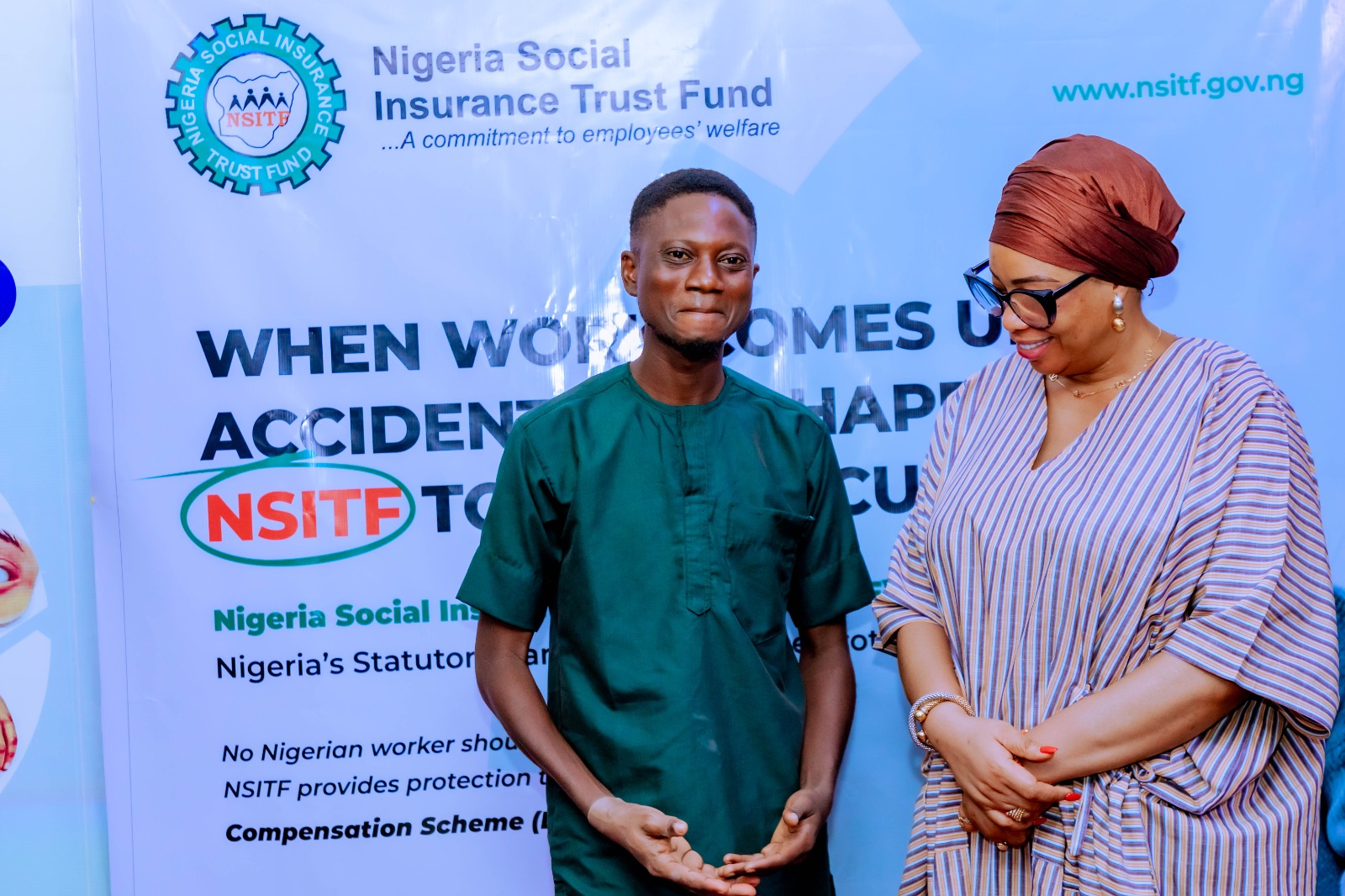
The Nigeria Social Insurance Trust Fund has provided customised prostheses to 78 workers who sustained employment-related injuries and disabilities.
The intervention was completed through the latest phase of the NSITF Prosthesis Provision Exercise, which began in April 2026. All 78 beneficiaries were assessed, fitted with appropriate devices, trained in their use and discharged following evaluation.
According to reports by National Accord and Vanguard, the programme covered a wide range of lower- and upper-limb prosthetic requirements.
The completed devices included:
- Eight above-knee prostheses
- One hip-disarticulation prosthesis
- Eleven below-knee prostheses
- Twelve below-elbow prostheses
- Five above-elbow prostheses
- One transhumeral prosthesis
- Forty silicone partial-hand prostheses
The high number of partial-hand devices demonstrates that occupational injury programmes must address more than major limb loss. Hand and finger injuries can have a profound effect on a person’s ability to work, perform daily activities and maintain financial independence.
Clinical assessment changed one prescription
NSITF Managing Director Oluwaseun Faleye said service providers accommodated individual clinical needs during the programme.
One beneficiary initially considered for an above-knee prosthesis was found during assessment to require a hip-disarticulation prosthesis. The provider subsequently delivered the more appropriate device.
This case illustrates the importance of completing a detailed clinical evaluation before procurement or fabrication begins. Descriptions in administrative records may not accurately represent the person’s amputation level, residual-limb condition or functional requirements.
A hip-disarticulation prosthesis differs substantially from an above-knee device in its socket design, suspension, alignment, component requirements and rehabilitation process. Providing the wrong category of prosthesis would be unlikely to deliver a safe or satisfactory outcome.
The ability to revise the prescription demonstrates why prosthetic procurement should be clinically led and sufficiently flexible to respond to assessment findings.
A complete pathway from assessment to training
NSITF’s General Manager for Claims and Compensation, Nkiru Ede-Ogunnaike, said beneficiaries progressed through assessment, measurement, fabrication, fitting, gait or functional training, evaluation and final discharge.
Discharge documentation included completion letters, warranty information and beneficiary satisfaction forms, which were filed in the recipients’ individual records.
This structured process is important because the value of a prosthesis cannot be measured solely by whether a device has been delivered. Its clinical success depends on comfort, functional performance, training and the user’s ability to incorporate it into daily life.
For lower-limb users, gait training can help develop balance, confidence and safe movement. Upper-limb and partial-hand users may require task-specific training related to their employment, personal care and daily activities.
Warranty documentation is also particularly relevant for people returning to work. Components, sockets and cosmetic devices may require adjustment, repair or replacement after exposure to the practical demands of an industrial or occupational environment.
Rehabilitation within Nigeria’s compensation system
The programme was delivered as part of the mandate of the Nigeria Social Insurance Trust Fund under the Employees’ Compensation Act 2010.
Nigeria’s Employees’ Compensation Scheme is funded through employer contributions and provides cash and non-cash support for people who experience injury, disability, occupational disease or death arising from employment.
According to NSITF, available benefits can include medical care, disability payments, counselling, subsistence support, vocational rehabilitation and the provision, repair or replacement of prostheses and other appliances.
This places prosthetic rehabilitation within a broader social-insurance framework rather than treating it solely as charitable assistance.
For injured workers, this distinction is significant. A workplace injury can result in both functional impairment and loss of income. An effective compensation programme must therefore address mobility, work capacity, psychological wellbeing and economic participation.
Returning to employment
Speaking for the beneficiaries, Solomon Sunday, an employee of Zodoson Industries in Abia State, said many recipients had experienced depression and frustration following their accidents. He credited the programme with helping them regain confidence and opportunities, including the ability to acquire new skills and earn a living.
These outcomes reflect the wider purpose of occupational rehabilitation. A prosthesis may improve function, but successful return to work can also require workplace assessment, reasonable accommodation, vocational retraining and cooperation from the employer.
Some workers may be able to resume their previous roles, while others may need modifications to equipment or duties. In certain cases, retraining for a different occupation may offer the safest and most sustainable pathway.
The programme’s outcome reporting could be strengthened further by monitoring prosthetic use, comfort, repairs and employment participation six and twelve months after discharge. Such data would show whether the devices continue to meet beneficiaries’ needs in real working environments.
Nevertheless, the completion of all 78 cases represents a meaningful demonstration of how a national employment insurance system can fund clinically appropriate prosthetic care. It also provides a model for linking O&P provision with compensation, vocational rehabilitation and return-to-work planning across Africa
- National Accord: NSITF Supports 78 Injured Workers
- Vanguard: NSITF Presents Prostheses to 78 Beneficiaries
- Nigeria Social Insurance Trust Fund
- NSITF Compensation and Disability Support
- Nigeria Employees’ Compensation Act 2010