

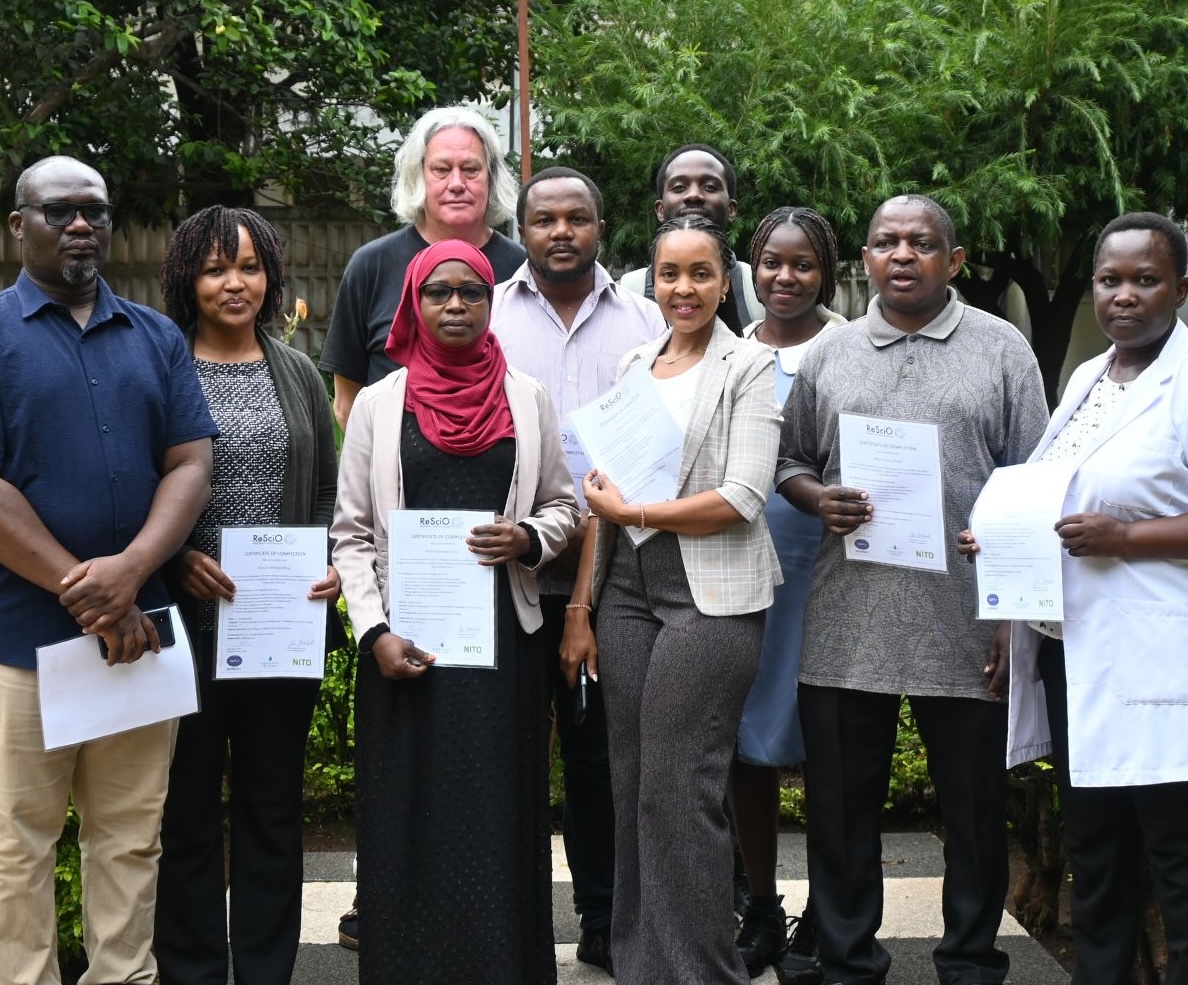
Thirteen teachers at the Tanzania Training Centre for Orthopaedic Technologists (TATCOT) have completed a specialised course in forefoot prosthetics as part of a long-term initiative to strengthen prosthetic and orthotic education in Tanzania.
The training was delivered in Moshi by Rune Nilsen of Sophies Minde Ortopedi. Combining theory with practical instruction, the course guided participants through the principal stages of providing a forefoot prosthesis, including patient assessment, demoulding, prosthetic design, fitting and patient education.
The programme formed part of the “Capacity Building in Prosthetic and Orthotic Education in Tanzania” project, a collaboration involving Sophies Minde Ortopedi, the Norwegian Society of Engineers and Technologists (NITO) and the Norwegian organisation ReSciO.
Running since 2021, the partnership has now delivered ten courses to support the continuing professional development of TATCOT’s teaching staff.
A Train-the-Trainer Approach
The project follows a train-the-trainer model designed to create benefits beyond the immediate group of course participants. By developing the clinical and teaching competencies of TATCOT’s educators, the programme enables new knowledge and techniques to be incorporated into the education of future orthopaedic technologists.
Students can subsequently carry these skills into clinical practice, extending the programme’s impact to patients and rehabilitation services in Tanzania and elsewhere in Africa.
This approach also helps place knowledge within an established educational institution rather than relying entirely on short-term external clinical interventions. Local educators can adapt the material to their curriculum, reinforce it through practical instruction and pass it to successive student cohorts.
Supporting a Regional Education Centre
Founded in Moshi in 1981, TATCOT provides education and training in prosthetics, orthotics, wheelchair technology and supportive seating. The institution serves students from Tanzania and other countries, contributing to the development of the rehabilitation workforce across the African region.
Its prosthetics programmes combine classroom teaching with laboratory instruction and supervised clinical practice. Students learn to assess patients, determine appropriate prescriptions and participate in the manufacture and delivery of prosthetic devices. More information about its lower-limb programme is available through TATCOT’s Lower Limb Prosthetic Technology course page.
Training educators in a specialised area such as forefoot prosthetics can enhance both the technical and clinical content available to students. Forefoot prosthetic management requires careful consideration of the patient’s residual anatomy, pressure distribution, stability, footwear and functional objectives. It also depends on effective patient education to support safe use and realistic expectations.
Bringing these elements together in a course for teaching staff helps ensure that students encounter a consistent process extending from assessment and design to fitting and follow-up.
Knowledge Intended to Last
According to Sophies Minde Ortopedi’s announcement, the course reflects a commitment to building competencies beyond Norway’s borders.
Reaching a tenth course is also an important milestone for the partnership. It demonstrates a sustained approach to professional education and institutional cooperation rather than a single training visit.
For the prosthetics and orthotics community, initiatives of this kind show how international partnerships can support locally anchored education. When teaching staff receive both theoretical knowledge and practical experience, each course has the potential to influence many more professionals—and ultimately many more patients—over time.
- Tanzania Training Centre for Orthopaedic Technologists
- TATCOT Lower Limb Prosthetic Technology Course
- Sophies Minde Ortopedi
- Sophies Minde Ortopedi on LinkedIn
- Norwegian Society of Engineers and Technologists — NITO