

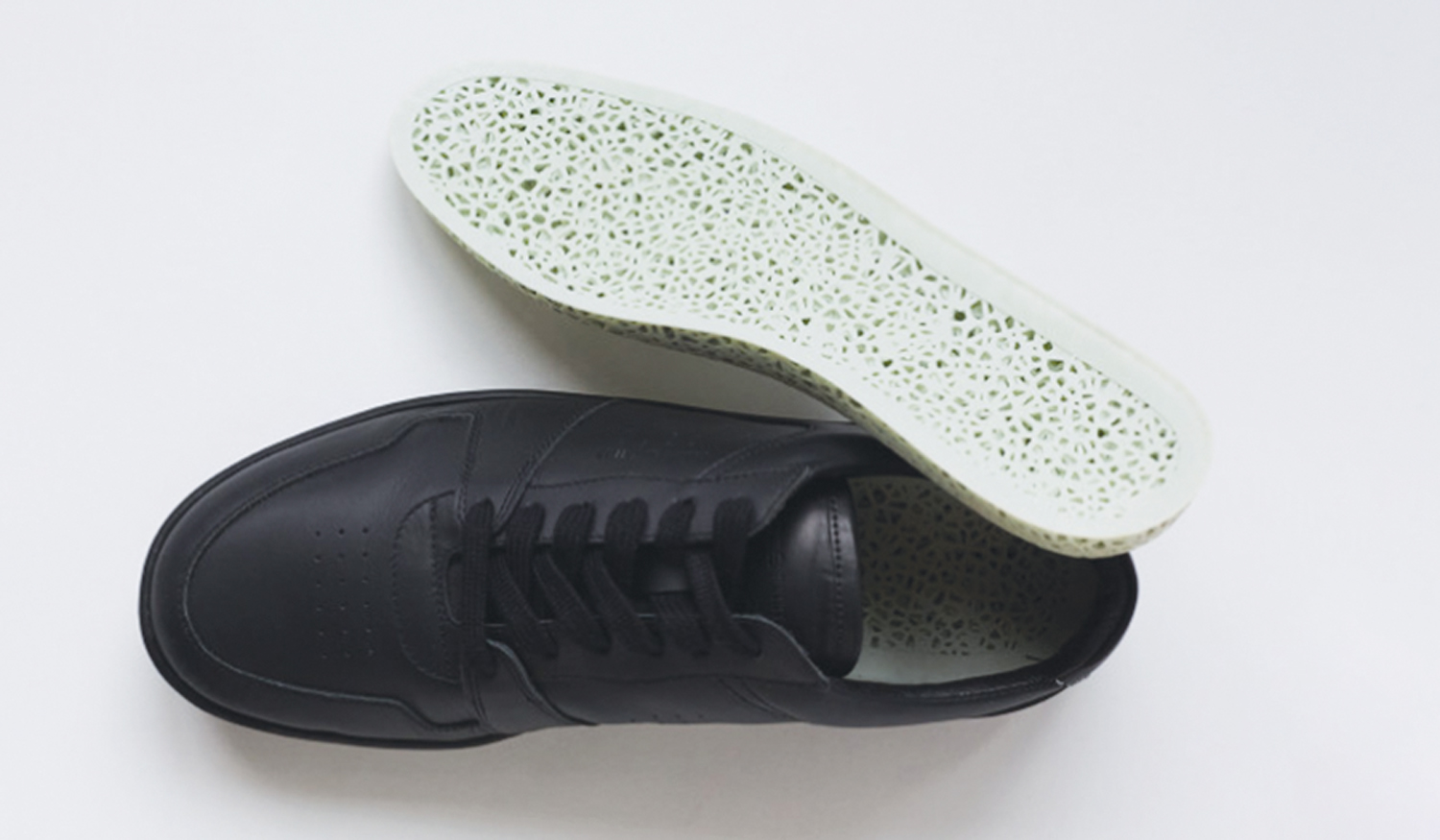
Munich-based footwear company Sneakprint has launched ShoeFactory, a platform where customers buy a personalised 3D-printable file rather than a finished pair of shoes. The first product is the Easy Slide sandal. Customers scan their feet, adjust a digital design and receive STL files to print themselves.
The model extends the scan-to-design process Sneakprint already uses for its custom-made sneakers, but changes who makes the physical product. With ShoeFactory, Sneakprint provides the fit data workflow and digital design; the customer supplies the printer and handles fabrication. The Easy Slide is listed at €64.99. 3dprintingindustry.com
From phone scan to printable design
Customers scan their feet in a phone browser without installing an app. The system uses Volumental’s scanning technology to capture measurements, which then drive a parametric model. Left and right feet are designed separately, allowing the geometry to reflect differences between them.
In the browser configurator, customers can adjust features including sole thickness, width, height, lattice density and text on the strap. Once the design is approved, ShoeFactory sends an archive of print-ready STL files by email. The files remain with the buyer for reprinting. The ordering flow requires a new scan for each order. 3dprintingindustry.com
The platform gives customers direct control over parts of the design process, while the parametric model connects scan data to the customisable features. The announced product range is currently centred on the Easy Slide; Sneakprint has described plans to let independent footwear designers offer additional styles through ShoeFactory.
An important production question
The digital file is only one part of a wearable product. At launch, the platform did not specify recommended printers, materials or print settings. That leaves customers to determine how to turn the file into a finished slide, including selecting suitable equipment and material.
For footwear, those choices affect the durability, comfort and performance of the printed item. Customers may need access to appropriate printing knowledge or support, especially if they are unfamiliar with flexible materials and footwear production. The announcement describes the file delivery process, but does not set out a validated production guide or quality-control pathway.
Sneakprint has also outlined a potential partner programme for printer, filament and accessory manufacturers, alongside opportunities for independent designers to list their products. These plans could help build an ecosystem around the files, but the programme details are available on request rather than fully specified in the launch information. 3dprintingindustry.com
What it could mean for O&P
The workflow will be familiar to O&P professionals in one respect: it links foot data to a digitally designed, personalised product. Sneakprint’s existing business uses foot scans and 3D-printed footbeds in finished sneakers. ShoeFactory extends that digital approach to downloadable footwear geometry. Sneakprint GmbH
There is an important distinction for clinicians and providers: an individually sized or shaped consumer product is not automatically a clinically assessed orthosis. ShoeFactory is presented as a footwear customisation platform; the launch information does not describe it as a prescription orthotic service.
For O&P providers across the Middle East, Africa and South Asia, the announcement raises practical questions about where customisation should happen, who is responsible for fabrication, and what support a customer needs after receiving a digital file. A downloadable design may reduce the need to ship a finished product, while placing more responsibility on the buyer or local printer. It may also prompt clinics and manufacturers to consider whether local production services could complement their existing digital workflows. That is a possible business implication, rather than a service announced by Sneakprint.
ShoeFactory’s launch is a useful example of digital customisation moving beyond the clinic and into consumer footwear. Its success will depend not only on capturing a foot scan and generating a personalised model, but also on whether customers can reliably produce, fit and use the final product.
- 3D Printing Industry: Sneakprint sells custom slides as downloads
- ShoeFactory Easy Slide
- Sneakprint: About Us