

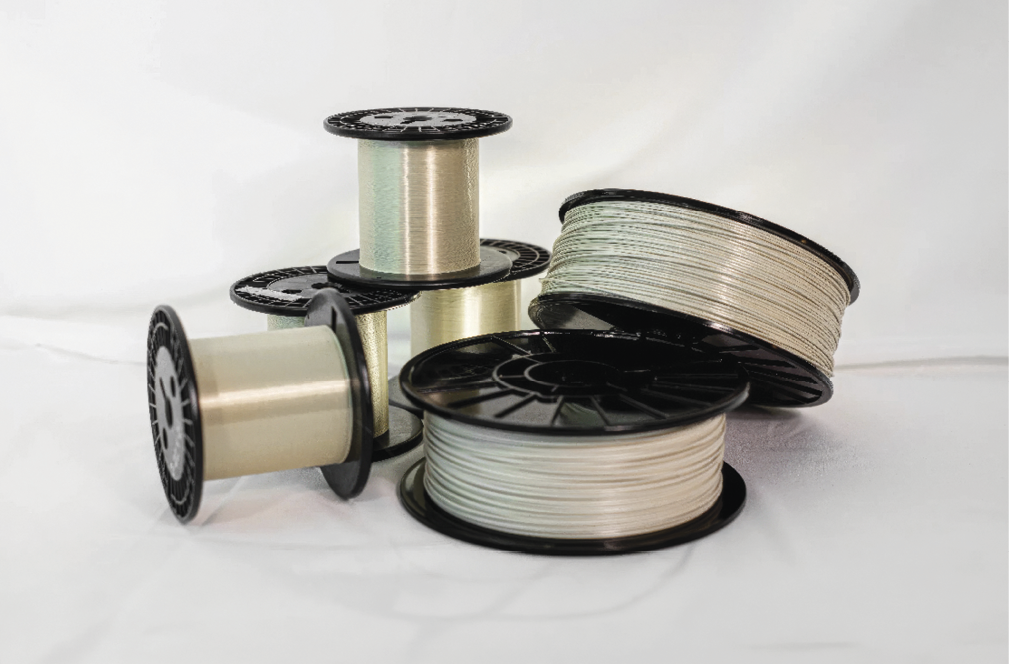
A high-performance polymer developed by US materials company Z-Polymers could expand the range of structural parts manufactured using comparatively accessible fused deposition modelling printers.
Known as Tullomer, the thermoplastic material is designed to combine high strength and stiffness with low weight, chemical resistance and thermal stability. Its developers identify prosthetics and other medical devices as potential applications.
The material was profiled by Today’s Medical Developments, which reported that it could enable lighter and potentially less expensive medical products without requiring the industrial printing infrastructure normally associated with high-performance polymers.
For prosthetic and orthotic professionals, the development is particularly relevant because material limitations have restricted which definitive components can be produced through desktop or workshop-based extrusion printing.
A high-performance material for FDM printing
Tullomer was developed by Z-Polymers, a Massachusetts company founded by polymer scientist Mike Zimmerman.
The material is supplied as filament for fused deposition modelling, also known as fused filament fabrication. In this process, a thermoplastic filament is heated and deposited through a nozzle in successive layers.
FDM is widely available and comparatively easy to deploy, but conventional filaments do not necessarily provide the strength, stiffness, fatigue resistance or temperature performance required for heavily loaded medical devices.
Z-Polymers says Tullomer was designed to address this performance gap while remaining printable using relatively affordable equipment.
The company describes the material as:
- Lightweight and highly stiff
- Stronger than conventional printable polymers
- Resistant to high and low temperatures
- Chemically resistant
- Dimensionally stable with low shrinkage
- Non-flammable
- Recyclable
- Suitable for filament and fibre production
- Capable of being used as reinforcement in multi-material printing
The manufacturer claims that certain forms and applications of Tullomer can achieve strength-to-weight performance substantially exceeding common steel. It also reports a specific gravity considerably below aluminium and steel.
These comparisons require careful interpretation. The performance of a polymer fibre, a laboratory test specimen and a finished layer-printed medical device may be very different. Strength can also vary according to test direction, print orientation, wall design, layer adhesion and processing conditions.
The relevant question for O&P is therefore not simply whether the raw material is “stronger than steel,” but whether a specific printed design can repeatedly withstand the loads, impacts and environmental conditions associated with its intended clinical use.
Potential applications in prosthetics
Prosthetic systems benefit from components that combine low mass with adequate strength and stiffness. Reducing weight can be especially valuable in longer prostheses, paediatric devices and applications where components are positioned further from the body.
Tullomer could potentially be investigated for:
- Prosthetic structural frames and protective covers
- Lightweight reinforcement structures
- Selected socket-frame designs
- Test components and functional prototypes
- Prosthetic hand and terminal-device structures
- Custom fixtures, alignment tools and workshop jigs
- Low-volume replacement parts
- Multi-material components combining rigid and flexible regions
Any use in a weight-bearing component would require device-specific engineering and validation. Lower-limb prostheses experience repeated cyclic loading, torsion, impacts and occasional loads well above those encountered during level walking.
A printed part must therefore be evaluated as a complete structure. Material tensile strength alone cannot establish whether a socket, connector or other component will be safe in clinical use.
For prosthetic sockets, clinicians must also consider surface finish, edge design, thermal behaviour, cleanability, comfort and the interaction between the printed structure and any flexible interface or liner.
Possible relevance to orthotics
High stiffness at a reduced weight could also create opportunities for orthotic structures, particularly where conventional printed thermoplastics would need excessive thickness to control movement.
Potential research applications might include rigid spinal-orthosis frames, external reinforcement elements, footwear components and selected lower-limb orthotic structures.
However, an effective orthosis does not always require the stiffest available material. Controlled flexibility, energy storage, local pressure distribution and predictable deformation may be more important than maximum tensile strength.
Material selection must therefore follow the biomechanical objective. A very stiff polymer may be useful in one area of an orthosis but inappropriate in another.
Multi-material printing may eventually become particularly relevant. Z-Polymers is investigating the use of Tullomer as an internal reinforcement within other engineering plastics. Such an approach could allow designers to place high stiffness only where it is required while retaining flexibility elsewhere.
An opportunity for decentralised manufacturing
The ability to process a high-performance polymer using relatively accessible FDM equipment could be significant for O&P services across the IMEA region.
Many clinics and workshops cannot justify the cost of industrial powder-bed fusion systems or high-temperature implant-manufacturing platforms. Filament printing offers a more accessible route into digital production, with simpler material handling and lower initial equipment costs.
If Tullomer can be processed reproducibly on suitable lower-cost machines, it may allow universities, rehabilitation centres and manufacturers to undertake more advanced prototyping and controlled device-development work locally.
This should not be confused with immediate clinical readiness. Successful printing in a workshop does not by itself establish that a device is safe, durable or legally marketable.
The economics will also depend on filament pricing, printing time, failed builds, post-processing, testing and quality-control requirements. No comparative cost data for finished O&P devices was presented in the reviewed sources.
Medical and implantable applications remain developmental
Z-Polymers reports that Tullomer has passed a cytotoxicity test and is investigating implant applications in collaboration with a veterinary school, including work involving canine spinal devices.
This is an early development step rather than evidence that the material is approved for human implantation.
The distinction is important. A cytotoxicity result addresses only one potential biological response. The US Food and Drug Administration evaluates the biocompatibility of the final finished medical device—not an individual raw material in isolation.
That evaluation may need to consider the manufacturing process, additives, printing parameters, residues, cleaning, sterilisation, anatomical contact and duration of exposure. The required evidence for a temporary skin-contacting prosthetic component would also differ substantially from that for a permanent implant.
The FDA’s additive-manufacturing guidance identifies material control, software workflow, post-processing, mechanical testing, dimensional accuracy, process validation, sterilisation and biocompatibility among the areas manufacturers may need to address.
No human implant approval or clearance for a Tullomer-based device was identified in the sources reviewed.
Prototyping may be the immediate opportunity
The most accessible short-term application may be functional prototyping.
A strong printable polymer could allow device designers to evaluate thin sections, load paths, fastening arrangements and complex geometries before investing in tooling or conventional production. Iterations could be produced rapidly without machining every design from metal or creating an injection mould.
This could support the development of new prosthetic joints, hands, covers, orthotic structures, clinical tools and assistive products.
Moving from prototype to definitive patient use would then require controlled printer settings, documented material batches, validated post-processing and mechanical testing of the finished design.
Tullomer represents an interesting attempt to bring higher-performance materials to a more accessible category of 3D printers. Its relevance to prosthetics will ultimately depend on independently generated mechanical data, repeatable printing performance and validation within specific devices.
For CPOs, the development is a reminder that the next stage of digital O&P will depend as much on material science as on scanners, software and printers.
- Today’s Medical Developments: New 3D-Printed Polymers Open New Possibilities for Medical Devices
- Z-Polymers Official Website
- Z-Polymers: Tullomer Product Information
- Z-Polymers: Tullomer Technical Specifications
- FDA: Technical Considerations for Additive-Manufactured Medical Devices
- FDA: Basics of Medical-Device Biocompatibility