

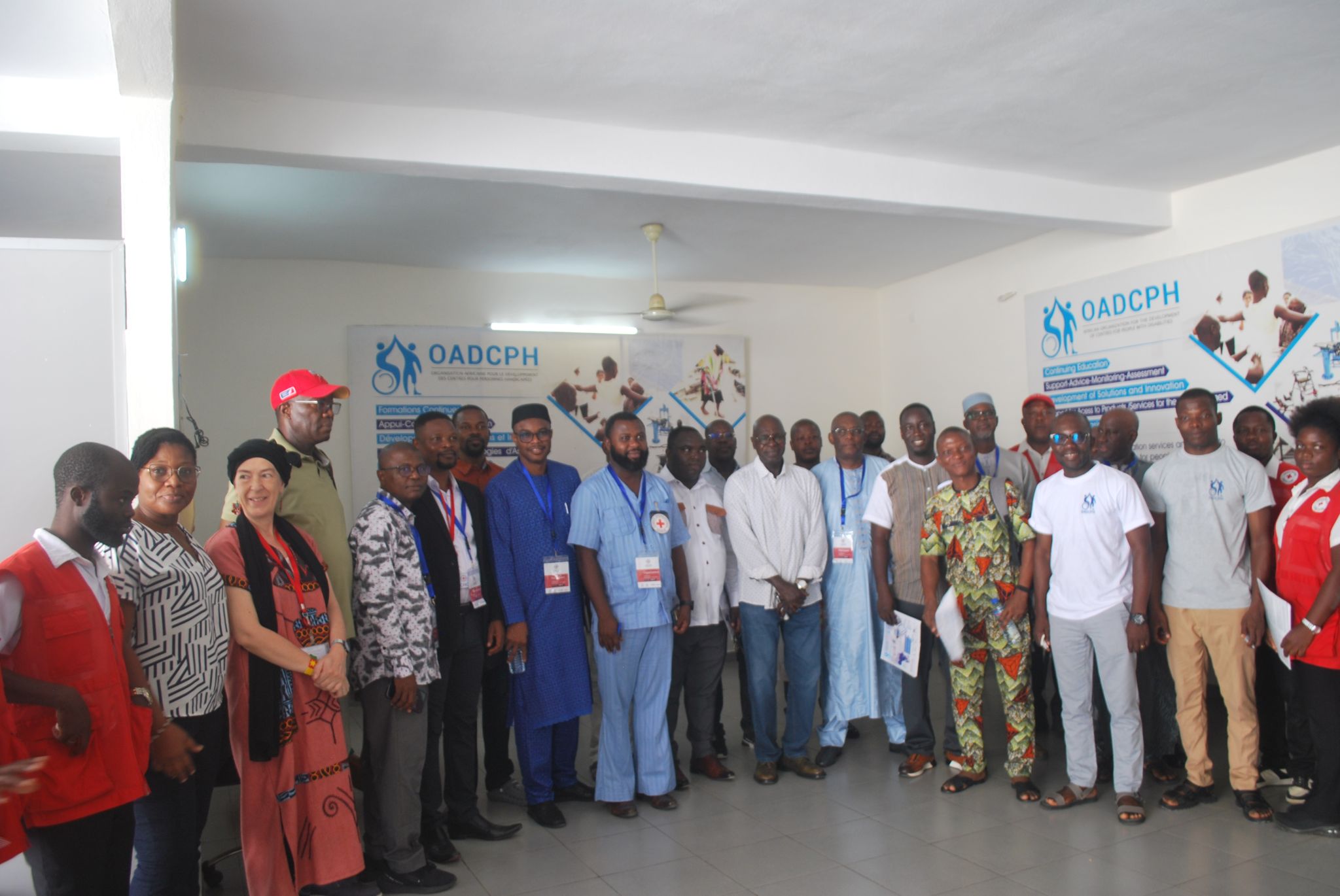
The Organisation Africaine pour le Développement des Centres pour Personnes Handicapées (OADCPH) has welcomed participants from several African countries to its offices in Lomé, Togo. The delegates were attending the International Committee of the Red Cross (ICRC) Regional Conference on the Physical Rehabilitation Sector in Francophone Africa, held in Lomé from 3 to 6 November 2026.
The conference theme was the recognition of the orthotist and prosthetist profession and its integration into the civil service: developments, challenges and prospects. In a LinkedIn post, OADCPH said the visit allowed participants to tour its facilities and gain a better understanding of its activities.

Eight countries, one question: recognition
According to Togo Presse, the conference brought together policymakers, technical and financial partners and other stakeholders from eight countries: Togo, Benin, Burkina Faso, Côte d’Ivoire, Cameroon, Mali, the Central African Republic and the Democratic Republic of the Congo. The programme included plenary sessions, thematic workshops, bilateral meetings and an exhibition of innovations.
Togo’s Minister of Health, Public Hygiene and Universal Health Coverage, Jean-Marie Koffi Tessi, opened the proceedings. The head of the ICRC delegation in Lomé said rehabilitation must be accessible to everyone, whatever their age, gender or place of residence. Gratien Akakpo-Numado, board president of the Fédération Togolaise des Associations de Personnes Handicapées (FETAPH), pointed to the lack of recognition, official status and a decent salary scale for orthoprosthetists.
Each country is expected to leave with a clear national roadmap, with assigned responsibilities and monitoring mechanisms, to be followed up at the next regional meeting in 2028.
A regional master’s programme in Lomé
The conference also marked the launch of the ICRC’s Projet d’Éducation en Réadaptation pour l’Afrique Francophone (PERAF). Togo First reports that the five-year project will create a master’s programme in prosthetic and orthotic sciences, strengthen partner institutions in Togo and Mali, and train clinical experts and specialised teachers. Partners include the École Nationale des Auxiliaires Médicaux (ENAM) de Lomé, the Université de Lomé, Human Study and Togo’s Ministry of Health.
Both reports cite WHO figures presented at the 75th session of the WHO Regional Committee for Africa in August 2025: more than 210 million people in Africa need rehabilitation services, and at least 63% of them do not receive the care they need.
Why OADCPH matters to the discussion
OADCPH works to develop rehabilitation centres for people with disabilities across Africa, offering continuing education, support and monitoring, solutions and innovation, and access to products and services. As we set out in our history of OADCPH, it has grown from Togo into a pan-African network. Its relationship with the ICRC is not new: in August, OADCPH hosted an ICRC delegation to explore future collaboration.
IMEA CPO Perspective
Recognition and civil-service integration may sound like administrative issues, but they decide whether trained orthoprosthetists stay in the profession. Without an official grade and salary scale, graduates trained with donor support often leave for other work, and public centres struggle to fill posts. Linking the PERAF master’s programme to national roadmaps on status and pay is the right combination: more qualified professionals only help if ministries have posts to put them in. Visits like the one to OADCPH also give delegates a practical view of what supply, training and centre support look like on the ground. The 2028 follow-up meeting will show which of the eight countries turned their roadmaps into recognised posts. See also our Togo O&P country profile.
Sources
- OADCPH Officiel on LinkedIn (November 2026)
- Togo Presse: Réadaptation physique, huit pays se concertent à Lomé
- Togo First: Au Togo, un master régional pour former des orthoprothésistes (4 November 2026)
- IMEA CPO: From Togo to a Pan-African Network, the History of OADCPH