 By
By
New retail initiative improves footwear access for amputees and prosthetic users
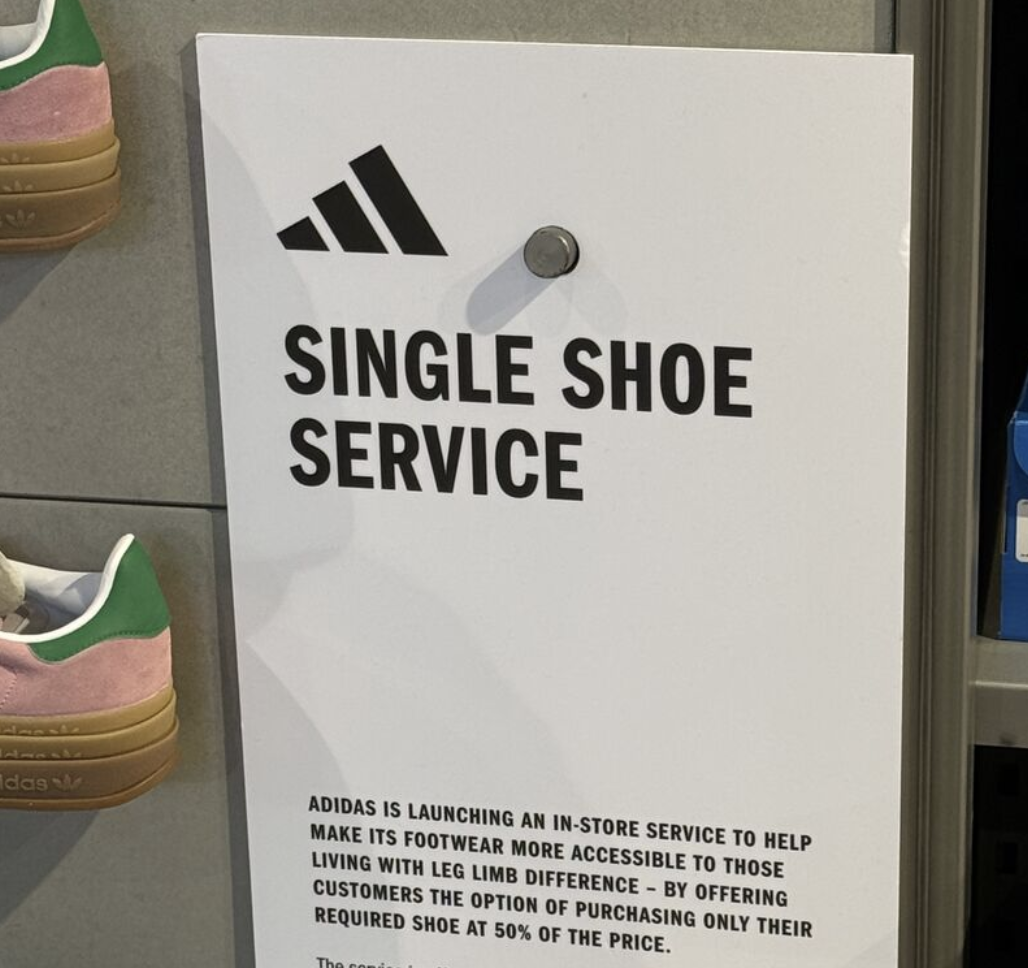
Adidas has introduced a new single shoe purchase service across its own retail stores in Europe, allowing customers with limb difference to buy only the shoe they need instead of being required to purchase a full pair. The initiative is intended to improve accessibility for people living with amputation, limb loss, or other conditions where only one shoe is required.
The service, launched in January 2026 and now available in more than 20 European countries, enables customers to purchase a single shoe at 50 percent of the full retail price. According to Adidas, the programme was developed in consultation with the disability community, including collaboration with Paralympic organisations and advocacy groups, to ensure the service reflects real-world needs.
The option is currently available in Adidas-owned stores and applies to all footwear in stock, including adult and children’s models. The company says the initiative is part of a wider effort to make sport and sportswear more inclusive and accessible to people who have historically been underserved by standard retail systems.
Footwear access is a practical issue for many prosthetic users, who often need only one shoe, different sizes for each foot, or customised footwear to fit around prosthetic components or orthotic devices. Traditionally, most brands sell shoes only in pairs, which can increase cost for amputees and create unnecessary waste. Similar accessibility programmes have been introduced by a small number of manufacturers, but they remain uncommon across the global footwear market.
For the orthotics and prosthetics community, initiatives such as the Adidas single shoe service highlight the importance of inclusive product design beyond the clinic. Access to properly fitting footwear is essential for prosthetic users, diabetic patients, and people using orthoses, as poor shoe fit can lead to skin problems, instability, and reduced mobility.
The move also reflects a broader trend toward adaptive and inclusive sportswear, with major brands increasingly working with athletes with disabilities to develop products and services that better meet real clinical and functional needs.
As awareness of limb difference and adaptive sport continues to grow, programmes that allow single shoe purchase, custom sizing, and adaptive footwear design may become an important part of improving mobility, participation in sport, and overall quality of life for prosthetic and orthotic users worldwide.