 By
By
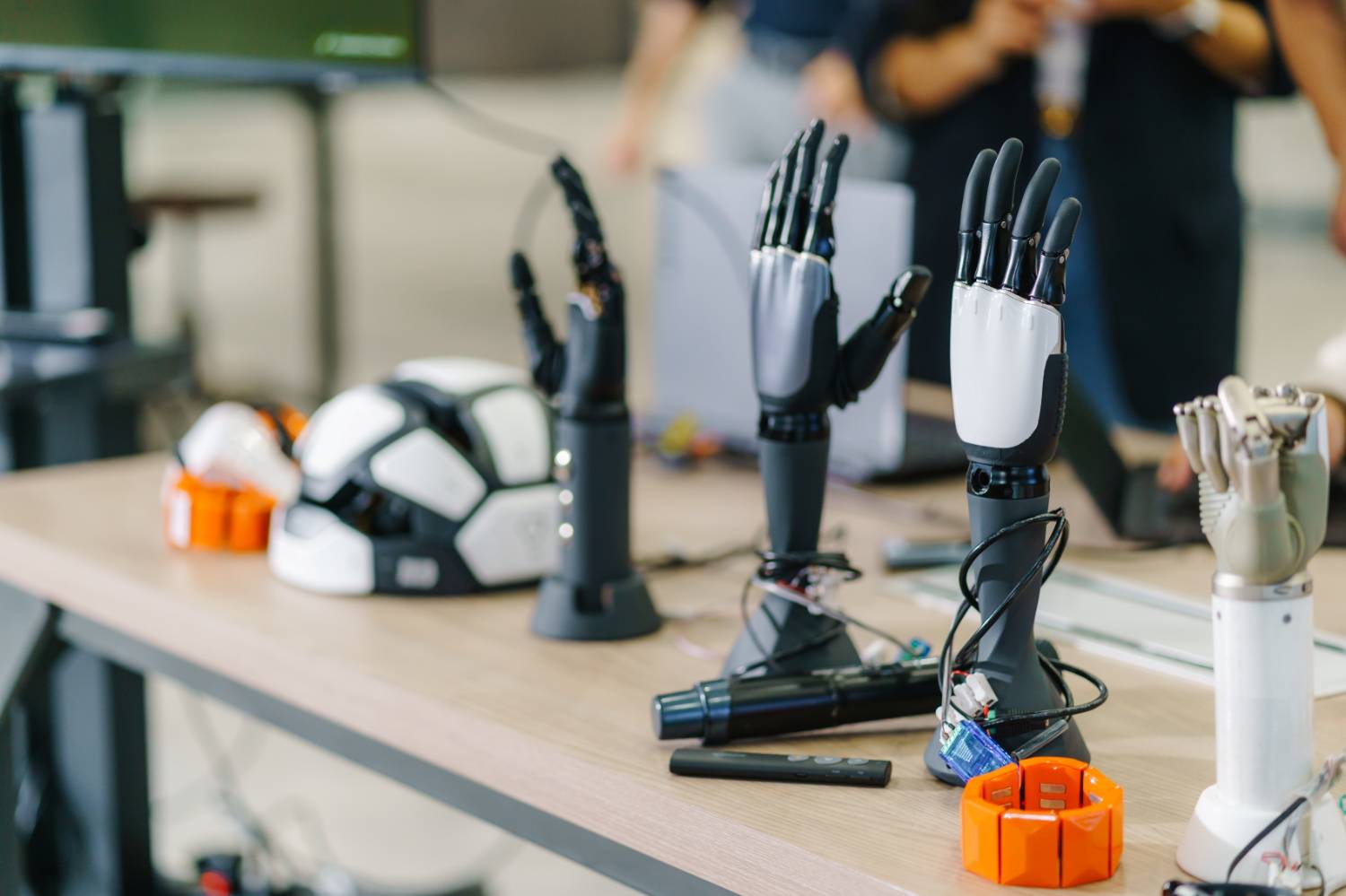
True Corporation has announced a partnership with OYMotion to develop Neuro AI technology for physical therapy and rehabilitation, with a specific focus on using brain-computer interface technology, artificial intelligence and digital data infrastructure to support patient recovery and control of smart devices or prosthetics. The collaboration is being led by True Corporation’s Research and Innovation Center in Thailand.
The initiative brings together True’s digital network and data platform with OYMotion’s neural sensing and signal-decoding capabilities. According to the announcement, the system is designed to translate brain activity into commands, allowing robotic devices, smart devices or prosthetic systems to perform movement in ways that more closely mimic natural human motion.
For the prosthetics, orthotics and rehabilitation sector, the announcement is significant because it shows how telecommunications infrastructure, AI, brain-computer interfaces and rehabilitation technology are beginning to converge. The future of assistive technology will not only depend on mechanical components or device design, but also on data, signal interpretation, remote connectivity, clinical feedback loops and integration with rehabilitation services.
From Traditional Therapy to Neuro-AI Rehabilitation
The partnership is aimed at patients undergoing physical rehabilitation, particularly people recovering from stroke, paralysis or mobility impairment. True Corporation said the system uses BCI technology to help patients control smart devices or prosthetics through neural signals transmitted over True’s network. The approach is intended to stimulate neural pathways, trigger muscle movement and support cognitive retraining as part of the rehabilitation process.
This is an important shift for rehabilitation services. Traditional therapy depends heavily on repeated face-to-face sessions, manual facilitation, patient motivation and the availability of trained therapists. Neuro-AI systems aim to add a new layer: the ability to capture neural or muscle signals, interpret patient intent, drive assisted movement, and generate data that clinicians can use to tailor treatment.
True said the technology is being piloted with patients at leading hospitals in Thailand to validate clinical outcomes, with the possibility of future scaling across the public health system if successful.
Why OYMotion Matters for Prosthetics and Rehabilitation
OYMotion is a neurotechnology company focused on neural sensors, AI recognition of neural signals and human-machine interface systems. The company describes its product areas as including intelligent bionic prosthetics, intelligent rehabilitation training systems and wearable exoskeleton products with EEG neural interfaces.
Its prosthetic technology work is directly relevant to the O&P sector. OYMotion’s OHand smart prosthesis combines biosensors, AI and mechanical design to detect neural signals from the user’s skin, interpret user intention and enable grasp patterns for daily activities.
The company also has experience in intelligent bionic prosthetics and rehabilitation medicine, with its ROHand dexterous hand described as an end-effector device used in humanoid robots, inspection robots, intelligent bionic prosthetics and educational research equipment.
For prosthetists and rehabilitation teams, the relevance is clear: better signal detection and AI-driven interpretation could help improve control of upper-limb prostheses, robotic therapy devices and exoskeleton-assisted rehabilitation. However, clinical success will still depend on correct patient selection, training, fitting, user acceptance, maintenance and long-term follow-up.
What This Could Mean for Prosthetic Control
Upper-limb prosthetic control remains one of the most difficult areas in prosthetics. A device may be technically advanced, but users can still struggle if control is unreliable, slow, cognitively demanding or poorly matched to their daily needs. AI-assisted signal recognition and neural-interface systems are being developed to reduce that gap.
The True–OYMotion collaboration points toward a future where prosthetic devices are connected to broader digital platforms. In theory, this could allow:
- More responsive prosthetic control through improved signal interpretation
- Better adaptation to individual user patterns over time
- Remote monitoring of device use and rehabilitation progress
- More personalised therapy planning based on movement and signal data
- Integration between hospital rehabilitation, prosthetic fitting and home-based training
- Faster feedback for clinicians when a device is not being used effectively
This does not mean that AI or BCI will replace the prosthetist, orthotist or therapist. Instead, these tools may expand what clinical teams can measure and adjust.
Relevance for Stroke, Paralysis and Mobility Rehabilitation
While the prosthetic-control implications are important, the announcement is also strongly focused on stroke and neurological rehabilitation. True said the system is designed to help patients control devices through neural signals, stimulate neural pathways and support recovery compared with conventional therapy, particularly for stroke patients and people with paralysis or mobility impairments.
This is highly relevant across the IMEA region, where stroke, diabetes, trauma, ageing populations and neurological disability are increasing rehabilitation demand. Many health systems already face shortages of specialised physiotherapists, rehabilitation physicians, occupational therapists and O&P professionals. Technologies that support guided therapy, remote monitoring and therapist efficiency could become increasingly important.
True has also positioned the initiative as a way to address shortages of specialised physical therapists and reduce long-term rehabilitation costs, both of which remain barriers to continuous care.
Why Telecom Infrastructure Is Part of the Story
One of the most interesting aspects of the partnership is that it is not simply a medical-device announcement. It is also a telecommunications and data-infrastructure story.
True Corporation’s role is to provide the digital ecosystem, connectivity and data platform needed to transmit brainwave and muscle data in real time. The company says this enables robotic devices or prosthetics to perform movements that closely resemble natural human motion.
For rehabilitation systems, this could become increasingly important. Connected care requires reliable networks, secure data transmission, clinical dashboards, device interoperability and responsible data governance. As rehabilitation moves beyond the hospital into clinics, homes and community settings, telecom and cloud infrastructure may become part of the clinical pathway.
This raises important questions for future deployment:
- How will patient data be protected?
- Who will own and manage rehabilitation data?
- How will clinicians validate AI-generated insights?
- Can systems work reliably in rural or low-connectivity settings?
- What happens when devices require updates, repairs or recalibration?
- How will reimbursement and public-sector procurement handle connected rehabilitation technologies?
These questions will matter not only in Thailand, but across Asia, the Middle East and Africa.
Thailand’s Regional Ambition in NeuroTech
True Corporation has described the partnership as part of a strategy to position Thailand as a regional centre for NeuroTech innovation. The company said that, if widely adopted, the initiative could support Thailand’s role as a regional hub for advanced rehabilitation and neurotechnology.
That ambition is important for the broader IMEA O&P and rehabilitation community. Thailand already has a substantial medical tourism, hospital and rehabilitation base. If neurotechnology, prosthetic control and AI-assisted rehabilitation systems mature there, the country could become an important reference point for neighbouring markets and for rehabilitation providers across the wider region.
What the O&P Sector Should Watch
The True–OYMotion partnership is promising, but the O&P field should evaluate it with a practical clinical lens. The most important question is not whether the technology is advanced. It is whether it improves patient outcomes in real-world rehabilitation and prosthetic use.
Key areas to watch include:
- Clinical trial results from Thai hospital pilots
- Evidence of functional improvement in stroke and paralysis rehabilitation
- Reliability of neural and muscle-signal decoding in daily use
- Applicability to upper-limb prosthetic users
- Training requirements for therapists, prosthetists and clinicians
- Affordability for public health systems and private clinics
- Long-term maintenance and technical support models
- Data security and responsible AI governance
- Scalability beyond major urban hospitals
For many O&P and rehabilitation providers, the lesson is that the next generation of assistive technology will be increasingly hybrid: part clinical device, part software platform, part data system and part rehabilitation service.
Outlook
The partnership between True Corporation and OYMotion marks a notable step in the development of AI-enabled, connected rehabilitation technology in Asia. By combining BCI, neural sensing, AI-driven signal recognition, prosthetic control and digital infrastructure, the initiative points toward a more integrated future for rehabilitation and assistive technology.
For the IMEA O&P community, the announcement is a useful signal. Prosthetic and orthotic care is moving into a world where device fitting, therapy, data, connectivity and intelligent control systems may become more closely linked. That creates opportunities for better outcomes, but it also places new demands on clinicians, technicians, regulators, payers and technology partners.
The future will not be defined by AI alone. It will be defined by how well neurotechnology can be translated into safe, affordable, clinically useful and patient-centred rehabilitation services.
- Original article: Khaosod English – True Corporation partners with OYMotion
- True Corporation announcement
- OYMotion official website
- OYMotion company profile
- OYMotion OHand smart prosthesis
- WHO Rehabilitation 2030 Initiative
- International Society for Prosthetics and Orthotics
- WHO and UNICEF Global Report on Assistive Technology