 By
By
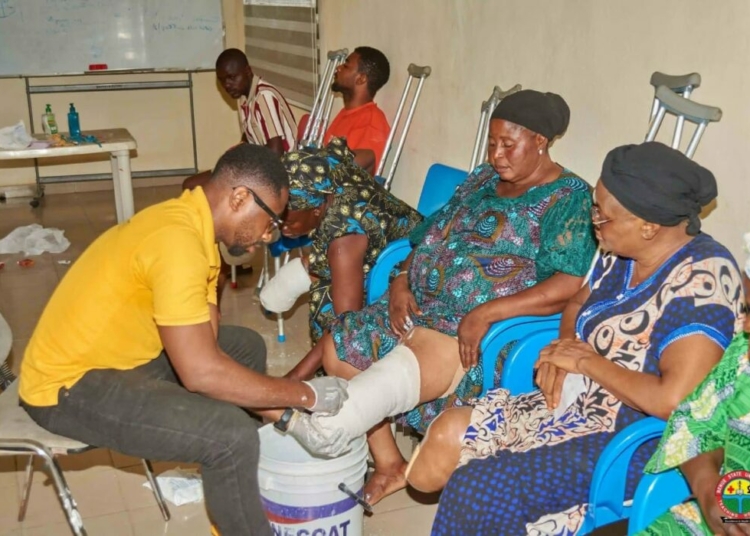
Benue State University Teaching Hospital (BSUTH), Makurdi, is scaling up access to prosthetic care through a free artificial limb initiative that now aims to reach 400 amputees across Benue State. Reporting by Leadership said the hospital flagged off a measurement camp exercise as part of the programme, marking an important step in moving beneficiaries from identification to actual prosthetic provision.
The initiative appears to have grown from an earlier programme size of 300 beneficiaries. Posts linked to BSUTH and local reporting indicate that the hospital had previously announced support for 300 indigent amputees before increasing the number to 400, suggesting both strong demand and an effort to widen the humanitarian reach of the project.
This matters because access to prosthetic care in many Nigerian states remains inconsistent, particularly for low-income users who cannot afford the cost of assessment, fitting, fabrication and follow-up. A hospital-led programme offering free artificial limbs can therefore do more than restore mobility for individual users; it can also demonstrate how public institutions can become stronger entry points for rehabilitation access in underserved settings. This is an inference based on the reported scale-up and the role BSUTH is playing in coordination and delivery.
The BSUTH programme is also part of a wider pattern of limb-support activity in Benue. Earlier reporting has documented large-scale free artificial limb donations in the state, including a 2021 programme supporting 228 amputees and a 2022 initiative reported as reaching 424 amputees. That longer history shows the need in Benue is not new, but the current BSUTH-led model is notable because it is being anchored through a major teaching hospital rather than only through one-off charitable outreach.
Recent local coverage also links the programme to wider institutional efforts at BSUTH and to partnerships supporting prosthetic expansion. One February 2026 report said the hospital was collaborating with the Ishk Tolaram Foundation to expand prosthetic access and was recruiting specialised personnel to establish a dedicated prosthetics department. If that development continues, the current free limb campaign could become more than a temporary intervention and instead help strengthen longer-term prosthetic service capacity in the state.
For the orthotics and prosthetics sector, this is the more important angle. Free limb campaigns are often reported as isolated acts of charity, but their deeper value lies in what they reveal about unmet demand, referral gaps and the need for more structured rehabilitation pathways. If BSUTH can convert this initiative into a stronger prosthetics service platform, it could improve not only access to devices but also continuity of care, follow-up and future service planning for amputees in Benue. This is a forward-looking interpretation, but it is grounded in the reported measurement camp, expanded beneficiary numbers and discussion of prosthetics department development.
There is also a broader public health and social inclusion message here. In states affected by trauma, poverty and limited rehabilitation infrastructure, prosthetic access is closely tied to livelihood, dignity and community participation. Programmes like this are therefore not only about fitting limbs. They are about helping users return to movement, routine and independence in environments where assistive technology is often financially out of reach.
The key question now is whether BSUTH’s expanded 400-beneficiary programme becomes a one-time success story or the foundation for a more permanent prosthetic and rehabilitation pathway in Benue. The scale-up already signals substantial demand. The next challenge will be building the clinical and institutional capacity to make access more sustainable over time.