 By
By
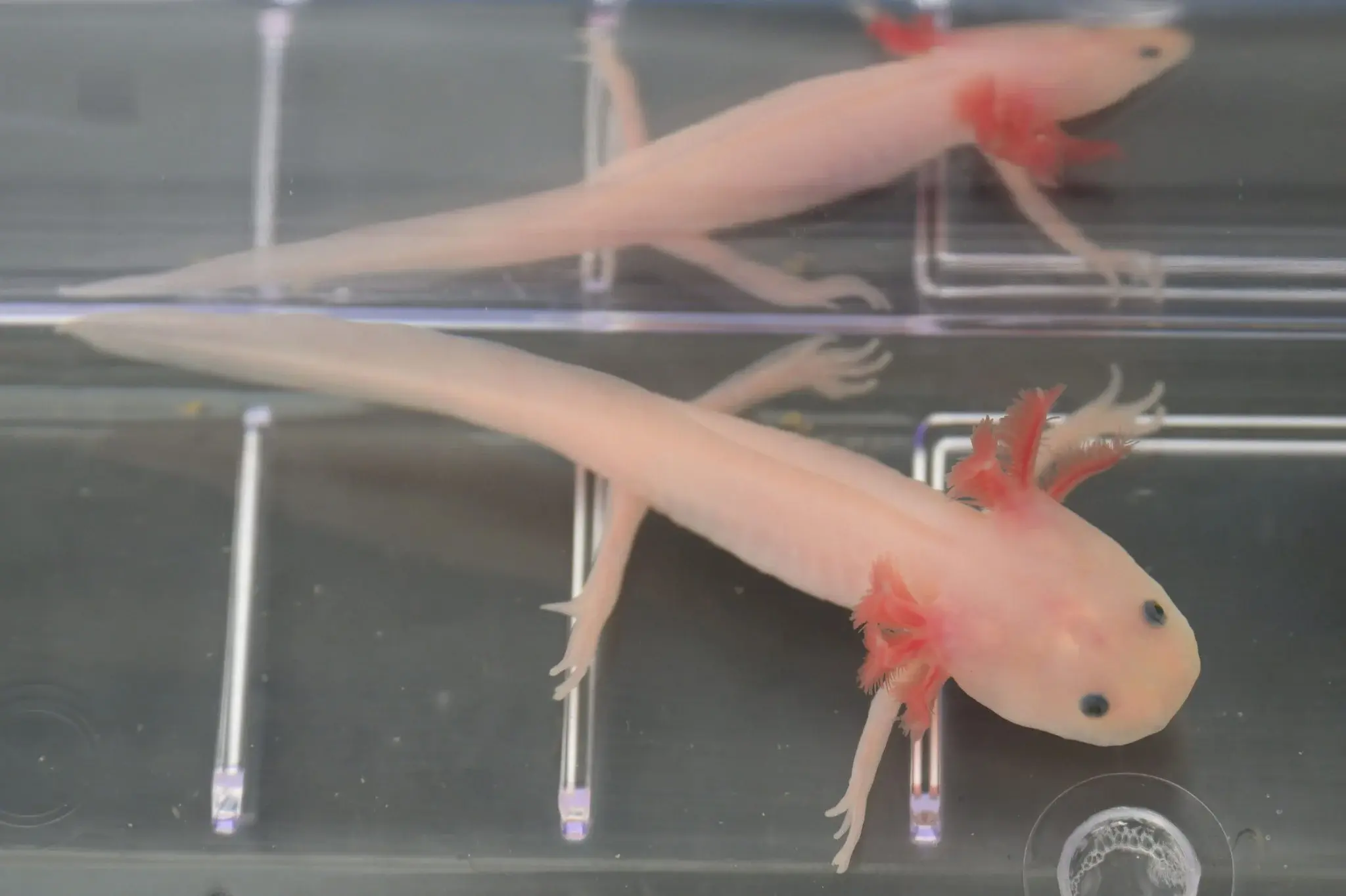
A newly published regeneration study is drawing attention for identifying a shared genetic programme involved in appendage regrowth across multiple species. While headlines about humans regrowing limbs can easily race ahead of the evidence, the actual significance of this research is still substantial: it helps clarify some of the molecular signals that support regeneration in animals and offers a possible early framework for future regenerative medicine strategies. The work was published in Proceedings of the National Academy of Sciences and focused on conserved regeneration-linked epidermal activity involving the transcription factors SP6 and SP8.
The study brought together research on axolotls, zebrafish and mice to investigate whether very different species share core genetic pathways during regeneration. According to Wake Forest University, one of the institutions involved, the researchers found that these animals use common genetic programmes in the regenerating epidermis, suggesting that regeneration is not just a collection of unrelated biological tricks, but may rely on more universal mechanisms than previously understood.
That finding is important because regeneration research often struggles with a translation problem. Salamanders can regenerate complex limbs, zebrafish can regenerate fins, and mice retain limited regenerative capacity in digit tips, but humans generally heal through scarring rather than structural regrowth. By identifying shared signals across species, the new study strengthens the idea that scientists may be able to learn from naturally regenerative organisms and apply at least some of those biological instructions in mammals.
At the centre of the study are the SP6 and SP8 transcription factors. In the axolotl, loss of SP8 disrupted proper limb bone regeneration, while in mice, knocking out SP6 and/or SP8 in basal epidermal tissue impaired bony digit tip regeneration. The authors then tested whether part of that lost regenerative effect could be restored. Using enhancer-directed gene delivery, they introduced FGF8, a known downstream target of SP factors, and found that this could partially rescue digit tip regeneration in SP-deficient mice and also accelerate regeneration in wild-type mice.
This is where the study becomes particularly interesting for the rehabilitation, prosthetics and regenerative medicine fields. It does not show that humans are close to regrowing entire arms or legs. What it does show is that there may be a biologically meaningful route for enhancing regenerative responses in mammalian tissue by targeting conserved epidermal gene programmes. In other words, the study is best understood as a foundational step, not a clinical breakthrough. Wake Forest’s own description of the work presents it in those terms, emphasizing that much more research is required before such findings could be translated into therapies for human limb loss.
That distinction matters. Human limb regeneration remains an extraordinarily difficult scientific challenge because a full limb is not just bone. It also requires coordinated regrowth of muscle, nerves, blood vessels, connective tissue, joints and skin, all in the correct anatomical pattern. Even in the mouse model used here, the work relates to digit tip regeneration, not the recreation of an entire limb. The PNAS paper itself frames the work as an attempt to address regeneration of complex structures in mammals through gene therapy, but not as a solved problem.
Even so, the implications are meaningful. If future studies can build on this work, researchers may eventually be able to design therapies that improve tissue regeneration after injury, amputation or disease. Such approaches could one day complement other regenerative strategies, including biomaterials, scaffolds, advanced wound-healing systems and cell-based therapies. The authors and institutional summaries both position gene-therapy-style signalling as one possible component of a future multi-disciplinary solution rather than a stand-alone answer.
For the orthotics and prosthetics sector, this kind of research is worth watching even though it remains far from routine care. Regeneration science has long occupied the edge of the O&P conversation because any eventual breakthrough in biological reconstruction would reshape how limb loss is treated. But in the near and medium term, such studies are more likely to influence adjacent areas first, such as wound repair, tissue engineering, partial structural restoration and reconstructive medicine, rather than replacing prosthetic care. That conclusion is an inference based on the current stage of the science and the limited scope of the animal results reported so far.
The broader value of this study is therefore not that it proves humans will regrow limbs soon. It is that it gives researchers a clearer genetic map of how regeneration is coordinated in species that can already do it well, and shows that some of those instructions can be partially harnessed in a mammalian model. In a field where progress is often incremental and easily overstated, that is still a significant development.