 By
By
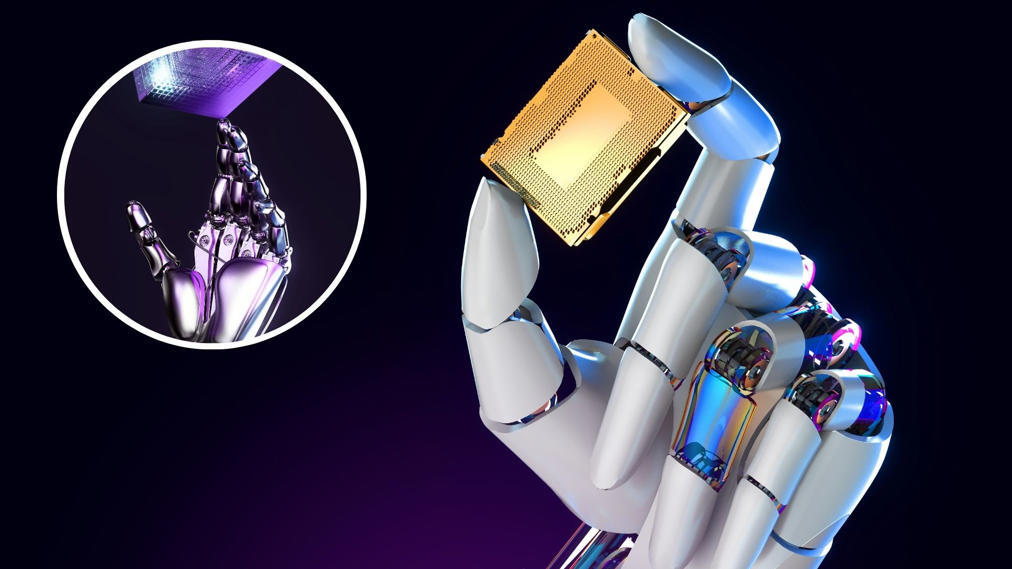
Researchers in China have developed a new soft bending sensor designed to help humanoid robotic hands better sense their own posture during delicate manipulation tasks. The work, published in Microsystems & Nanoengineering in February 2026, focuses on improving what is effectively robotic proprioception: the ability of a hand to detect how its joints and fingers are positioned while it moves.
According to the paper, the team developed an omnidirectional soft bending sensor specifically for humanoid dexterous hands, aiming to improve multi-degree-of-freedom motion sensing in applications where robotic hands need more precise posture perception. The researchers say the design was inspired by the human hand’s own structure and proprioceptive capability.
That matters because robotic hands still face a major challenge: they can grasp and move, but sensing their own exact posture during complex motion is often harder than it looks. In practice, a hand that can better monitor its own configuration has a better chance of performing fine manipulation tasks more reliably, especially when handling varied objects or moving through multi-axis positions. This is an inference from the study’s stated goals and framing.
The authors describe the sensor as “soft,” which is important in itself. Soft sensing technologies are attractive in robotics because they can conform more naturally to curved, moving structures such as fingers and joints, rather than relying only on rigid sensing hardware. In this case, the sensor was developed to support omnidirectional posture perception, meaning it is intended to detect bending and movement in more than one direction rather than only along a single axis.
For IMEA CPO readers, the story is not directly about prosthetics, but it is relevant to the wider future of sensorized hands, human-machine interfaces, and advanced manipulation systems. Research that improves robotic hand posture sensing may also influence adjacent fields such as prosthetic hand design, rehabilitation robotics, and wearable motion-sensing systems. That is an inference rather than a claim made explicitly in the paper, but it is consistent with the overlap between soft sensing, dexterous manipulation, and assistive-device development.
The significance of the new work is therefore less about a single headline claim and more about capability building. Humanoid robots are becoming more mechanically sophisticated, but dexterity still depends heavily on perception. A hand that can better understand its own posture is a step toward more coordinated, adaptive, and human-like manipulation.
At this stage, the published paper is best understood as a research advance rather than a commercial product launch. Still, it highlights a direction worth watching closely: the push to combine soft materials, multi-axis sensing, and dexterous robotic control in ways that make robot hands more aware of what they are doing in real time.